Where to Start with Agatha Christie: A Reading Guide
Where to start with Agatha Christie — whether to begin with And Then There Were None, Murder on the Orient Express, or The Murder of Roger Ackroyd. A complete reading guide.
Agatha Christie (1890–1976) is the best-selling fiction writer of all time — selling more books than any other author except Shakespeare and the Bible — and the undisputed queen of detective fiction. In a career spanning fifty years and sixty-six novels, she invented the definitive template for the classic mystery: the isolated setting, the limited number of suspects, the brilliant detective who gathers all the clues the reader has seen before revealing the solution. Her best novels — And Then There Were None, Murder on the Orient Express, The Murder of Roger Ackroyd — remain as compelling and as surprising as when they were published.
Where to Start
The Most Gripping: And Then There Were None (1939)
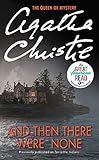
The best first Christie — and one of the most technically brilliant mystery novels ever written. Ten strangers gathered on a remote island, each morally culpable for a death they escaped punishment for, killed one by one according to a nursery rhyme. Christie’s achievement is to make the solution — which must be consistent with all the evidence and must be truly surprising — feel inevitable in retrospect while being completely hidden throughout. The best-selling mystery novel of all time; the best demonstration of Christie’s plotting genius without a recurring detective.
The Poirot Classic: Murder on the Orient Express (1934)
The best starting point for readers who want Hercule Poirot — the fastidious Belgian detective with his ‘little grey cells’ and his moustaches — in his most famous case. On the Orient Express, snowbound in Yugoslavia, a wealthy American is found stabbed in his locked sleeping compartment; Poirot investigates with the characteristic combination of logical deduction and psychological observation. The solution is one of the most audacious in detective fiction history — genuinely surprising and perfectly fair, since all the evidence is visible to the reader. Kenneth Branagh’s film (2017) is enjoyable but reveals the solution.
The Masterpiece: The Murder of Roger Ackroyd (1926)
Christie’s most controversial and most celebrated single novel — the one in which she violated (or extended) the rules of detective fiction in a way that remains debated ninety years later. Avoid all summaries; avoid all descriptions of the ending; read it as it was intended to be read, as a straightforward English village murder mystery narrated by the village doctor who assists Poirot. The ending is genuinely shocking and, on reflection, genuinely fair. It is one of the most technically accomplished plots in the history of the genre.
Death on the Nile (1937)
Christie’s most glamorous novel — set on a Nile steamer during an Egyptian cruise, where a beautiful heiress is murdered after her honeymoon is already complicated by the presence of her ex-fiancée and former best friend. Poirot must navigate an elaborate web of jealousy, love, and financial motive to identify the killer. The Egyptian setting is Christie at her most romantically atmospheric; the plot is one of her most tightly constructed. Kenneth Branagh’s 2022 film adaptation is visually ambitious.
A Murder Is Announced (1950)
The finest Miss Marple novel — a puzzle of particular cleverness in which a notice in a local newspaper announces that a murder will take place at a specific house at a specific time, and a murder duly occurs, though not exactly as announced. Christie’s Miss Marple is at her most psychologically astute here; the village of Chipping Cleghorn is her most fully realised English village community; the solution is among the most satisfying in her later work.
The Mysterious Affair at Styles (1920)
Christie’s first novel — the one that introduced Hercule Poirot — and a useful starting point for readers who want to read the Poirot series in order of publication. An elderly woman is poisoned at an English country house during the First World War; Poirot, a Belgian refugee staying in the village, investigates. Less polished than the later novels (Christie had not yet mastered her craft) but essential for readers who want the complete Poirot arc and fascinating for the glimpse it provides of how the detective emerged.
Why And Then There Were None Is the Ideal First Book
For a reader new to Agatha Christie, the most famous and best-selling mystery writer of all time, And Then There Were None is the ideal first book because it is among her most brilliant and gripping novels and a perfect expression of her distinctive gifts, the ingenious plotting, the masterful suspense, and the irresistible puzzle. And Then There Were None gathers ten strangers on a remote island, where they are killed off one by one according to a chilling nursery rhyme, in one of the most technically brilliant and suspenseful mystery novels ever written. As an entry point it is ideal, for it is among her most celebrated standalone works and a perfect example of her ingenious, gripping mysteries. It welcomes the newcomer with its chilling premise, its masterful suspense, and its ingenious puzzle, drawing the reader into her distinctive vision. It is among her most famous works and a fine representation of her gifts, so the new reader encounters Christie at her most brilliant. For the newcomer, then, And Then There Were None is the natural and ideal starting point.
What to Expect as a New Reader
As a new reader, you can expect And Then There Were None to be an ingenious, gripping, and masterfully suspenseful mystery. You can expect a chilling premise, for ten strangers are gathered on a remote island and killed off one by one according to a nursery rhyme. You can expect ingenious plotting, for the novel is one of the most technically brilliant mysteries ever written. You can expect masterful suspense, for the tension mounts relentlessly as the cast dwindles. You can expect an irresistible puzzle, for the reader is challenged to work out the solution. You can expect a satisfying, surprising resolution. You can expect accessible, propulsive, and addictive storytelling. You can expect the qualities that made Christie the best-selling novelist of all time. Expect, in short, an ingenious, gripping, and masterfully suspenseful mystery, a perfect introduction to Christie’s gifts.
Going Deeper After Your First Book
Once And Then There Were None has introduced you to Christie’s gifts, the reader who wishes to go deeper can explore her vast body of work, above all her famous series featuring her beloved detectives. The novels featuring the brilliant Belgian detective Hercule Poirot, including some of her most celebrated and ingenious mysteries, and those featuring the shrewd Miss Marple, offer endless ingenious puzzles and masterful suspense, while her many other novels and stories provide a lifetime of mystery reading. Reading these after And Then There Were None deepens your appreciation of Christie’s distinctive gifts, the ingenious plotting, the masterful suspense, and the irresistible puzzles. Her characteristic genius runs through her enormous body of work. Building your reading journey through Christie is a matter of following her mysteries from And Then There Were None into her Poirot and Miss Marple novels and beyond. The reader who begins here and continues will find the most famous and prolific mystery writer of all time to follow.
Reading Agatha Christie
Christie’s genius is plotting — the ability to construct a mystery in which every clue is visible to the reader and the solution is still genuinely surprising. Her prose is functional rather than stylistic; her characters are types rather than deeply realised individuals. The pleasures of Christie are the pleasures of puzzle — the game between the reader and the novelist, with all information provided fairly and the challenge to find the pattern before Poirot or Marple reveals it. Reading her quickly, as thriller, misses the point; reading her slowly, attending to every detail as a potential clue, is the correct approach.
Frequently Asked Questions
Where should I start with Agatha Christie?
And Then There Were None (1939) is the best starting point for most readers — the most purely suspenseful of Christie's novels, in which ten strangers are lured to an isolated island and killed one by one according to the nursery rhyme 'Ten Little Indians'. It is self-contained (no recurring detective), immediately gripping, and demonstrates Christie's extraordinary gift for plot construction and surprise. Murder on the Orient Express is the best starting point for readers who want Hercule Poirot; The Murder of Roger Ackroyd for those who want Christie's most technically daring single novel.
What is And Then There Were None about?
And Then There Were None (1939) brings ten strangers to Indian Island off the Devon coast: they all receive invitations that turn out to be traps, and a gramophone record announces that each of them has committed a crime for which they escaped punishment. As they are killed one by one in the order of the nursery rhyme, the survivors must determine who among them is the killer — knowing that the killer cannot be one of the dead. Christie herself said it was the most difficult plot she ever wrote; it is the best-selling mystery novel of all time and one of the best-selling novels ever written.
What is The Murder of Roger Ackroyd about?
The Murder of Roger Ackroyd (1926) is Christie's most formally daring novel — the one in which she commits what many readers have considered a fundamental violation of the detective fiction genre's rules. Roger Ackroyd, a wealthy man in the English village of King's Abbot, is found murdered in his locked study; Hercule Poirot, who has retired to the village, investigates. The novel's ending — which involves one of the most famous revelations in the history of crime fiction — divided readers when it was published (many accused Christie of cheating) and is now considered her masterpiece. Do not read any summaries or reviews before reading it.
Who is Miss Marple?
Miss Jane Marple is Christie's second major detective — an elderly spinster from the village of St. Mary Mead, who solves crimes through her expert knowledge of human nature, formed by decades of observing village life. She first appeared in Murder at the Vicarage (1930) and features in twelve novels. Marple differs from Poirot in method (intuition and knowledge of human nature rather than logic and grey cells) and in social position (she is a middle-class Englishwoman rather than a foreign celebrity detective). A Murder Is Announced (1950) is generally considered the finest Marple novel.