Where to Start with George S. Clason: A Reading Guide
Where to start with George S. Clason — how to approach The Richest Man in Babylon, the classic personal finance parables that have remained in print since 1926. A complete reading guide.
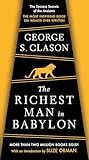
George S. Clason (1874–1957) was an American author and businessman who began publishing financial wisdom as pamphlets in the 1920s, distributed by American banks and insurance companies to their clients. The pamphlets were so widely read and so often requested that they were eventually collected and published as a single volume in 1926. The Richest Man in Babylon has been in continuous print ever since — nearly a century of unbroken publication, across countless editions and dozens of languages.
Where to Start: The Richest Man in Babylon (1926)
The essential George S. Clason — and the most memorable introduction to personal finance ever written. The Richest Man in Babylon delivers financial principles through parables set in ancient Babylon — a choice that serves the material in ways that direct instruction cannot. Financial advice absorbed in the context of a story, through the experience of a character working through real decisions, is retained and applied more readily than identical advice presented as a list of rules. Clason, whether by instinct or design, understood this nearly a century ago.
The central story follows Arkad, a young clay tablet scribe who grew up in poverty alongside friends with similar prospects. As an adult, Arkad becomes the wealthiest man in Babylon. His friends, curious how this happened when they worked equally hard, ask him to explain. His answer — the core of the book — is not a story of luck or exceptional talent but of consistent application of principles that anyone can follow.
The most fundamental: a part of all you earn is yours to keep. Most people reverse this principle: they earn money, pay their expenses — rent, food, clothing, debt — and keep what remains. What remains is usually nothing. Arkad discovered, through the counsel of a money lender he asked for wisdom, that the sequence must be reversed: save first, then live on what remains. The amount saved before anything else — Clason recommends no less than ten parts in every hundred earned — should not be spent on living expenses. It is the seed of wealth.
The Five Laws of Gold that Arkad eventually articulates to his students codify the wisdom in compact form:
- Gold comes eagerly and in increasing quantities to those who save a tenth of their earnings to build an estate for their future.
- Gold works diligently for the wise owner who finds for it profitable employment, multiplying even as the flocks of the field.
- Gold clings to the protection of the cautious owner who invests it under the advice of men wise in its handling.
- Gold slips away from the man who invests it in businesses or purposes with which he is not familiar or which are not approved by those skilled in its keep.
- Gold flees the man who would force it to impossible earnings or who follows the alluring advice of tricksters and schemers.
These laws are broad by the standards of modern financial planning — they are principles, not implementation guides. But their essence has not been improved upon: save consistently, invest in what you understand, seek wise counsel, and avoid the promise of rapid returns. Every piece of personal finance advice generated in the century since Clason published his pamphlets is either an application or an elaboration of these principles.
The parable format earns its place across the book’s 144 pages. When Arkad’s friend Kobbi borrows money to invest in a scheme that fails, the reader feels the mistake rather than simply being told it was a mistake. When Arkad’s son Nomasir is sent out into the world with a bag of gold and instructions to return as a rich man — and fails because he ignores the principles his father gave him — the lesson lands with the weight of a story rather than the weightlessness of advice.
The archaic language is the book’s only genuine obstacle. Clason wrote in a biblical cadence meant to evoke ancient wisdom, and some readers find it off-putting. The content repays the style’s demands in full.
Why The Richest Man in Babylon Is the Essential First Book
For a reader new to George S. Clason, The Richest Man in Babylon is the essential first book because it is his classic, enduring work, one of the most beloved books on personal finance ever written, and the fullest expression of his distinctive approach, the teaching of timeless financial principles through parables set in ancient Babylon. The Richest Man in Babylon presents simple, fundamental principles of saving, investing, and building wealth through engaging stories set in the ancient city. As an entry point it is both natural and essential, for it is his defining work and a beloved classic of personal finance. It welcomes the newcomer with its engaging parables, its timeless principles, and its accessible style, drawing the reader into the fundamentals of building wealth. It is his most famous work and the foundation of his reputation, so the new reader encounters Clason’s approach directly. For the newcomer seeking timeless financial wisdom, then, The Richest Man in Babylon is the natural and essential starting point.
What to Expect as a New Reader
As a new reader, you can expect The Richest Man in Babylon to be an engaging, timeless, and accessible classic of personal finance. You can expect a parable form, for the book teaches its lessons through engaging stories set in ancient Babylon. You can expect timeless principles, for the book presents simple, fundamental rules of saving, investing, and building wealth. You can expect a memorable central lesson, above all the principle of paying yourself first by saving a portion of all you earn. You can expect an emphasis on living below your means, investing wisely, and building wealth steadily. You can expect an accessible, story-driven, and easy-to-read style. You can expect enduring wisdom rendered simply and memorably. Expect, in short, an engaging, timeless, and accessible classic of personal finance, the essential introduction to Clason’s approach.
Going Deeper After Your First Book
Once The Richest Man in Babylon has introduced you to its timeless financial principles, the reader who wishes to go deeper can carry its lessons into the wider literature of personal finance to which it is a beloved, foundational classic. Since The Richest Man in Babylon is his central work, the natural next step is outward, into the broad field of personal-finance writing, where its fundamental principles, paying yourself first, living below your means, and investing wisely, are developed in greater practical detail by many later authors. The reader equipped with these timeless fundamentals is well prepared to explore the wider literature. Reading more widely builds on the foundation his parables provide. Clason’s simple, memorable principles offer a foundation that the reader can carry into all of personal finance. Building your reading journey from The Richest Man in Babylon is a matter of carrying its timeless principles into the wider personal-finance literature. The reader who begins here will have a timeless, foundational set of principles for building wealth.
Reading George S. Clason
The Richest Man in Babylon is Clason’s essential book. It stands alone and requires no prior reading.
For the full George S. Clason bibliography, reviews, and biography, visit the George S. Clason author page on Editors Reads.
Affiliate disclosure: Links to Amazon on this page are affiliate links. We earn a small commission at no extra cost to you.
Frequently Asked Questions
Where should I start with George S. Clason?
The Richest Man in Babylon (1926) is Clason's essential and only widely read work — a collection of financial parables set in ancient Babylon that deliver timeless principles through the story of Arkad, a scribe who rises from poverty to become the city's wealthiest citizen. Nearly a century old and still the most memorable and emotionally engaging introduction to personal finance ever written. Can be read in an afternoon.
What is The Richest Man in Babylon about?
The Richest Man in Babylon presents financial principles through a series of parables set in ancient Babylon. The central story follows Arkad, who became wealthy through consistent application of simple principles: saving at least 10% of everything you earn before other spending, living on less than you earn, making your savings work for you through wise investment, protecting against loss, and continually improving your ability to earn. The Babylonian setting gives the advice narrative momentum and emotional stickiness.
Is The Richest Man in Babylon's advice still relevant today?
The Richest Man in Babylon's core principles — pay yourself first, live below your means, make your money work for you, protect against loss — are as applicable today as in 1926 because they describe the fundamental mechanics of wealth accumulation, which have not changed. The specific investment vehicles and financial products have evolved enormously, but the principles are independent of those specifics. The archaic style can put some readers off, but the underlying wisdom has not been improved upon.
What should I read after The Richest Man in Babylon?
After The Richest Man in Babylon, Morgan Housel's The Psychology of Money covers the emotional and behavioural dimension of wealth with comparable accessibility and more contemporary examples. Ramit Sethi's I Will Teach You to Be Rich translates Clason's principles into specific modern accounts, automation strategies, and investment products. JL Collins's The Simple Path to Wealth covers the investment side of Clason's 'make your money work for you' principle in actionable contemporary detail.


