Where to Start with Gretchen Rubin: A Reading Guide
Where to start with Gretchen Rubin — how to approach The Happiness Project, her essential year-long experiment in pursuing greater happiness. A complete reading guide.
By Lena Fischer
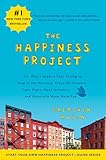
Gretchen Rubin (born 1965) is an American author who began her career as a law clerk for Justice Sandra Day O’Connor before pivoting to writing. The Happiness Project (2009) became a major bestseller and spawned a blog, a podcast (Happier with Gretchen Rubin), and a further series of books on habits and tendencies. She is one of the most prominent voices in the popular positive psychology space.
Where to Start: The Happiness Project (2009)
The essential Rubin — and the book that made happiness research accessible to a general audience at scale. The Happiness Project begins with an observation Rubin found uncomfortable to admit: she was not unhappy, but she was not as happy as she could be. She had a good life — a loving husband, healthy children, work she cared about, a home in New York City — and she was squandering it through inattention, bad habits, and a failure to act on what she knew would make things better.
Her solution was systematic: a year-long project to test happiness-boosting strategies across twelve monthly themes, informed by research in positive psychology, philosophy, and neuroscience, and reported honestly including when the results disappointed her. The monthly structure — January for energy (sleep, exercise, decluttering), February for marriage (expressing affection, fighting better), March for work (aiming higher, doing things well for their own sake) — gives the book a narrative momentum that pure research synthesis lacks.
Rubin’s most useful quality as a narrator is her self-awareness about her own particularity. She knows that her concerns — the privilege and comfort of her New York professional life, her specific personality and values — are not universal, and she regularly signals where her experience might not generalise. This honesty makes her more trustworthy, not less useful; her conclusions are more credible for acknowledging their limits.
The research synthesis underlying each monthly theme is accurate and thoughtful. The finding that relationships are the most reliable source of sustained happiness is well-documented. The counterintuitive finding that acting the way you want to feel — smiling when you don’t feel like smiling, moving when you don’t feel like exercising — is more effective than waiting to feel it first is supported by research and more honestly reported here than in most popular treatments. The observation that outer order contributes to inner calm — that decluttering your physical environment has genuine psychological benefits — became one of the book’s most quoted and most controversial claims.
The project’s form — structured experiment, honest reporting, concrete conclusions — is itself the most valuable contribution. Many readers have been inspired to design their own happiness projects, which is exactly what Rubin intended.
Why The Happiness Project Is the Ideal First Book
For a reader new to Gretchen Rubin, The Happiness Project is the ideal first book because it is her breakout work and the fullest expression of her distinctive approach, the practical, research-informed, and personally engaging exploration of how to be happier. The Happiness Project recounts Rubin’s year-long experiment in testing the wisdom of the ages and the findings of research about happiness in her own life, month by month, in a relatable and accessible way. As an entry point, it offers the fullest expression of Rubin’s appeal, the combination of research and personal experiment, the practical and relatable approach, and the engaging exploration of happiness in everyday life. It welcomes the newcomer with its relatable premise, its practical insights, and its engaging style, drawing the reader into an accessible and personal exploration of happiness. It is her best-known book and the one that best represents her approach, so that the new reader encounters Rubin’s method from the first. For the newcomer, then, The Happiness Project is the natural and ideal starting point, the engaging account of her year-long experiment in becoming happier.
What to Expect as a New Reader
As a new reader, you can expect The Happiness Project to be a practical, research-informed, and personally engaging exploration of how to be happier in everyday life. You can expect a relatable premise, for the book recounts Rubin’s year-long experiment in testing the wisdom of the ages and the findings of research about happiness in her own ordinary life. You can expect a combination of research and personal experiment, for Rubin draws on a wide range of research and wisdom about happiness and tests it through her own monthly experiments and resolutions. You can expect a practical and accessible approach, for Rubin focuses on concrete, achievable changes and resolutions rather than grand theories, making the pursuit of happiness relatable and actionable. You can expect an engaging, candid, and personal style, for Rubin shares her own experiences, successes, and failures with honesty and humor. Expect, in short, a practical, research-informed, and personally engaging exploration of how to be happier, a relatable and accessible introduction to Rubin’s approach.
Going Deeper After Your First Book
Once The Happiness Project has introduced you to Rubin’s approach, the reader who wishes to go deeper can explore her other work, which extends her practical, research-informed exploration to related questions of happiness, habits, and human nature. Her other books address such subjects as the formation of habits and the different ways that people respond to expectations, applying her characteristic combination of research, personal insight, and practical accessibility to these related dimensions of happiness and self-understanding. Reading these after The Happiness Project deepens your engagement with Rubin’s distinctive approach, the practical, research-informed, and personally engaging exploration of happiness, habits, and how to live better. Her characteristic method runs through her work, and the reader who has enjoyed The Happiness Project will find the same practical, relatable approach in her other books. Building your reading journey through Rubin’s work is a matter of following her exploration of happiness and habits from her breakout book into her further work. The reader who begins with The Happiness Project and continues through her work will find a practical, relatable, and engaging guide to happiness, habits, and human nature.
Reading Gretchen Rubin
Begin with The Happiness Project — it is her most essential and most widely read book. Better Than Before (2015) covers habit formation as the practical follow-up. Both standalone.
For the full Gretchen Rubin bibliography, reviews, and biography, visit the Gretchen Rubin author page on Editors Reads.
Affiliate disclosure: Links to Amazon on this page are affiliate links. We earn a small commission at no extra cost to you.
Frequently Asked Questions
Where should I start with Gretchen Rubin?
The Happiness Project (2009) is Rubin's most essential and widely read book — a memoir structured around a year-long experiment in which she systematically tests happiness-boosting strategies across twelve monthly themes, from decluttering to friendship to spirituality. Research-grounded, self-aware, and immediately actionable; its success spawned a broader conversation about personal happiness research.
What is The Happiness Project about?
The Happiness Project describes the year Rubin spent testing practical strategies for increasing her happiness — not because she was unhappy, but because she recognised she could be living more fully and wanted a systematic approach to understanding how. Each month focuses on a different domain (energy, marriage, work, play, friendship, money, parenthood). Rubin reports honestly on what works, what doesn't, and why, grounded in research on positive psychology and happiness science.
Is The Happiness Project scientifically rigorous?
The Happiness Project synthesises research from positive psychology, neuroscience, and happiness studies in accessible form rather than at scholarly depth. Rubin is transparent about this: she is a writer and former lawyer reporting on a personal experiment informed by existing research, not conducting original research herself. The synthesis is accurate and her conclusions are grounded in evidence, but readers seeking clinical depth should complement it with Martin Seligman's Flourish or Sonja Lyubomirsky's The How of Happiness.
What should I read after The Happiness Project?
After The Happiness Project, Rubin's Better Than Before covers habit formation specifically — how to make and break habits — which is the practical follow-up to the happiness project's conclusions. Martin Seligman's Flourish covers the positive psychology research at greater depth. For the specific happiness finding that relationships matter most, Robert Waldinger and Marc Schulz's The Good Life covers the longest-running study on adult happiness ever conducted.