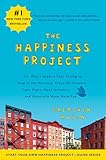
Editors Reads Verdict
Rubin's self-aware, methodical approach to happiness research makes for both an engaging memoir and a practical reference. Her willingness to admit when things don't work is as valuable as her enthusiasm for what does.
What We Loved
- The year-long structure creates genuine narrative momentum
- Rubin's self-awareness and honesty make her an unusually trustworthy narrator
- Grounded in actual happiness research rather than anecdote alone
- Immediately actionable — readers can run their own happiness project
Minor Drawbacks
- Rubin's particular concerns (privileged New York professional life) may not resonate universally
- The monthly structure means some areas receive more depth than others
- The research synthesis is accessible but not scholarly
Key Takeaways
- → Happiness is not a destination but a byproduct of how you live day to day
- → Outer order contributes to inner calm — decluttering has genuine psychological benefits
- → Acting the way you want to feel is often more effective than waiting to feel that way
- → Relationships are the most reliable source of sustained happiness
- → Your own happiness affects everyone around you — it is not selfish to pursue it
| Author | Gretchen Rubin |
|---|---|
| Publisher | Harper |
| Pages | 320 |
| Published | December 29, 2009 |
| Language | English |
| Genre | Self-Help, Memoir |
| Difficulty | Beginner |
| Best For | Anyone interested in practical happiness research; self-help readers who prefer memoir format. |
How The Happiness Project Compares
The Happiness Project at a glance against 3 similar books readers weigh alongside it.
| Book | Author | Rating | Best for |
|---|---|---|---|
| The Happiness Project (this book) | Gretchen Rubin | ★ 4.0 | Anyone interested in practical happiness research |
| Atomic Habits | James Clear | ★ 4.8 | Anyone who wants to build better habits, break bad ones, or improve personal |
| Four Thousand Weeks | Oliver Burkeman | ★ 4.4 | Readers who have tried productivity systems and found them insufficient, and |
| The Power of Now | Eckhart Tolle | ★ 4.6 | Anyone struggling with anxiety, overthinking, or searching for a practical |
The Methodical Approach to Joy
Gretchen Rubin was not unhappy. She had a good marriage, two children she loved, a successful career as a writer. She was, by any reasonable measure, living a good life. But she had a persistent sense that she was not as happy as she could be — that she was not appreciating what she had, not bringing her best energy to the things that mattered. So she did what a former Supreme Court clerk and devoted researcher would do: she designed a study with herself as subject.
Twelve Months, Twelve Themes
Rubin assigns each month a thematic focus: January is about energy (sleep more, exercise more, tackle nagging tasks). February is about love (improve her marriage). March is about work. April is about parenthood. And so on through the year to November, about her attitude, and December, when she tries to keep all the changes in place simultaneously. Each month involves specific resolutions, tracked in a color-coded chart. The structure provides the book with genuine narrative momentum — each chapter is both a report on the month’s experiments and a development of Rubin’s evolving understanding of her own happiness.
The Research Underneath
Rubin draws throughout on the happiness research literature — positive psychology, flow theory, the hedonic adaptation research, the evidence on relationships and social connection. The integration is accessible rather than scholarly, but she takes care to distinguish between what is well-evidenced and what is her own observation. This intellectual honesty — a willingness to report when her experiments didn’t work — is the book’s most appealing quality.
Why a “Project” at All
Part of what made the book a phenomenon is the framing itself. Rather than treating happiness as a mood to wait for or a destination to reach, Rubin treats it as a project — something to be approached with the same deliberateness she would bring to writing a book or researching a brief. That reframing is quietly radical in a genre that tends to promise transformation through a single insight. By insisting that lasting change comes from sustained, structured effort applied to ordinary life, and by documenting the failures alongside the wins, Rubin produced a self-help book that reads more like an honest field report than a sales pitch. It is this experimental, show-your-work spirit — happiness as an ongoing practice rather than a problem to be solved once — that has kept the book in print and its method in use for well over a decade.
The Commandments and Secrets of Adulthood
Two of the book’s most enduring contributions are its homemade frameworks. Rubin’s “Twelve Commandments” are personal rules of thumb that organise her whole project, the first and most important being “Be Gretchen” — the recognition that she could not borrow someone else’s recipe for happiness but had to build one suited to her actual temperament, accepting what she genuinely liked rather than what she thought she should like. Others include “Act the way I want to feel,” “Don’t expect praise or appreciation,” and “Enjoy the process.” Alongside them she compiles her “Secrets of Adulthood” — wry, hard-won truths such as “the days are long, but the years are short” and “outer order contributes to inner calm.” These coinages have outlived the book itself, and “Be Gretchen” in particular captures the project’s most useful insight: that happiness is personal, and that self-knowledge precedes self-improvement.
A Calendar of Small Experiments
What gives the book its momentum is its concreteness. Rubin’s conviction is that people make far more progress toward measurable, near-term goals than toward an abstraction like “be happier,” so she breaks the year into specific, trackable resolutions — go to sleep earlier, declutter a closet, quit nagging, start a blog, make new friends, keep a one-sentence journal — and grades herself on a color-coded chart each night. The cumulative effect is to demonstrate that happiness is less a matter of grand epiphany than of dozens of small, deliberate adjustments to daily life. Her recurring discoveries — that “outer order” genuinely calms the mind, that acting cheerful tends to make you feel cheerful, that relationships are the single most reliable source of well-being, and that novelty and challenge boost happiness even when they’re uncomfortable — are modest but sturdy, and grounded in the positive-psychology research she weaves throughout.
The Privilege Problem
No honest review can skip the book’s most common criticism: that it is the happiness manual of a wealthy, healthy, securely married New York professional, and that its concerns — decluttering, organising, finding more joy in an already-good life — can read as “first-world problems” to anyone facing poverty, trauma, or serious mental illness. The objection is fair, and to her credit Rubin largely anticipates it; she is explicit that hers is a project for someone who is not in crisis, and she acknowledges that for people struggling with chronic depression the whole enterprise would be far harder. Readers should come to the book understanding that it is a memoir of optimising an already-fortunate life, not a remedy for genuine suffering. Taken on those terms, its self-awareness is part of what makes it tolerable rather than smug.
A Franchise and a Verdict
The Happiness Project launched Gretchen Rubin into one of the most successful careers in modern self-help. It spawned sequels and companions — Happier at Home, Better Than Before (on habits), The Four Tendencies (her popular personality framework), and Outer Order, Inner Calm — along with the long-running Happier with Gretchen Rubin podcast and a vast online community of readers running their own happiness projects. The book’s most practical legacy is precisely that invitation: not to adopt Rubin’s resolutions but to design your own, adapted to your real circumstances. As a blend of candid memoir, accessible research synthesis, and actionable template, it remains one of the more intellectually honest entries in a crowded genre — a book that succeeds less by revealing some grand secret to happiness than by modelling a thoughtful, evidence-aware way of paying closer attention to your own life.
Our rating: 4.0/5 — An honest, research-grounded, and immediately actionable exploration of everyday happiness by one of self-help’s most intellectually rigorous authors.
Frequently Asked Questions
What is "The Happiness Project" about?
Gretchen Rubin spends a year methodically testing happiness-boosting strategies in twelve monthly themes — from decluttering to friendship to spirituality — and reporting what actually works.
Who should read "The Happiness Project"?
Anyone interested in practical happiness research; self-help readers who prefer memoir format.
What are the key takeaways from "The Happiness Project"?
Happiness is not a destination but a byproduct of how you live day to day Outer order contributes to inner calm — decluttering has genuine psychological benefits Acting the way you want to feel is often more effective than waiting to feel that way Relationships are the most reliable source of sustained happiness Your own happiness affects everyone around you — it is not selfish to pursue it
Is "The Happiness Project" worth reading?
Rubin's self-aware, methodical approach to happiness research makes for both an engaging memoir and a practical reference. Her willingness to admit when things don't work is as valuable as her enthusiasm for what does.
Ready to Read The Happiness Project?
Check the current price on Amazon.
Check Price on Amazon (paid link)Prices and availability are subject to change. See Amazon for current price.
Review last updated: