Where to Start with Ernest Hemingway: A Reading Guide
Where to start with Ernest Hemingway — whether to begin with A Farewell to Arms, The Sun Also Rises, or The Old Man and the Sea. A complete reading guide.
Ernest Hemingway (1899–1961) is the most stylistically influential American writer of the twentieth century — the novelist and short story writer whose stripped, concrete prose reshaped what prose fiction could be and do. His major novels — The Sun Also Rises, A Farewell to Arms, For Whom the Bell Tolls — are among the definitive accounts of the First World War generation, of masculinity under pressure, and of the experience of Americans in Europe. He won the Nobel Prize in Literature in 1954.
Where to Start
The Best Entry Point: The Sun Also Rises (1926)
The best first Hemingway novel. The Paris and Pamplona expatriate world — the cafés, the fishing in Spain, the bullfights, the parties that go on until dawn — is the fullest expression of Hemingway’s early method: a prose so stripped of editorialising that the reader must feel the emotional weight of each scene through its surface rendering alone. Jake Barnes’s love for Brett Ashley, complicated by his war wound, is the novel’s most honest relationship; the bullfights are Hemingway’s central metaphor for grace under pressure. The novel is short (around 250 pages) and can be read in two sittings.
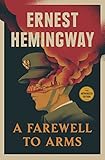
The Love Story: A Farewell to Arms (1929)
The best starting point for readers who want Hemingway’s full emotional range. Frederick Henry’s love for Catherine Barkley, conducted against the violence and chaos of the Italian campaign in the First World War, is the most romantic thing Hemingway wrote — and also the most brutal. The retreat from Caporetto, one of the great set-pieces in American fiction, demonstrates Hemingway’s ability to render mass historical experience through precise individual observation. The novel’s ending refuses consolation and remains, eighty years later, genuinely devastating.
The Shortest: The Old Man and the Sea (1952)
The most accessible single Hemingway text — the novella for which he won the Nobel Prize, and the most concentrated statement of his themes. Santiago, the old Cuban fisherman, battles a great marlin in the Gulf Stream for three days, alone. The novella is simultaneously a simple story of endurance and a meditation on what it means to try fully and fail without disgrace. At around 130 pages, it can be read in an afternoon and serves as the ideal introduction to Hemingway’s worldview for readers who are uncertain about committing to a full novel.
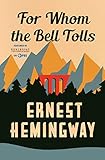
The Epic: For Whom the Bell Tolls (1940)
Hemingway’s longest and most ambitious novel — set in Spain during the Civil War, in which the American Robert Jordan is tasked with blowing up a bridge behind enemy lines. The novel compresses a few days into a vast meditation on loyalty, courage, love, and political idealism. Maria and Jordan’s love story is Hemingway’s most fully developed romantic relationship; Pilar, the leader of the partisan band, is his most complex female character. Best approached after The Sun Also Rises and A Farewell to Arms.
The Memoir: A Moveable Feast (1964)
Hemingway’s posthumously published memoir of Paris in the 1920s — his years with Hadley, his friendships with Gertrude Stein, Ezra Pound, F. Scott Fitzgerald, and James Joyce, and his development as a writer. The book explains more about where Hemingway’s style came from than any critical study; it also contains some of the most beautiful descriptive prose he wrote. The account of Fitzgerald’s insecurity — and his wife Zelda’s role in it — is brilliant and probably unfair to both. Best read after at least one of the novels.
Hemingway’s Method
Hemingway’s ‘iceberg theory’ — that the dignity of a story’s movement comes from what the writer omits — is the key to reading him. When a character’s dialogue seems to be about something trivial, it is usually about something essential. When a scene ends without resolution, the resolution has already occurred in what was not said. Readers who try to read Hemingway quickly, skimming for plot, will miss what the novels are actually doing. Reading slowly, attending to what is absent from each scene, is the correct approach — and produces the experience of depth beneath the apparently simple surface.
Frequently Asked Questions
Where should I start with Ernest Hemingway?
The Sun Also Rises (1926) is the best starting point — a short, immediately engaging novel about a group of American and British expatriates in Paris and Pamplona in the 1920s, narrated by Jake Barnes, a veteran rendered impotent by a war wound. It is Hemingway's most characteristic novel: the dialogue is spare and exact, the action is concrete, and what matters most is never stated directly. A Farewell to Arms is the best starting point for readers who want a love story; The Old Man and the Sea for those who want the shortest possible introduction.
What is The Sun Also Rises about?
The Sun Also Rises (1926) follows Jake Barnes, an American journalist in Paris, and his circle of expatriates — including the writer Robert Cohn, the irresistible Brett Ashley, and the sportsman Mike Campbell — as they travel to Pamplona for the running of the bulls. The novel is an account of the 'Lost Generation' — the men and women whose capacity for normal emotional life was destroyed by the First World War — told through surface observation that implies everything it withholds. Brett and Jake's love for each other is the novel's centre; their inability to consummate it is its symbol.
What is Hemingway's style?
Hemingway's style — developed under the influence of Gertrude Stein and his journalism training — is characterised by short declarative sentences, Anglo-Saxon vocabulary, extreme compression, and the 'iceberg theory': the idea that the most important things in a story are never stated directly but implied by what is on the surface. Emotional content is conveyed through concrete action and dialogue rather than description or analysis. His dialogue is particularly distinctive: characters talk around what they mean, and the gap between what is said and what is felt generates the tension. The style is easy to read and very difficult to imitate.
Is A Farewell to Arms Hemingway's best novel?
A Farewell to Arms (1929) is probably Hemingway's most complete novel — a love story set against the Italian front in the First World War, in which the American ambulance officer Frederick Henry and the British nurse Catherine Barkley fall in love during the war's violence and attempt to escape it. The novel's final chapters are among the most devastating in American fiction. Some critics prefer The Sun Also Rises for its structural economy; others prefer A Farewell to Arms for its emotional range. Both are essential; the question is whether to begin with the more bitter or the more romantic of his visions.