Where to Start with John Steinbeck: A Reading Guide
Where to start with John Steinbeck — whether to begin with Of Mice and Men, The Grapes of Wrath, East of Eden, or Cannery Row. A complete reading guide.
John Steinbeck (1902–1968) is the most politically serious of the major American novelists of the mid-twentieth century — the writer whose fiction gave the most sustained and compassionate account of the American working class during the Depression and the post-war period. His major works — Of Mice and Men, The Grapes of Wrath, East of Eden — are simultaneously politically engaged and deeply humane, driven by a belief in human dignity that the social conditions he described constantly threatened. He won the Nobel Prize in Literature in 1962.
Where to Start
The Best Entry Point: Of Mice and Men (1937)
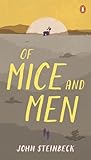
The perfect introduction to Steinbeck — his most concentrated and most moving work. The friendship between George and Lennie — the practical, quick-witted George who looks after the large, childlike Lennie — and the dream of their own farm (rabbits, alfalfa, their own space, freedom from exploitation) is Steinbeck’s most direct account of the relationship between human dignity and the American economic system. At approximately 100 pages, the novella can be read in an afternoon; its ending is prepared for throughout and still devastating. One of the most frequently assigned texts in American schools — and still one of the most emotionally powerful.
The Major Novel: The Grapes of Wrath (1939)
Steinbeck’s greatest achievement — and one of the most important American novels of the twentieth century. The Joads’ journey from Oklahoma to California, and what they find when they arrive, is the most sustained fictional account of the Great Depression and the experience of the American working class in the 1930s. Ma Joad — whose endurance and moral intelligence hold the family together through every catastrophe — is Steinbeck’s greatest characterisation. The novel’s final image (Rose of Sharon nursing a starving stranger with her milk) is one of the most discussed endings in American fiction: an act of pure human solidarity, offered without sentimentality.
The Ambitious Epic: East of Eden (1952)
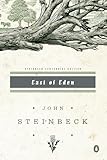
Steinbeck’s most ambitious and most personal novel — the book he described as the only one he ever wanted to write. The Trask and Hamilton families’ intertwined stories in the Salinas Valley across three generations are organised around the Cain and Abel story and the Hebrew word timshel: the possibility of moral choice. The character of Cathy/Kate — one of the great villains in American fiction, a woman apparently without empathy or moral capacity — is Steinbeck’s most psychologically extreme creation. At over 600 pages, it is his longest and most complex novel; the best approach after Of Mice and Men and The Grapes of Wrath.
The Warm California Novel: Cannery Row (1945)
Steinbeck’s most affectionate novel — an episodic celebration of the sardine-canning community on Monterey’s Cannery Row and the people who inhabit it: Doc (based on Steinbeck’s closest friend, the marine biologist Ed Ricketts), Mack and the boys, Lee Chong the grocer, Dora the brothel-keeper. The novel has almost no plot; it is a portrait of a community and a moment, written with a warmth and humour that the grimness of The Grapes of Wrath and the ambition of East of Eden does not quite allow. The best entry point for readers who want Steinbeck’s lighter, more comic side.
The Pearl (1947)
A short novel — almost a fable — based on a Mexican folk tale. Kino, a poor pearl diver, finds the ‘Pearl of the World’, and what the pearl does to him and his family is Steinbeck’s most concentrated account of how material wealth corrupts and destroys. Simple, direct, and very fast; appropriate for reading alongside Of Mice and Men as a companion study in how Steinbeck uses extreme narrative economy to make large moral arguments.
Why Of Mice and Men Is the Ideal First Book
For a reader new to John Steinbeck, the Nobel Prize-winning American novelist, Of Mice and Men is the ideal first book because it is his most concentrated and accessible work and a perfect expression of his distinctive gifts, the deep compassion, the vivid characterization, and the powerful engagement with ordinary, struggling people. Of Mice and Men tells the story of two migrant workers, the practical George and the gentle, powerful Lennie, and their dream of a better life, in a short, moving, and unforgettable novel. As an entry point it is ideal, for it is brief, accessible, and among his most beloved works, a perfect introduction to his compassionate, powerful fiction. It welcomes the newcomer with its compelling characters, its emotional power, and its deep compassion, drawing the reader into his distinctive vision. It is among his most famous works and a fine representation of his gifts, so the new reader encounters Steinbeck at his most accessible. For the newcomer, then, Of Mice and Men is the natural and ideal starting point.
What to Expect as a New Reader
As a new reader, you can expect Of Mice and Men to be a short, moving, and unforgettable novel. You can expect a compelling story, for the novel follows two migrant workers, the practical George and the gentle, powerful Lennie, and their dream of a better life. You can expect deep compassion, for Steinbeck renders his struggling characters with profound sympathy. You can expect vivid characterization, for the friendship at the heart of the novel is movingly drawn. You can expect powerful engagement with ordinary people, with poverty, loneliness, and dreams during the Great Depression. You can expect emotional power and a tragic dimension. You can expect a brief, accessible, and deeply affecting read. You should be prepared for a moving and tragic conclusion. Expect, in short, a short, moving, and unforgettable novel, a perfect introduction to Steinbeck’s gifts.
Going Deeper After Your First Book
Once Of Mice and Men has introduced you to Steinbeck’s gifts, the reader who wishes to go deeper can explore his other novels, which continue his deep compassion, his vivid characterization, and his powerful engagement with ordinary, struggling people, often during the Great Depression. His masterpiece, the great novel of a family driven from their land and journeying west in search of a better life, is among the most powerful in American literature, while his other beloved works, including his sweeping family saga and his warm, humane novels of California life, extend his vision. Reading these after Of Mice and Men deepens your appreciation of Steinbeck’s distinctive gifts, the deep compassion, the vivid characterization, and the powerful engagement with ordinary people. His characteristic concerns run through his work. Building your reading journey through Steinbeck is a matter of following his fiction from Of Mice and Men into his other novels. The reader who begins here and continues will encounter one of the great and most compassionate American novelists, and a Nobel laureate.
Reading Steinbeck
Steinbeck’s prose is direct, concrete, and warm — closer to Hemingway than to Faulkner in its plainness, but more emotionally generous than either. His landscapes are rendered with extraordinary precision (the Salinas Valley in East of Eden, the Oklahoma Panhandle in The Grapes of Wrath, the Monterey waterfront in Cannery Row); his characters are full of dignity even when the systems they inhabit deny it. The best approach is to read him slowly and attend to his physical descriptions, which are never merely decorative but always part of the emotional argument.
Frequently Asked Questions
Where should I start with John Steinbeck?
Of Mice and Men (1937) is the best starting point — a short novella (about 100 pages) about two itinerant ranch workers, the quick-witted George and the large, gentle, mentally limited Lennie, who dream of owning their own farm. The novella is Steinbeck's most concentrated and most moving work: its ending is inevitable and devastating, and the friendship it portrays — the loyalty between two men who have no one else — is one of the most affecting in American fiction. The Grapes of Wrath is the best starting point for readers who want Steinbeck's full scope; East of Eden for those who want his most ambitious novel.
What is The Grapes of Wrath about?
The Grapes of Wrath (1939) follows the Joad family — Tom, Ma, Pa, Granma, Grampa, Rose of Sharon, and the others — as they flee the Oklahoma Dust Bowl for California, where they have been promised work and a better life. What they find in California is exploitation, violence, and contempt. The novel is simultaneously an account of the specific historical catastrophe of the Dust Bowl and the Great Depression and a more general account of how working-class Americans have been treated by the economic system. It won both the Pulitzer Prize and the National Book Award and was described by Roosevelt as having done more for farm labour than any piece of legislation.
Is East of Eden Steinbeck's best novel?
East of Eden (1952) is Steinbeck's most ambitious novel — a multi-generational epic set in the Salinas Valley of California, tracing the intertwined stories of two families (the Trasks and the Hamiltons) across three generations. The novel's central argument is drawn from the Hebrew word 'timshel' (thou mayest) in the Cain and Abel story: the possibility of choosing good over evil, which Steinbeck presents as the most important truth in human life. At over 600 pages, it is Steinbeck's most sustained achievement; it is also, for many readers, his most personally felt work — he described it as the book he always wanted to write.
What is Cannery Row about?
Cannery Row (1945) is Steinbeck's most relaxed and most affectionate novel — an episodic account of life on Cannery Row in Monterey, California, the sardine canning district, focusing on the marine biologist Doc (based on Steinbeck's friend Ed Ricketts), Mack and the boys who live in a converted fish house, and the various colourful inhabitants of the Row. The novel has almost no plot: it is a celebration of a community, a moment, and a way of life that was disappearing. Written after the grimness of The Grapes of Wrath, it is Steinbeck's warmest and most comic work.