Where to Start with Kazuo Ishiguro: A Reading Guide
Where to start with Kazuo Ishiguro — whether to begin with The Remains of the Day, Never Let Me Go, or Klara and the Sun. A complete reading guide.

Kazuo Ishiguro (born 1954) won the Nobel Prize in Literature in 2017 — the prize committee describing his novels as those that ‘uncovered the abyss beneath our illusory sense of connection with the world.’ His seven novels, each formally inventive and emotionally devastating, constitute one of the most consistent bodies of work in contemporary British fiction. His central achievement is the unreliable narrator who cannot see what they are telling us: Stevens’s self-deception in The Remains of the Day, Kathy’s suppressed grief in Never Let Me Go, the nameless Axl and Beatrice’s fading memories in The Buried Giant.
Where to Start
The Essential Novel: The Remains of the Day (1989)
The ideal first Ishiguro — and one of the greatest English novels of the past fifty years. Stevens’s motor journey through the West Country is simultaneously a physical journey and a psychological excavation: as he drives and reflects, the reader gradually perceives everything that Stevens cannot acknowledge — that his devoted service to Lord Darlington was service to a Nazi sympathiser, that his rigid concept of ‘dignity’ has prevented him from having any human life, that he allowed his love for Miss Kenton to go unacknowledged because to acknowledge it would have been to admit that he had desires beyond his professional role. The novel’s ending — Stevens’s realisation on a pier at Weymouth — is one of the most restrained and most devastating in contemporary fiction.
The Speculative Novel: Never Let Me Go (2005)
Ishiguro’s most widely read novel — and the most immediately emotional. Kathy’s account of her childhood at Hailsham and her adult life as a ‘carer’ and ‘donor’ is told with a surface calm that masks the depth of her grief. The novel uses the science-fiction conceit of cloning not to explore its technological or ethical implications but to ask what it feels like to know you will die, and what choices remain available to you within that knowledge. The relationship between Kathy, Ruth, and Tommy — the loves and betrayals and reconciliations — is Ishiguro’s most humanly generous fiction.
The Fantasy Novel: The Buried Giant (2015)
Ishiguro’s most formally experimental novel — set in post-Arthurian Britain, in which a strange mist has caused everyone to forget the recent past. The elderly couple Axl and Beatrice travel to find their son, accompanied by a Saxon warrior and the knight Sir Gawain, and the novel’s central question gradually reveals itself: whether the forgetting that has brought a fragile peace to a recently war-torn society can survive the recovery of memory. The fantasy framework is Ishiguro’s vehicle for his most direct meditation on the relationship between memory and identity, and on whether some truths are better left unexcavated.
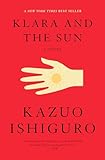
Klara and the Sun (2021)
Ishiguro’s most recent novel — narrated by Klara, an Artificial Friend (a humanoid robot designed to be a companion to children), who observes the human world with deep attention and misunderstands it systematically in ways that reveal more about human behaviour than the humans themselves perceive. The novel is Ishiguro’s meditation on consciousness, love, and what it means to sacrifice yourself for someone you love — questions raised by artificial intelligence but answered in fully human terms. The best of his later novels; not a starting point.
Why The Remains of the Day Is the Ideal First Book
For a reader new to Kazuo Ishiguro, the Nobel Prize-winning novelist, The Remains of the Day is the ideal first book because it is among his finest and most beloved novels and the fullest expression of his distinctive gifts, the restrained and precise prose, the masterful use of an unreliable narrator, and the profound exploration of memory, regret, and self-deception. The Remains of the Day follows an aging English butler on a motoring journey through the countryside, which becomes a quiet, devastating reckoning with his life, his loyalty, and his missed chances. As an entry point it is ideal, for it is one of his most celebrated works and a perfect example of his subtle, emotionally profound fiction. It welcomes the newcomer with its compelling narrator, its restrained beauty, and its emotional depth, drawing the reader into his distinctive vision. It is among his major works and the one that best represents his gifts, so the new reader encounters Ishiguro at his finest. For the newcomer, then, The Remains of the Day is the natural and ideal starting point.
What to Expect as a New Reader
As a new reader, you can expect The Remains of the Day to be a restrained, precise, and profoundly moving novel. You can expect a compelling narrator, for the novel follows an aging English butler whose dignified, repressed voice masks deep emotion. You can expect masterful unreliable narration, for the butler’s account reveals, through what it conceals, the truths he cannot face. You can expect restrained, precise prose, for Ishiguro writes with great subtlety, control, and quiet beauty. You can expect a profound exploration of memory, regret, loyalty, and self-deception, as the journey becomes a reckoning with a life. You can expect emotional depth achieved through understatement. You can expect a quietly devastating read. You should expect a subtle novel that rewards attentive reading. Expect, in short, a restrained, precise, and profoundly moving novel, a superb introduction to Ishiguro’s gifts.
Going Deeper After Your First Book
Once The Remains of the Day has introduced you to Ishiguro’s gifts, the reader who wishes to go deeper can explore his other novels, which continue his restrained prose, his masterful narration, and his profound exploration of memory, loss, and self-deception across a remarkable range of settings and genres. His haunting Never Let Me Go brings his subtle, devastating art to a speculative premise, while his earlier novels of postwar Japan and England, his ambitious later works, and his fantastical and science-fictional fiction reveal the breadth of his vision. Reading these after The Remains of the Day deepens your appreciation of Ishiguro’s distinctive gifts, the restrained and precise prose, the masterful narration, and the profound exploration of memory and regret. His characteristic concerns run through his work. Building your reading journey through Ishiguro is a matter of following his fiction from The Remains of the Day into his other novels. The reader who begins here and continues will encounter one of the most subtle and profound novelists of our time, and a Nobel laureate.
When We Were Orphans (2000)
Ishiguro’s most enigmatic novel — the one that most explicitly disrupts the boundary between reliable and unreliable narration. Christopher Banks, a celebrated English detective, returns to Shanghai in 1937 to find the parents who disappeared when he was a child, and the novel’s final section abandons any pretense of realism as Christopher moves through a version of the Shanghai war that is entirely subjective and dreamlike. The novel divides readers most sharply; some find it Ishiguro’s most disturbing achievement; others find it a misstep. Best approached after The Remains of the Day and Never Let Me Go.
Frequently Asked Questions
Where should I start with Kazuo Ishiguro?
The Remains of the Day (1989) is the essential starting point — the Booker Prize-winning novel in which Stevens, an English butler, takes a rare motor trip through the West Country while reflecting on his decades of service and his suppressed love for the housekeeper Miss Kenton. The novel is Ishiguro's most perfect work and the finest demonstration of his central technique: the narrator who deceives himself, whose account of his life reveals far more than he intends or acknowledges. Never Let Me Go is the best alternative starting point for readers who want his speculative fiction.
What is The Remains of the Day about?
The Remains of the Day (1989) follows Stevens, the consummate English butler, on a motor journey through the West Country to visit Miss Kenton, the former housekeeper with whom he worked at Darlington Hall for many years and who has now written him a letter suggesting her marriage is failing. Stevens's reflections on his career — his concept of 'dignity', his service to Lord Darlington, his suppression of every personal feeling in the service of professional duty — gradually reveal that his entire life has been organized around a mistaken principle of self-denial, and that he allowed the one relationship that might have given him happiness to slip away because he refused to acknowledge it. Ishiguro's most perfect novel and one of the greatest in contemporary literature.
What is Never Let Me Go about?
Never Let Me Go (2005) follows Kathy H., who narrates the story of her childhood at Hailsham, an English boarding school, and her friendships with Ruth and Tommy. The novel's central revelation — which Ishiguro delays revealing directly, though it becomes gradually clear — is that Kathy and her fellow students are clones, bred to donate their organs as adults. The novel is not primarily a science-fiction novel about cloning but a meditation on mortality: the knowledge that you will die at a specific age, that your life is organized around this knowledge, and what this means for the choices available to you. One of the most moving novels of the past twenty years.
What is Ishiguro's writing style?
Ishiguro's novels are all written in the first person, and all employ the same fundamental technique: a narrator whose account of their own life is systematically unreliable — not because they lie but because they cannot or will not see what they are telling us. Stevens cannot acknowledge that his loyalty to Lord Darlington was misplaced; Kathy cannot acknowledge the extent of her own grief; the narrator of A Pale View of Hills cannot acknowledge what she is telling us about her daughter's death. The tension between what the narrator says and what the reader perceives is the primary source of Ishiguro's emotional power. Reading him slowly and skeptically — asking 'what is this narrator not saying?' — produces the richest experience.