Where to Start with Kurt Vonnegut: A Reading Guide
Where to start with Kurt Vonnegut — whether to begin with Slaughterhouse-Five, Cat's Cradle, or Breakfast of Champions. A complete reading guide to Vonnegut's novels.
Kurt Vonnegut (1922–2007) is the most beloved American satirist of the twentieth century — the novelist whose dark comedy about war, science, and the absurdity of American life made him both a popular and a critical success in a way that few writers achieve. His method — short chapters, science fiction elements deployed to expose the absurdity of reality, recurrent motifs (‘So it goes’; ‘Poo-tee-weet’), and an authorial persona of wounded bewilderment — is entirely distinctive and immediately recognisable. His best novels are also his most accessible: Slaughterhouse-Five, Cat’s Cradle, The Sirens of Titan.
Where to Start
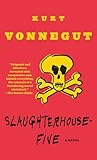
The Essential Novel: Slaughterhouse-Five (1969)
Vonnegut’s masterpiece and the definitive starting point. Billy Pilgrim’s unstuck relationship with time — his simultaneous existence in Dresden in 1945, on Tralfamadore as an alien exhibit, and at various points in his comfortable American postwar life — is Vonnegut’s formal solution to the problem of writing about Dresden. The firebombing was an atrocity; it was also absurd; it killed more people than Hiroshima and was almost completely ignored by the culture; and Billy’s experience of it cannot be rendered in any conventional narrative form. The novel’s recurrent ‘So it goes’ (said every time death is mentioned, which is very often) is both comedy and elegy.
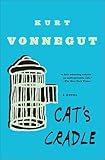
The Satirical Novel: Cat’s Cradle (1963)
Vonnegut’s most purely satirical novel — a black comedy about the invention of the atomic bomb, the religion of ‘Bokononism’ (a faith built on lies whose believers know are lies), and the end of the world by Ice-Nine. The novel is faster and more formally conventional than Slaughterhouse-Five; its comedy is darker and its nihilism more absolute. Bokonon’s ‘foma’ (harmless untruths that give meaning to life) is Vonnegut’s most direct engagement with the question of how human beings sustain meaning in a universe that doesn’t offer it. Many readers consider Cat’s Cradle his greatest novel; it makes an excellent second Vonnegut.
The Sirens of Titan (1959)
Vonnegut’s second novel and the one that established his method — a science fiction framework (the richest man in America travels through the solar system, encountering determinism, Martian invasion, and the revelation that human history has been shaped by alien intervention) deployed to raise philosophical questions about free will, meaning, and the nature of happiness. The novel is less formally inventive than Slaughterhouse-Five and less politically sharp than Cat’s Cradle, but it is very funny and surprisingly moving, especially in its final pages.
Breakfast of Champions (1973)
Vonnegut’s most explicitly metafictional novel — a work in which he appears as a character, giving his fictional creations their ‘freedom’, and in which the narrative is illustrated by his own crude drawings. The novel is Vonnegut’s most direct statement of his themes: that American culture is built on fictions (about success, about freedom, about progress) that damage the people who believe them, and that the artist’s job is to expose these fictions and absorb their consequences. More of an aesthetic statement than a fully achieved novel; best read after Slaughterhouse-Five and Cat’s Cradle.
Why Slaughterhouse-Five Is the Ideal First Book
For a reader new to Kurt Vonnegut, Slaughterhouse-Five is the ideal first book because it is his masterpiece and the fullest expression of his distinctive gifts, the dark humor, the humane vision, and the inventive blend of science fiction, satire, and anti-war witness. Slaughterhouse-Five follows Billy Pilgrim, who becomes unstuck in time, living simultaneously through his experience as a prisoner of war during the firebombing of Dresden, his postwar life, and his abduction by aliens, in a profound and darkly comic meditation on war, time, and free will. As an entry point it is ideal, for it is his most celebrated work and a perfect example of his inventive, humane, and darkly funny fiction. It welcomes the newcomer with its inventive structure, its dark humor, and its profound anti-war vision, drawing the reader into his distinctive imagination. It is his masterpiece, so the new reader encounters Vonnegut at his finest. For the newcomer, then, Slaughterhouse-Five is the natural and ideal starting point.
What to Expect as a New Reader
As a new reader, you can expect Slaughterhouse-Five to be an inventive, darkly funny, and profoundly humane anti-war novel. You can expect an inventive structure, for the protagonist becomes unstuck in time, living his life out of order across war, peace, and an alien planet. You can expect dark humor, for Vonnegut blends comedy, absurdity, and tragedy, with his famous refrain, so it goes. You can expect an anti-war vision, for the novel draws on Vonnegut’s own experience of the firebombing of Dresden to bear witness to the horror and absurdity of war. You can expect science-fiction elements alongside autobiography and satire. You can expect a humane, compassionate, and resigned wisdom about fate, time, and free will. You can expect a short, accessible, and unforgettable novel. Expect, in short, an inventive, darkly funny, and profoundly humane anti-war novel, a perfect introduction to Vonnegut’s gifts.
Going Deeper After Your First Book
Once Slaughterhouse-Five has introduced you to Vonnegut’s gifts, the reader who wishes to go deeper can explore his other novels, which continue his dark humor, his humane vision, and his inventive blend of science fiction and satire. His other beloved works satirize subjects from free will and technology to wealth, war, and the human condition, often featuring his recurring characters and his distinctive, conversational, darkly funny voice, while his essays and collections reveal his warmth and wisdom directly. Reading these after Slaughterhouse-Five deepens your appreciation of Vonnegut’s distinctive gifts, the dark humor, the humane vision, and the inventive satire. His characteristic voice runs through his work, and the reader who has enjoyed Slaughterhouse-Five will find it across his novels. Building your reading journey through Vonnegut is a matter of following his fiction from Slaughterhouse-Five into his other novels and essays. The reader who begins here and continues will find one of the most humane, funny, and beloved American writers of the twentieth century.
Vonnegut’s Method
Vonnegut’s prose is deliberately simple — short sentences, frequent paragraph breaks, a narrative voice that is conversational and self-deprecating. His science fiction elements are not predictions or speculations but satirical devices: the Tralfamadorians’ view of time as a fixed structure allows him to write about death without the consolations of tragedy; the concept of Ice-Nine allows him to make the end of the world feel ridiculous rather than apocalyptic. The best preparation for reading Vonnegut is simply to trust the apparent simplicity of his style: the darkness underneath is real, but it is rendered with a warmth and humour that makes it bearable.
Frequently Asked Questions
Where should I start with Kurt Vonnegut?
Slaughterhouse-Five (1969) is the best starting point — Vonnegut's most celebrated novel and the most fully realised expression of his method: the mixture of science fiction, autobiography, black comedy, and anti-war sentiment that makes him unlike anyone else. The novel follows Billy Pilgrim, who has become unstuck in time and who experiences the firebombing of Dresden (which Vonnegut survived as a prisoner of war) alongside his kidnapping by aliens and his peaceful death in the future. Cat's Cradle is the best alternative starting point for readers who want Vonnegut's satirical mode at its purest.
What is Slaughterhouse-Five about?
Slaughterhouse-Five (1969) follows Billy Pilgrim, an American soldier and prisoner of war who survived the Allied firebombing of Dresden in February 1945 and who has become 'unstuck in time' — he experiences the events of his life in random order, including his future death and his captivity on the planet Tralfamadore, whose inhabitants perceive all moments simultaneously and therefore have no word for death. The novel is structured around Vonnegut's own inability to write about Dresden — which he witnessed as a prisoner of war — and its recurrent phrase 'So it goes' (used whenever death is mentioned) is one of the great stylistic innovations in American fiction.
What is Cat's Cradle about?
Cat's Cradle (1963) follows the narrator John, who is researching a book about the inventor of the atomic bomb and becomes entangled with the Bokononist religion (founded on 'foma', comforting lies) and the island nation of San Lorenzo. The novel builds to the end of the world — brought about by Ice-Nine, a substance invented by the atomic bomb's creator that freezes all water it touches — with a black comedy that has made it one of the most frequently assigned novels in American universities. Its satire of American science, religion, and Cold War politics is Vonnegut at his most concentrated.
Is Vonnegut appropriate for young adults?
Vonnegut is frequently read by teenagers and frequently assigned in high school — Slaughterhouse-Five in particular, though it has also been one of the most frequently banned books in American schools. His novels are accessible in style (short sentences, short chapters, digressive but never obscure), emotionally immediate, and morally serious in ways that resonate strongly with young readers who are beginning to form views about war, injustice, and authority. The science fiction elements make the philosophy easier to absorb; the black comedy makes the difficult content bearable. He is, arguably, the ideal gateway novelist to both literary fiction and anti-war literature.