Editors Reads Verdict
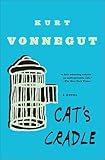
Cat's Cradle is Vonnegut's most formally inventive novel and arguably his darkest — a satire of science, religion, nationalism, and human self-destructiveness so thorough that its comedy feels like the only honest response to its own argument. The invention of Bokononism alone would secure its place in American letters.
What We Loved
- Bokononism is one of American literature's great comic-philosophical inventions
- The novel's formal fragmentation — 127 micro-chapters — is precisely right for its subject matter
- The satire of American scientific and military culture has only sharpened with age
- The ending is one of the most unforgettable in twentieth-century fiction
Minor Drawbacks
- The plot is looser than Vonnegut's other novels — less a story than an accumulation of insights
- Some characters are more satirical types than fully realised people
- The San Lorenzo sections require patience before their purpose becomes clear
Key Takeaways
- → All religions are lies, but some lies are more useful than others — Bokononism's founding insight
- → Scientific knowledge without ethical constraint is the most dangerous force human beings possess
- → Nationalism is a story people tell themselves that makes catastrophe easier to accept
- → The form of a book is itself an argument — Vonnegut's fragments enact the fragmented world they describe
- → Humanity's capacity for self-destruction is not a design flaw but the logical outcome of its design features
| Author | Kurt Vonnegut |
|---|---|
| Publisher | Dial Press |
| Pages | 287 |
| Published | January 1, 1963 |
| Language | English |
| Genre | Science Fiction, Satire, Fiction, Classic |
| Difficulty | Intermediate |
| Best For | Readers who enjoyed Slaughterhouse-Five and want more Vonnegut; fans of satirical science fiction; anyone interested in mid-century American fiction that anticipated the absurdism of contemporary life. |
How Cat's Cradle Compares
Cat's Cradle at a glance against 3 similar books readers weigh alongside it.
| Book | Author | Rating | Best for |
|---|---|---|---|
| Cat's Cradle (this book) | Kurt Vonnegut | ★ 4.2 | Readers who enjoyed Slaughterhouse-Five and want more Vonnegut |
| 1984 | George Orwell | ★ 4.7 | Every adult in a democracy |
| Brave New World | Aldous Huxley | ★ 4.5 | Readers of 1984 and other dystopian fiction, philosophy and ethics enthusiasts, |
| Slaughterhouse-Five | Kurt Vonnegut | ★ 4.5 | Literary fiction readers, antiwar literature enthusiasts, and anyone seeking |
Ice-Nine and the Logic of Apocalypse
A narrator who calls himself John — though he was to have been christened Jonah — sets out to write a book about what important Americans were doing on the day Hiroshima was bombed. His research leads him to the children of Felix Hoenikker, one of the fathers of the atomic bomb, and to the discovery that Hoenikker left behind something potentially more dangerous than nuclear fission: ice-nine, a polymorph of water that freezes solid at room temperature and converts any water it touches into more of itself.
The premise is pure Vonnegut: terrible, logical, and delivered with the deadpan inevitability of a punchline whose setup has been building since the first sentence. Cat’s Cradle, published in 1963, is both his most formally radical novel and his funniest — which is to say it is also his most despairing. The comedy is not relief from the darkness but the only register in which the darkness can be honestly stated.
Bokononism: A Religion for Adults
The novel’s philosophical achievement is Bokononism, the religion of the fictional Caribbean island of San Lorenzo. Founded on what its creator acknowledges are lies — foma, harmless untruths — Bokononism offers its adherents comfort, meaning, and community, while its founding text openly admits that none of its metaphysical claims should be believed. The spiritual practice of boko-maru, the touching of bare feet sole-to-sole, is described as a genuine human connection available even within a system that concedes its own falseness.
Vonnegut is not endorsing religion so much as he is asking what it would look like if a religion were honest about what religions actually do. The answer, Bokononism suggests, is that people would practice it anyway — because the need it meets is real even if its claims are not. This is either the most comforting or the most desolating idea in the novel, depending on where you stand.
The Form Matches the Argument
Cat’s Cradle is divided into 127 chapters, many of them less than a page long. This formal fragmentation is not stylistic showing-off but structural argument: the novel is about a world that cannot be held together, and its form refuses to pretend otherwise. Each micro-chapter arrives and departs before it can accumulate the kind of authority that would let the reader feel secure.
The novel traces a journey from New York to San Lorenzo that ends in global catastrophe brought about not by malice but by carelessness — the casual, distracted carelessness of people who were too intelligent to think about consequences. This is Vonnegut’s consistent accusation against the twentieth century: that its disasters were committed not by monsters but by the ordinarily inattentive.
The Ending
Without describing it, the ending of Cat’s Cradle is one of the most perfectly calibrated in American fiction — absurdist, terrible, and somehow exactly right. Vonnegut earns it across every preceding page.
Our rating: 4.2/5
The Scientist Without Conscience
The cold heart of Cat’s Cradle is Felix Hoenikker, the fictional father of the atomic bomb, who is dead before the novel begins but presides over it like a malign absence. Vonnegut renders him not as a villain but as something more disturbing: a man of pure, childlike scientific curiosity entirely severed from any sense of consequence. He plays cat’s cradle with a loop of string on the day the bomb he helped build incinerates Hiroshima; he develops ice-nine because a general idly wished for a way to eliminate mud, never once asking what would happen if the substance escaped. Through Hoenikker, Vonnegut delivers his most pointed accusation against the twentieth century — that its great catastrophes were authored not by monsters but by brilliant, distracted, morally vacant men who simply did not think about where their cleverness led. His three children, who inherit chips of ice-nine and carry them carelessly into the world, are the human chain by which his thoughtlessness becomes apocalypse.
The Last Laugh
The journey to the impoverished island of San Lorenzo, where the dictator “Papa” Monzano rules and Bokononism is officially banned precisely so that it can be more deliciously believed, gathers all of Vonnegut’s targets — science, religion, nationalism, the American abroad — into a single accelerating farce. The novel’s dread builds beneath its comedy until the moment ice-nine reaches the sea, and the deadpan jokes that have carried the reader this far suddenly reveal the abyss they were drawn over. Vonnegut’s refusal to separate the funny from the terrible is the whole achievement: the laughter is not relief from the horror but the only honest register in which the horror can be spoken. The final image — narrated through the calm, ruined voice of Bokononism — is among the most perfectly calibrated endings in American fiction, absurd and devastating and exactly right. Cat’s Cradle asks whether humanity’s appetite for self-destruction is an accident or a design feature, and its answer, delivered with a grin, is the bleakest thing in the book.
The Argument of the Form
Part of what makes Cat’s Cradle endure is that its fragmentation is itself an argument. The 127 micro-chapters, many less than a page, refuse to let the reader settle into the false security of a coherent narrative, enacting at the level of form the disintegrating world the novel describes. Bokononism — the religion founded openly on lies that admit to being lies — is one of American literature’s great comic-philosophical inventions, and its founding insight, that all religions are untrue but some untruths are more useful than others, gives Vonnegut a way to satirise faith without simply dismissing the human need it serves. The satire of American scientific and military culture, embodied in the careless brilliance of Felix Hoenikker, has only sharpened with age, as has the novel’s warning that knowledge without ethical constraint is the most dangerous force human beings possess. Nationalism, science, religion, and the casual carelessness of clever people are all gathered into a single accelerating farce, and the comedy never loosens its grip on the dread beneath it. Cat’s Cradle is looser in plot than Vonnegut’s other novels — less a story than an accumulation of insights — but that looseness is part of the design, and the ending earns its place among the most unforgettable in twentieth-century fiction.
Frequently Asked Questions
What is "Cat's Cradle" about?
A writer researching the life of the atomic bomb's inventor discovers ice-nine — a form of water that freezes solid at room temperature — in the hands of dangerous and careless people. Vonnegut's darkest comedy.
Who should read "Cat's Cradle"?
Readers who enjoyed Slaughterhouse-Five and want more Vonnegut; fans of satirical science fiction; anyone interested in mid-century American fiction that anticipated the absurdism of contemporary life.
What are the key takeaways from "Cat's Cradle"?
All religions are lies, but some lies are more useful than others — Bokononism's founding insight Scientific knowledge without ethical constraint is the most dangerous force human beings possess Nationalism is a story people tell themselves that makes catastrophe easier to accept The form of a book is itself an argument — Vonnegut's fragments enact the fragmented world they describe Humanity's capacity for self-destruction is not a design flaw but the logical outcome of its design features
Is "Cat's Cradle" worth reading?
Cat's Cradle is Vonnegut's most formally inventive novel and arguably his darkest — a satire of science, religion, nationalism, and human self-destructiveness so thorough that its comedy feels like the only honest response to its own argument. The invention of Bokononism alone would secure its place in American letters.
Ready to Read Cat's Cradle?
Check the current price on Amazon.
Check Price on Amazon (paid link)Prices and availability are subject to change. See Amazon for current price.
Review last updated: