Where to Start with MJ DeMarco: A Reading Guide
Where to start with MJ DeMarco — how to approach The Millionaire Fastlane, his contrarian argument that conventional frugality-plus-index-funds advice optimises for the wrong goal, and that scalable business ownership is the only realistic path to rapid wealth. A complete reading guide.
By Marcus Webb
MJ DeMarco is an American entrepreneur and author who built a limousine booking website, sold it for a significant sum in his early thirties, and has been financially independent since. He subsequently wrote The Millionaire Fastlane (2011) and UNSCRIPTED (2017), self-publishing both through his own company Viperion Publishing and building substantial audiences through word of mouth rather than traditional publishing infrastructure. He is deliberately private about personal details and is known primarily through his books and his online forum, The Fastlane Forum. The Millionaire Fastlane has sold over half a million copies without major publisher backing and has become one of the most widely circulated contrarian personal finance books of the past decade.
Where to Start: The Millionaire Fastlane (2011)
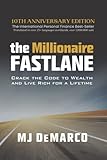
The Millionaire Fastlane was written for people who find the standard personal finance prescription — save 10%, invest in index funds, wait forty years — unacceptable on its own terms, and offers a different framework: wealth through value creation rather than deferred consumption. The Millionaire Fastlane opens with a provocation: the conventional financial advice that dominates the personal finance section — save 10 percent, live frugally, invest in index funds, wait — is not wrong exactly, but it optimises for the wrong thing. DeMarco’s core critique is not that the Slowlane strategy fails to produce wealth; it is that it produces wealth at the end of an active life rather than during it.
The Slowlane critique is the book’s most valuable section. DeMarco is willing to state plainly what most conventional personal finance books imply: that the strategy of accumulating savings across a forty-year career and retiring on them works, but that most of what makes life worth living — health, energy, time with people you choose, the capacity for adventure and experience — is disproportionately available in the active decades that the strategy requires you to spend building the accumulation. The critique is not that frugality is wrong; it is that optimising for wealth at sixty-five while deferring everything else to sixty-five is a strange way to organise a life.
The Fastlane framework centres on the CENTS commandments: a viable Fastlane business should address genuine Need (not a product the entrepreneur finds interesting but one the market demonstrably wants), have potential for Scale (the income should not be directly tied to the number of hours the owner works), give the owner Control (franchises and employment relationships transfer too much control to others), have meaningful barriers to Entry (easily replicated businesses get replicated), and have a Time decoupling component (the business should generate income while the owner sleeps). These are useful filters for evaluating business ideas before committing significant effort to them.
The execution section is where the book’s limitations are most apparent. Knowing what a good business looks like and building one are different problems, and DeMarco’s guidance on the second is significantly thinner than on the first. The CENTS criteria are necessary but not sufficient; the book is most useful as a framework for clarifying what you are trying to build rather than as a practical manual for building it.
Why The Millionaire Fastlane Is the Ideal First Book
For a reader new to MJ DeMarco, The Millionaire Fastlane is the ideal first book because it is his breakout work and the fullest expression of his distinctive, provocative philosophy of wealth, entrepreneurship, and rejecting the conventional path to riches. The Millionaire Fastlane argues against the slow, traditional path of saving for decades, and makes the case instead for building wealth through entrepreneurship and creating value at scale. As an entry point it is ideal, for it is his best-known book and the fullest statement of his contrarian approach to wealth. It welcomes the newcomer with its provocative arguments, its blunt and energetic style, and its entrepreneurial focus, drawing the reader into his distinctive perspective. Readers are wise to engage critically, weighing his bold claims and recognizing that entrepreneurship carries real risk. It is his defining work and the one that best represents his ideas, so the new reader encounters DeMarco directly. For the newcomer drawn to his perspective, then, The Millionaire Fastlane is the natural starting point, best approached thoughtfully.
What to Expect as a New Reader
As a new reader, you can expect The Millionaire Fastlane to be a provocative, blunt, and energetic book about wealth and entrepreneurship. You can expect a contrarian argument, for DeMarco rejects the conventional advice of saving slowly for decades, which he calls the slowlane, in favor of building wealth through entrepreneurship. You can expect a focus on creating value at scale, for DeMarco argues that real wealth comes from businesses that serve many people. You can expect a blunt, energetic, and opinionated style. You can expect an emphasis on mindset, control, and taking ownership of one’s financial life. You can expect bold claims and a strong point of view, which the thoughtful reader weighs critically, recognizing that entrepreneurship carries real risk and that results vary widely. Expect, in short, a provocative, blunt, and energetic book about wealth and entrepreneurship, an introduction to DeMarco’s contrarian ideas best read thoughtfully.
Going Deeper After Your First Book
Once The Millionaire Fastlane has introduced you to DeMarco’s ideas, the reader who wishes to go deeper can explore his other books, which extend and refine his entrepreneurial philosophy, while continuing to read with a critical eye. His follow-up works develop his thinking on the mindset and habits of wealth and on the principles of building a successful business, building on the foundation of his first book. The reader can also place his contrarian approach within the wider literature of entrepreneurship and wealth-building, weighing his bold claims against other perspectives and against the real risks of starting a business. Reading more widely deepens your engagement with DeMarco’s distinctive perspective. His characteristic emphasis on entrepreneurship and value creation runs through his work. Building your reading journey from The Millionaire Fastlane is a matter of following his ideas into his other books and the wider entrepreneurship literature. The reader who begins here will have encountered a provocative, contrarian voice on wealth and entrepreneurship.
Reading MJ DeMarco
The Millionaire Fastlane is DeMarco’s essential book and the place to start. UNSCRIPTED (2017) provides more depth on escaping the employee mindset and building a life around the Fastlane principles for readers who want to continue.
For the full MJ DeMarco bibliography, reviews, and biography, visit the MJ DeMarco author page on Editors Reads.
Affiliate disclosure: Links to Amazon on this page are affiliate links. We earn a small commission at no extra cost to you.
Frequently Asked Questions
Where should I start with MJ DeMarco?
The Millionaire Fastlane: Crack the Code to Wealth and Live Rich for a Lifetime (2011) is DeMarco's essential book — a deliberately contrarian argument against the dominant personal finance orthodoxy. DeMarco is a self-made entrepreneur who built and sold a limousine booking website and has been financially independent since his early thirties. The book's central argument is that conventional advice — spend less, save more, invest in index funds, wait until you are sixty-five — optimises for wealth in old age at the cost of the active decades of your life. His alternative is to build a scalable business where income is not directly tied to your time, which he calls the Fastlane.
What is The Millionaire Fastlane about?
DeMarco identifies three financial paths: the Sidewalk (spending everything, no savings, living for the present), the Slowlane (conventional frugality plus long-term investing, which he argues delivers wealth only after most of your active life has passed), and the Fastlane (building a scalable business that can generate wealth rapidly and without requiring your constant time). His critique of the Slowlane is incisive: the strategy works, but its payoff comes in your sixties when many of the experiences money enables are less available. The Fastlane argument centres on what he calls the five commandments for business viability: the business should provide genuine Need, have potential for Scale, the owner should maintain Control, have a barrier to Entry, and generate income that is not directly tied to Time.
What are the legitimate criticisms of The Millionaire Fastlane?
DeMarco's writing style is aggressive and occasionally alienating — the book has a self-congratulatory quality that some readers find off-putting. More substantively, the Fastlane argument involves significant survivorship bias: DeMarco built one successful business and presents that as a template; most businesses fail, and the book does not adequately engage with the execution difficulty of building a genuinely scalable business with high barriers to entry. The CENTS framework (Control, Entry, Need, Time, Scale) is useful as a business filter but the gap between knowing what makes a good business and actually building one is not addressed with the same rigour as the critique of conventional finance. Read the critique of the Slowlane seriously; read the Fastlane prescription with more critical distance.
What should I read after The Millionaire Fastlane?
After The Millionaire Fastlane, DeMarco's UNSCRIPTED (2017) extends the argument with more depth on business building and escaping the employee mindset. For the business mechanics DeMarco points toward but doesn't fully develop, Peter Thiel's Zero to One covers what makes businesses defensible and scalable. The Simple Path to Wealth by JL Collins presents the strongest version of the Slowlane argument DeMarco argues against — reading both gives you the genuine debate. Alex Hormozi's $100M Offers covers the practical product and pricing mechanics of building high-margin businesses.