Where to Start with Nathaniel Hawthorne: A Reading Guide
Where to start with Nathaniel Hawthorne — whether to begin with The Scarlet Letter, The House of the Seven Gables, or Twice-Told Tales. A complete reading guide.
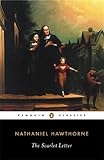
Nathaniel Hawthorne (1804–1864) was the American novelist and short story writer whose fiction — exploring Puritan New England’s legacy of sin, guilt, and moral hypocrisy — established him as the first major American psychological novelist and one of the central figures in the American literary tradition. Born in Salem, Massachusetts, the great-great-grandson of a judge in the Salem witch trials, Hawthorne was haunted by his family’s role in that history; his fiction returns repeatedly to the question of inherited guilt, the persistence of the past in the present, and the specifically American forms of religious and social pressure that enforce moral conformity while concealing moral failure. The Scarlet Letter (1850) is his masterwork and one of the foundational American novels; The House of the Seven Gables (1851) and his short story collections complete the essential Hawthorne.
Where to Start: The Scarlet Letter (1850)
The essential Hawthorne — and one of the most psychologically acute American novels of the nineteenth century. Hester Prynne has been convicted of adultery in Puritan Boston and condemned to wear the scarlet letter A on her breast as a permanent public mark of her sin. Her husband has disappeared; the father of her daughter Pearl is unknown. She refuses to name him.
The father is the Reverend Arthur Dimmesdale — a minister of extraordinary gifts and reputation, admired and loved by his congregation, who cannot bring himself to confess what he has done. Over seven years, Hester’s public shame gradually transforms into something like dignity; Dimmesdale’s private guilt destroys him from within; and Roger Chillingworth, Hester’s returned husband, dedicates himself to uncovering and prolonging the minister’s torment.
What makes the novel still vital is its understanding of how communities use public shaming: Hester, the marked transgressor, ultimately develops more moral strength than the community that condemned her; Dimmesdale, the respected minister, is less honest and less admirable than the woman he betrayed. The novel is about the difference between acknowledged sin and concealed sin — and about who the community actually punishes and who it protects.
The House of the Seven Gables (1851)
Hawthorne’s domestic Gothic — set in a crumbling Salem mansion built by the original Pyncheon patriarch on land taken from a man he sent to the gallows. Two centuries later, the Pyncheons still live in the house and still carry the curse. Hawthorne’s argument that the sins of the past continue to exact payment in the present through character, property, and blood is his most Gothic and most sustained treatment of inherited guilt. Darker and stranger than The Scarlet Letter.
Twice-Told Tales (1837)
The short story collection that established Hawthorne’s literary reputation — moral allegories set in Puritan New England, stories of isolation, scientific hubris, and the psychology of guilt. ‘The Minister’s Black Veil’ and ‘Wakefield’ are among the finest short stories in the American tradition. Essential for readers who want Hawthorne’s range and the full context of his obsessions.
Why The Scarlet Letter Is the Ideal First Book
For a reader new to Nathaniel Hawthorne, The Scarlet Letter is the ideal first book because it is his masterpiece, a landmark of American literature, and the fullest expression of his distinctive gifts, the moral and psychological depth, the symbolic richness, and the searching engagement with sin, guilt, and society. The Scarlet Letter tells the story of Hester Prynne, condemned and forced to wear a scarlet A for adultery in Puritan New England, and the secret guilt of those around her, in a profound exploration of sin, hypocrisy, and redemption. As an entry point it is ideal, for it is his greatest and most famous work and a perfect example of his morally serious, symbolically rich fiction. It welcomes the newcomer with its compelling story, its profound themes, and its symbolic power, drawing the reader into the world of classic American literature. It is his masterpiece and the one that best represents his gifts, so the new reader encounters Hawthorne at his finest. For the newcomer, then, The Scarlet Letter is the natural and ideal starting point.
What to Expect as a New Reader
As a new reader, you can expect The Scarlet Letter to be a profound, symbolically rich, and morally searching novel. You can expect a compelling story, for the novel follows Hester Prynne, publicly condemned to wear a scarlet A for adultery in Puritan New England, and the hidden guilt of others. You can expect profound themes, for the novel explores sin, guilt, shame, hypocrisy, judgment, and the possibility of redemption. You can expect symbolic richness, for Hawthorne weaves powerful symbols, above all the scarlet letter itself, throughout the novel. You can expect psychological and moral depth, for the novel probes the inner lives and consciences of its characters. You can expect a richly atmospheric portrait of Puritan society and its harsh moral world. You should expect a deliberate, dense, nineteenth-century prose style that rewards attention. Expect, in short, a profound, symbolically rich, and morally searching novel, a fine introduction to Hawthorne’s gifts.
Going Deeper After Your First Book
Once The Scarlet Letter has introduced you to Hawthorne’s gifts, the reader who wishes to go deeper can explore his other novels and his short stories, which continue his moral and psychological depth, his symbolic richness, and his engagement with sin, guilt, and the American past. His other major novel turns his vision on a decaying New England family and the weight of ancestral guilt, while his celebrated short stories and tales distill his dark, symbolic, morally searching imagination in shorter form. Reading these after The Scarlet Letter deepens your appreciation of Hawthorne’s distinctive gifts, the moral and psychological depth, the symbolic richness, and the searching engagement with sin and society. His characteristic qualities run through his work. Building your reading journey through Hawthorne is a matter of following his fiction from The Scarlet Letter into his other novels and his short stories. The reader who begins here and continues will encounter one of the foundational figures of American literature.
Reading Nathaniel Hawthorne
Begin with The Scarlet Letter — it is the most fully realised, most psychologically modern, and most important of his works. Read The House of the Seven Gables for his Gothic mode; Twice-Told Tales for the short fiction that represents half his achievement. All three can be read in any order.
For the full Nathaniel Hawthorne bibliography, reviews, and biography, visit the Nathaniel Hawthorne author page on Editors Reads.
Affiliate disclosure: Links to Amazon on this page are affiliate links. We earn a small commission at no extra cost to you.
Frequently Asked Questions
Where should I start with Nathaniel Hawthorne?
The Scarlet Letter (1850) is the essential starting point — Hawthorne's account of Hester Prynne, condemned to wear the letter A for adultery in Puritan New England, while the father of her illegitimate daughter Pearl declines into secret guilt as a revered minister. The novel is the foundational American work on sin, shame, and hypocritical community morality, and is still widely taught because its psychological observations remain urgent. The House of the Seven Gables is the alternative for readers who want Hawthorne's Gothic domestic mode.
What is The House of the Seven Gables about?
The House of the Seven Gables (1851) is Hawthorne's second major novel — set in a rotting ancestral house in Salem under a family curse laid by a man wrongly executed for witchcraft by the original Pyncheon ancestor. The novel follows the current Pyncheons as the curse continues to exact its payments across generations: the wealthy Judge Pyncheon who mirrors his corrupt ancestor, the impoverished Hepzibah who opens a cent-shop to survive, her brother Clifford returned from unjust imprisonment. Hawthorne's meditation on inherited guilt — how the sins of earlier generations live on in property, family character, and blood — is his most Gothic work.
What is Twice-Told Tales about?
Twice-Told Tales (1837) is Hawthorne's first major collection of stories — the book that established his reputation as a writer of moral-allegorical fiction rooted in Puritan New England history. The collection includes 'The Minister's Black Veil' (a minister who wears a veil no one can convince him to remove), 'Wakefield' (a man who leaves his wife and watches her from nearby for twenty years), and 'Dr. Heidegger's Experiment' (a scientist who offers elderly friends a drink from the Fountain of Youth). The best introduction to Hawthorne's short fiction and the themes that organise all his work.
Is Hawthorne difficult to read today?
Hawthorne writes in nineteenth-century prose that is denser and more formal than modern literary fiction, but he is not among the most difficult classic American writers — his sentences are long but grammatically clear, and his subjects (sin, guilt, community pressure, the relationship between past and present) are universally legible. The Scarlet Letter in particular reads with surprising psychological modernity; its account of how communities use shame as a mechanism of social control feels as relevant as ever.