Where to Start with Louisa May Alcott: A Reading Guide
Where to start with Louisa May Alcott — whether to begin with Little Women, Little Men, or Jo's Boys. A complete reading guide to the American classic author.
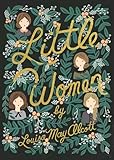
Louisa May Alcott (1832–1888) was the American novelist whose Little Women (1868) — written rapidly to fulfil a publisher’s request for a story for girls, and largely autobiographical — became one of the most beloved American novels of the nineteenth century and remains, 150 years later, in continuous print and continuous cultural presence. Alcott was the daughter of the transcendentalist philosopher Bronson Alcott; the family was perennially impoverished; she wrote to support them. Little Women’s portrait of Jo March — the aspiring writer who wants to support herself by her pen and resist the social conventions that constrain women — drew directly on her own experience, and the novel’s emotional honesty about female ambition and its costs has made it a touchstone for generations of readers who recognise themselves in Jo.
Where to Start: Little Women (1868)
The essential Alcott — and one of the most enduring American novels. The four March sisters are growing up in Concord, Massachusetts, during the Civil War: their father is away at the front; their mother Marmee holds the family together with warmth and moral authority; the girls themselves navigate poverty, social expectation, and their very different relationships to what it means to be a woman.
Jo March is the novel’s heart. She is a writer who burns with the desire to make something lasting, who publishes sensational fiction under a pseudonym to help her family, and who resists every suggestion that she should be more ladylike, less outspoken, less herself. Alcott’s portrayal of Jo is the most honest depiction of female creative ambition in nineteenth-century American literature — and the compromises the novel eventually forces on Jo (a marriage that is not the love affair readers want for her, a domestic life that is not the literary one she dreamed of) have been debated by readers ever since.
The other sisters are equally fully realised: Meg’s desire for comfort and respectability, Beth’s gentle goodness and its mortal fragility, Amy’s determination to use conventional femininity to achieve her own ambitions. Each represents a different strategy for navigating the constraints of being a woman in 1860s New England.
The novel was published in two parts in 1868 and 1869; most editions combine them. It remains one of the highest-rated novels in the American literary tradition precisely because its emotional honesty has never aged.
Little Men (1871)
Jo as an adult, running Plumfield School with her husband. Gentler and more episodic than Little Women; a warm portrait of progressive education and the individual children Jo and Friedrich try to help. Best read after the original.
Jo’s Boys (1886)
The final book in the series, following the Plumfield students into adulthood. Alcott’s last extended engagement with the March family world; for devoted readers who want to follow Jo to the end.
Why Little Women Is the Ideal First Book
For a reader new to Louisa May Alcott, Little Women is the ideal first book because it is her masterpiece and one of the most beloved novels in American literature, the fullest expression of her distinctive gifts, the warmth, the vivid characterization, and the heartfelt depiction of family life. Little Women follows the four March sisters, Meg, Jo, Beth, and Amy, as they grow up in nineteenth-century New England, navigating love, ambition, hardship, and the bonds of family. As an entry point it is the natural place to begin, for it is her most famous and cherished work, the novel that has charmed and moved readers for over a century and a half. It welcomes the newcomer with its endearing characters, its warmth and humor, and its emotional depth, drawing the reader into one of the great stories of family and growing up. It is her defining work and the one that best represents her gifts, so the new reader encounters Alcott at her finest. For the newcomer, then, Little Women is the natural and ideal starting point.
What to Expect as a New Reader
As a new reader, you can expect Little Women to be a warm, heartfelt, and richly characterized novel of family and growing up. You can expect unforgettable characters, above all the four March sisters, each vividly drawn, especially the spirited, ambitious, writerly Jo, one of literature’s most beloved heroines. You can expect warmth and emotional depth, for the novel portrays the joys, sorrows, quarrels, and deep love of family life with great tenderness. You can expect a coming-of-age story, as the sisters grow up, pursue their dreams, and face love, loss, and the choices of womanhood. You can expect humor alongside genuine pathos, including one of the most affecting passages in the literature of childhood. You can expect a story progressive in its sympathies, especially in its portrait of Jo’s independence and ambition. Expect, in short, a warm, heartfelt, and richly characterized novel of family and growing up, a beloved introduction to Alcott’s gifts.
Going Deeper After Your First Book
Once Little Women has introduced you to the March family, the natural next step is to continue their story through Alcott’s sequels, which follow the sisters and the next generation into adulthood with the same warmth and moral seriousness. Little Men and Jo’s Boys carry the story forward, focusing on Jo’s later life and the school she comes to run, extending the world readers love. Beyond the March family, the reader who has enjoyed Alcott’s gifts can explore her many other novels and stories for young readers, as well as her more surprising and sensational fiction written under a pseudonym. Her characteristic qualities, the warmth, the vivid characters, and the heartfelt depiction of family and growth, run through her work. Building your reading journey through Alcott is a matter of continuing the March family saga and exploring her wider fiction. The reader who begins with Little Women will find one of the most beloved storytellers of family life in American literature.
Reading Louisa May Alcott
Begin with Little Women — it is a complete reading experience that requires nothing before or after it. Read Little Men and Jo’s Boys in order if you want to continue with the March family. The original novel is the essential Alcott.
For the full Louisa May Alcott bibliography, reviews, and biography, visit the Louisa May Alcott author page on Editors Reads.
Affiliate disclosure: Links to Amazon on this page are affiliate links. We earn a small commission at no extra cost to you.
Frequently Asked Questions
Where should I start with Louisa May Alcott?
Little Women (1868) is the essential starting point — Alcott's novel about the four March sisters (Meg, Jo, Beth, and Amy) coming of age in Civil War-era New England, navigating the tension between social expectation and personal aspiration. It is one of the most beloved American novels ever written, and its emotional honesty — particularly about Jo March's ambition and the compromises that women and girls are forced to make — has never aged. The sequels Little Men and Jo's Boys follow; all can be read in order or independently.
What is Little Women about?
Little Women follows the four March sisters through their adolescence while their father is away at the Civil War — each sister navigating her own relationship to femininity, ambition, and belonging. Meg, the eldest, wants social respectability and a domestic life; Jo, the most autobiographical, wants to write and resist the constraints of being a woman in 1860s New England; Beth is gentle and domestic and already marked by mortality; Amy is artistic and ambitious in ways her society permits more readily than Jo's. The novel is both a portrait of nineteenth-century girlhood and a surprisingly direct examination of the frustrations of female ambition.
What is Little Men about?
Little Men (1871) is the sequel to Little Women, set many years later, in which Jo March (now Jo Bhaer, married to Professor Friedrich Bhaer) runs Plumfield School for boys with her husband, putting their progressive educational ideals into practice with a diverse cast of students. More episodic and gentler than Little Women; a portrait of progressive education through the lens of affectionate character studies. Best read after Little Women.
Should you read the sequels to Little Women?
Little Women is a complete reading experience on its own and most readers stop there. Little Men and Jo's Boys follow Jo in her adult life running Plumfield School; they are gentler, more episodic, and less dramatically compelling than the original. Readers who loved Little Women and want to spend more time with the March family will find the sequels warm and rewarding; readers who found Little Women satisfying as a standalone do not need to continue.