Where to Start with Peter Attia: A Reading Guide
Where to start with Peter Attia — how to approach Outlive, his essential guide to the science of longevity and healthspan. A complete reading guide.
By Priya Anand
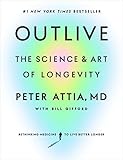
Peter Attia (born 1973) is a Canadian-American physician who trained in surgery at Johns Hopkins and oncology at the National Institutes of Health before leaving institutional medicine to focus entirely on longevity. His long-form podcast The Drive has built one of the most engaged audiences in health media, covering research, clinical practice, and protocol development with a depth unusual for public health communication. Outlive (2023) is the synthesis of his decade of research and clinical practice — the book that made his framework broadly accessible.
Where to Start: Outlive (2023)
The essential Attia — and the most comprehensive longevity guide available. Outlive begins with a critique of what Attia calls Medicine 2.0: the reactive model of healthcare that waits for disease to manifest, treats its symptoms, and measures success by whether the patient survives the episode. Attia argues for Medicine 3.0: a proactive model that uses the long lead time before chronic disease manifests — often decades — to intervene when interventions are cheapest and most powerful.
The conceptual heart of the book is the distinction between lifespan and healthspan. Living to ninety with the last decade in cognitive and physical decline is not a success by Attia’s measure. His framework is designed to extend the period of full function — to delay the onset of what he calls the Marginal Decade rather than merely extending total years.
Attia organises the book around the Four Horsemen: the chronic diseases that account for the vast majority of deaths in developed countries. For each — cardiovascular disease, cancer, neurodegenerative disease (particularly Alzheimer’s), and metabolic dysfunction (insulin resistance and type 2 diabetes) — he covers mechanisms, risk factors, the timeline of development, and the interventions that the evidence actually supports. The metabolic dysfunction chapter is particularly important; Attia argues that insulin resistance, driven by excessive refined carbohydrate consumption and physical inactivity, underlies much of the cardiovascular and cancer risk that eventually kills most people.
The exercise chapters are the book’s most actionable and best-sourced section. Attia presents the evidence that exercise — a combination of Zone 2 aerobic training (low-intensity cardio that develops the aerobic base) and strength training (which preserves the muscle mass, bone density, and power that prevent functional decline) — is the most powerful longevity intervention we have. Its effects exceed any pharmaceutical intervention in the evidence base, and the protocols Attia specifies are practical and well-explained.
The book closes with sections on sleep and emotional health — Attia treats sleep not as a lifestyle preference but as a biological requirement, and engages with the psychological patterns that undermine longevity efforts with the same rigour he brings to the physiological ones.
Why Outlive Is the Ideal First Book
For a reader new to Peter Attia, Outlive is the ideal and essential first book because it is his singular major work, an influential and comprehensive guide to longevity and healthspan, and the fullest expression of his approach to living a longer and healthier life. A physician focused on longevity, Attia presents in Outlive a detailed framework for extending not just lifespan but healthspan, the years of healthy, vigorous life, through a proactive approach to the major diseases of aging and the factors that shape long-term health. As an entry point, it is the natural and essential place to begin, for it is Attia’s defining work, the comprehensive account of his approach to longevity. It welcomes the newcomer with its detailed framework, its evidence-based approach, and its compelling focus on healthspan, drawing the reader into a thorough guide to living longer and better. It is his singular major book and the fullest expression of his approach, so that the new reader encounters Attia’s central framework directly. For the newcomer interested in longevity and health, then, Outlive is the natural and ideal starting point.
What to Expect as a New Reader
As a new reader, you can expect Outlive to be a detailed, evidence-based, and comprehensive guide to longevity and healthspan. You can expect a focus on healthspan, for Attia argues that the goal should be not merely to live longer but to extend healthspan, the years of healthy, vigorous, and capable life, and to compress the period of decline. You can expect a proactive, preventive approach, for Attia advocates addressing the major chronic diseases of aging long before they manifest, through attention to the underlying factors of long-term health. You can expect detailed coverage of the pillars of healthspan, including exercise, nutrition, sleep, and emotional health, grounded in science and clinical experience. You can expect a thorough and substantial book, detailed and serious, that rewards the engaged reader. You can expect a framework for taking an active, informed role in your own long-term health. Expect, in short, a detailed, evidence-based, and comprehensive guide to longevity and healthspan, a thorough introduction to Attia’s approach to living longer and better.
Going Deeper After Your First Book
Once Outlive has given you Attia’s framework for longevity and healthspan, the reader who wishes to go deeper can explore the wider literature on longevity, health, and the science of aging to which his work contributes, as well as his ongoing work and resources, reading further in the light of the framework that his book provides. The themes of Outlive, the extension of healthspan, the prevention of the chronic diseases of aging, and the pillars of long-term health, connect to an active and growing field of longevity science and health, and the reader drawn to these questions can pursue them further. Reading more deeply deepens your engagement with the science and practice of longevity, but Outlive provides the comprehensive framework and foundation. Attia’s approach, the proactive, evidence-based pursuit of healthspan, offers a thorough foundation, and the reader who has absorbed it is well equipped to explore the wider literature. Building your reading journey from Outlive is a matter of pursuing its framework through the wider literature on longevity and health. The reader who begins with Outlive will have a comprehensive foundation for understanding and pursuing a longer, healthier life.
Reading Peter Attia
Outlive is Attia’s essential and only book. It stands alone and requires no prior reading.
For the full Peter Attia bibliography, reviews, and biography, visit the Peter Attia author page on Editors Reads.
Affiliate disclosure: Links to Amazon on this page are affiliate links. We earn a small commission at no extra cost to you.
Frequently Asked Questions
Where should I start with Peter Attia?
Outlive: The Science and Art of Longevity (2023) is Attia's essential book — the most comprehensive and clinically grounded longevity guide available. Written by a physician who trained at Johns Hopkins and NIH before devoting his practice entirely to longevity medicine, it covers exercise, nutrition, sleep, and emotional health with rigour that most health books cannot match. Essential reading for anyone serious about their healthspan.
What is Outlive about?
Outlive argues that modern medicine waits for disease to appear before treating it, when the evidence supports radical intervention decades earlier. Attia organises the book around the four chronic diseases that kill most people — cardiovascular disease, cancer, neurodegeneration, and metabolic dysfunction — and presents what the science supports for preventing each. The distinction between lifespan (how long you live) and healthspan (how long you live well) is its central contribution.
Is Outlive too technical for general readers?
Outlive is the most clinically detailed major longevity book available, but Attia writes for an educated general audience, not physicians. The difficulty rating is intermediate — readers will need to engage with concepts like VO2 max, insulin resistance, and Zone 2 training, but Attia explains each from the ground up. Some of his protocols require specialist testing not accessible to all readers, and some positions are ahead of mainstream medicine — appropriate critical reading is warranted.
What should I read after Outlive?
After Outlive, Matthew Walker's Why We Sleep covers the sleep science at full length — Attia's sleep chapter is excellent but compressed. David Sinclair's Lifespan covers longevity science from the cellular biology angle, with more emphasis on pharmaceutical and supplement interventions. For the exercise science specifically, Brad Stulberg and Steve Magness's Peak Performance covers performance adaptation with complementary depth.