Where to Start with Richard Powers: A Reading Guide
Where to start with Richard Powers — whether to begin with The Overstory, Galatea 2.2, or Bewilderment. A complete reading guide to Powers's science and nature novels.
Richard Powers (born 1957) is the most intellectually ambitious American novelist of his generation — a writer who brings rigorous scientific knowledge to bear on literary fiction, illuminating subjects from genetics to artificial intelligence to ecology with equal authority and equal emotional depth. His novels are long, dense with ideas, and rewarding in proportion to the attention they demand. He received the Pulitzer Prize for Fiction in 2019 for The Overstory, which has become one of the most widely read and most influential environmental novels in American literature.
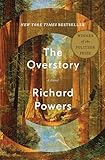
Where to Start: The Overstory (2018)
The essential Powers — and his most widely accessible work. Nine separate stories of American lives gradually converge around trees and the fight to preserve old-growth forests. Patricia Westerford, a scientist who discovers that trees communicate and form underground networks, becomes an unlikely prophet. Nick Hoel, the descendant of a chestnut farmer, is shaped by a tree that has survived a disease that killed every other American chestnut. A Vietnam veteran, a programmer, a property lawyer, an artist, and others find their lives redirected by encounters with the natural world.
The novel is Powers at his most ambitious in scope and his warmest in execution — the scientific material (drawn from actual plant biology) is integrated with genuine narrative urgency, and the human stories are individually compelling before they converge. Pulitzer Prize winner; one of the most important American novels about the environmental crisis.
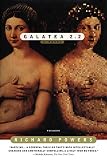
Galatea 2.2 (1995)
Powers’s most intimate and most formally original novel — the story of a writer named Richard Powers who returns to his university after years in the Netherlands and becomes involved in a project to teach a neural network, Helen, to pass a master’s level literature examination. As Helen learns to read — first simple texts, then more complex ones — she begins to respond to literature in ways that raise increasingly difficult questions about what reading means and what literary understanding requires. The novel is simultaneously a meditation on artificial intelligence, a love story (Powers’s feeling for Helen becomes genuine), and an account of the relationship between scientific and literary knowledge.
Bewilderment (2021)
Powers’s most emotionally concentrated novel — short by his standards and focused on the relationship between Robin, a deeply sensitive nine-year-old boy who is struggling to function in the world, and his father Theo, an astrobiologist who grieves for Robin’s mother and spends his days imagining life on other planets. When a neurofeedback experiment uses recordings of Robin’s mother’s neural activity to train Robin’s brain, the results are transformative but dangerous. The novel is Powers’s most directly emotional and his most overtly political — a meditation on childhood neurodiversity, loss, and the environmental catastrophe that Robin’s sensitivity makes unbearable.
The Gold Bug Variations (1991)
Powers’s most formally ambitious novel — an intricate structure built on the parallels between genetics and music, specifically the genetic code and Bach’s Goldberg Variations. Two love stories set forty years apart (a scientist in the 1950s and a librarian in the 1980s) are interwoven with the discovery of the genetic code and an account of what DNA and music have in common. The novel is Powers at his most intellectually demanding and most formally dazzling; for readers who want to understand what distinguishes him from other American novelists, this is the most complete demonstration of his method.
Why The Overstory Is the Ideal First Book
For a reader new to Richard Powers, The Overstory is the ideal first book because it is his Pulitzer Prize-winning masterwork and the fullest expression of his distinctive gifts, the intellectual ambition, the rich storytelling, and the profound engagement with science, nature, and human meaning. The Overstory weaves together the stories of nine characters whose lives become bound up with trees and the fate of the natural world, in a sweeping, ambitious, and deeply moving novel. As an entry point it is ideal, for it is his most celebrated work and a perfect example of his ambitious, intellectually rich, and emotionally powerful fiction. It welcomes the newcomer with its compelling stories, its intellectual depth, and its emotional and ecological power, drawing the reader into his distinctive vision. It is his most famous work and the one that best represents his gifts, so the new reader encounters Powers at his finest. For the newcomer, then, The Overstory is the natural and ideal starting point.
What to Expect as a New Reader
As a new reader, you can expect The Overstory to be an ambitious, intellectually rich, and deeply moving novel. You can expect a sweeping structure, for the novel weaves together the stories of nine characters whose lives become bound up with trees and the natural world. You can expect intellectual ambition, for Powers engages deeply with science, ecology, and the question of humanity’s relationship to nature. You can expect rich storytelling, for the individual stories are compelling and emotionally engaging. You can expect ecological power, for the novel is a passionate, urgent meditation on trees, forests, and the fate of the living world. You can expect emotional depth and a grand, interconnected design. You should expect a substantial, ambitious novel that rewards engagement. Expect, in short, an ambitious, intellectually rich, and deeply moving novel, a superb introduction to Powers’s gifts.
Going Deeper After Your First Book
Once The Overstory has introduced you to Powers’s gifts, the reader who wishes to go deeper can explore his other novels, which continue his intellectual ambition, his rich storytelling, and his profound engagement with science, nature, and human meaning. His many acclaimed works explore subjects from neuroscience and music to genetics, artificial intelligence, and the natural world, each marked by his ambitious intellect and his emotional depth, including his later novel of a father, a son, and the living planet. Reading these after The Overstory deepens your appreciation of Powers’s distinctive gifts, the intellectual ambition, the rich storytelling, and the engagement with science and nature. His characteristic strengths run through his work. Building your reading journey through Powers is a matter of following his fiction from The Overstory into his other novels. The reader who begins here and continues will find one of the most intellectually ambitious and emotionally powerful novelists in contemporary American literature.
Reading Richard Powers
Powers is best approached with patience and curiosity: his novels require readers to engage with the scientific or intellectual material they bring to bear, but they reward that engagement with a deepened understanding of their subjects that few other novelists achieve. Begin with The Overstory for the most emotionally immediate entry; read Galatea 2.2 for the most intimate; read The Gold Bug Variations for the most formally complex. Any starting point leads naturally to the others, and each novel permanently changes how readers understand the world it illuminates.
Frequently Asked Questions
Where should I start with Richard Powers?
The Overstory (2018) is both the best starting point and Powers's most celebrated novel — a Pulitzer Prize-winning epic about nine Americans whose lives become intertwined with trees and with the environmental movement fighting to protect old-growth forests. It is Powers at his most accessible and his most emotionally powerful, combining his characteristic scientific depth with narrative warmth and genuine urgency about the natural world. Galatea 2.2 is the best alternative for readers interested in artificial intelligence; Bewilderment for those who want something shorter.
What is The Overstory about?
The Overstory (2018) follows nine Americans — a chestnut farmer, an aeronautical engineer, a psychology researcher, a Vietnam veteran, a programmer, a property lawyer, an artist, an activist, and a soldier — whose separate stories converge around trees and the environmental movement. The novel is structured like a tree: individual stories branch and join. Powers draws on contemporary plant science (trees communicate, form networks, have something like memory) to argue that the natural world has its own intelligence and its own claims on our attention. One of the most important American novels about the environmental crisis.
What is Galatea 2.2 about?
Galatea 2.2 (1995) is the most directly autobiographical of Powers's novels — a semi-fictional account of a writer named Richard Powers who returns to his university after years abroad and becomes involved in a project to teach a neural network (named Helen) to pass a literature examination at the master's level. The novel is simultaneously an account of artificial intelligence (how a machine learns to read and respond to texts) and a love story between the fictional Powers and the machine he is teaching. It is Powers's most intimate novel and his most formally experimental.
Is Richard Powers difficult to read?
Powers is demanding but the demands are primarily conceptual rather than formal: his novels require engagement with the scientific and intellectual material (genetics, computing, neuroscience, ecology, music theory) that he brings to each subject. His prose is clear and his narratives are accessible; what requires effort is the depth of attention he brings to his subjects. The rewards are proportionate to the effort: Powers's novels illuminate their subjects — trees, artificial intelligence, genetics, the natural world — in ways that permanently change how readers understand them. The Overstory is the most accessible; Galatea 2.2 the most formally experimental.