Where to Start with Thomas Sowell: A Reading Guide
Where to start with Thomas Sowell — how to approach Basic Economics, his essential introduction to economic thinking. A complete reading guide.
By Marcus Webb
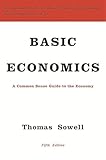
Thomas Sowell (born 1930) is an American economist, social theorist, and political philosopher at the Hoover Institution at Stanford University, where he has been a Senior Fellow since 1980. He has written over forty books covering economics, social policy, history, and cultural analysis. Basic Economics (first published 2000, updated in multiple subsequent editions) is his most widely read work and has been praised across the political spectrum as the most accessible introduction to economic thinking available.
Where to Start: Basic Economics (2000)
The essential Sowell — and one of the most effective economics books for general readers ever written. Basic Economics opens with a challenge that Sowell considers the fundamental discipline of economic thinking: think through not just the immediate effects of a policy or action, but the effects of those effects. This single practice, rigorously applied across hundreds of examples drawn from around the world and across centuries of history, is the engine of the entire book.
The core insight is simple but persistently violated in public discourse: most economic fallacies stem from focusing on what is immediately visible while ignoring what is less visible. Rent control sounds compassionate — it makes housing affordable for current tenants. The less visible effect: it reduces the incentive to build or maintain housing, reducing supply over time and increasing rents for everyone who is not currently a tenant. Minimum wage laws sound pro-worker — they mandate higher pay. The less visible effect: for workers whose labour produces less value than the mandated wage, the result is unemployment rather than higher pay. The policy’s beneficiaries are visible; its costs fall on people not yet in the workforce who are invisible in the political debate.
What distinguishes this book from economics textbooks is the near-total absence of technical apparatus. Sowell writes entirely in plain prose — no graphs, no equations, no econometric models — on the conviction that economic reasoning can be fully communicated without them. Six hundred pages of real-world examples demonstrate that he is right. The examples range from Medieval European grain markets to modern Californian housing policy to Soviet industrial planning — a breadth that demonstrates the principles are not specific to any time or political system.
The book’s most important contribution beyond the core fallacy may be its account of prices as information. Sowell explains at length that prices are not just numbers — they are the mechanism by which dispersed, local knowledge about supply and demand is aggregated into a signal that coordinates the decisions of millions of strangers who will never meet and share no common plan. When governments override prices through controls or subsidies, they do not eliminate the underlying coordination problem; they remove the most effective available tool for solving it. This analysis, drawn from Hayek and developed with characteristic clarity, changes how readers think about economic intervention in ways that standard policy debate rarely captures.
Sowell’s perspective is consistently market-oriented, which some readers on the left find ideologically skewed. Readers willing to engage critically and follow the arguments rather than seeking confirmation will find the book genuinely educational across the political spectrum.
Why Basic Economics Is the Ideal First Book
For a reader new to Thomas Sowell, Basic Economics is the ideal first book because it is his most popular and accessible work and a fine expression of his distinctive gift, the clear, jargon-free explanation of economic principles for the general reader. Basic Economics explains how economies work, covering the role of prices, supply and demand, incentives, and the consequences of economic decisions, all without graphs, equations, or jargon, illustrated with real-world examples. As an entry point it is ideal, for it is his best-known book and a clear introduction to his economic thinking and his way of explaining economics to ordinary readers. It welcomes the newcomer with its clarity, its real-world examples, and its accessible style, drawing the reader into the basic principles of economics. Readers will encounter a clear point of view, often associated with free-market thinking, and are wise to engage thoughtfully and to consider other perspectives as well. It is among his most famous works, so the new reader encounters Sowell at his most accessible. For the newcomer, then, Basic Economics is an excellent starting point.
What to Expect as a New Reader
As a new reader, you can expect Basic Economics to be a clear, accessible, and jargon-free introduction to economic principles. You can expect a focus on fundamentals, for Sowell explains how economies work through the role of prices, supply and demand, incentives, and the consequences of decisions. You can expect no graphs or equations, for Sowell deliberately explains economics in plain language for the general reader. You can expect real-world examples, for the book illustrates its principles with concrete cases from many countries and times. You can expect an emphasis on thinking through consequences, including the unintended and long-term effects of economic choices and policies. You can expect a clear and confident point of view, often associated with free-market economics, which the thoughtful reader weighs alongside other perspectives. Expect, in short, a clear, accessible, and jargon-free introduction to economic principles, a fine introduction to Sowell’s thinking.
Going Deeper After Your First Book
Once Basic Economics has introduced you to Sowell’s thinking, the reader who wishes to go deeper can explore his other books, which apply his clear, example-driven reasoning to a wide range of economic and social subjects, while continuing to read thoughtfully and to weigh other views. His other works examine subjects such as economic facts and fallacies, the history and economics of particular groups, the role of intellectuals, and questions of policy and society, always in his accessible, argument-driven style. Reading these after Basic Economics deepens your engagement with Sowell’s distinctive approach, the clear reasoning and the focus on consequences and incentives. His characteristic perspective runs through his work, and the reader is well served by also engaging economists of other schools for a rounded view. Building your reading journey through Sowell is a matter of following his reasoning from Basic Economics into his other books. The reader who begins here and continues will find one of the most prominent and accessible economic writers of his generation.
Reading Thomas Sowell
Basic Economics is Sowell’s most essential and widely read book. It stands alone and requires no prior reading.
For the full Thomas Sowell bibliography, reviews, and biography, visit the Thomas Sowell author page on Editors Reads.
Affiliate disclosure: Links to Amazon on this page are affiliate links. We earn a small commission at no extra cost to you.
Frequently Asked Questions
Where should I start with Thomas Sowell?
Basic Economics: A Common Sense Guide to the Economy (2000) is Sowell's most essential and widely read book — a comprehensive introduction to economic thinking that requires no graphs, equations, or prior knowledge of economics. Uses hundreds of real-world examples to train readers to see beyond immediate effects to the full consequences of policies and actions. One of the most effective economics books for general readers ever written.
What is Basic Economics about?
Basic Economics trains readers in the discipline Sowell considers fundamental: not whether a policy has good intentions but what its full consequences are, including unintended effects and long-term costs invisible to its proponents. The book covers prices as information systems, the unintended consequences of price controls and subsidies, why rent control reduces housing supply, how minimum wages affect employment, and dozens of other economic phenomena — all in plain prose without technical apparatus.
Is Basic Economics politically biased?
Sowell is a classical liberal economist with a market-oriented perspective, and Basic Economics reflects this consistently — critics on the left find it ideologically skewed. However, the book's primary method is tracing consequences rather than stating preferences: it applies the same standard of 'what are the full effects?' to policies across the political spectrum. Readers who engage critically rather than seeking confirmation will find it genuinely educational even when it challenges their prior views.
What should I read after Basic Economics?
After Basic Economics, Henry Hazlitt's Economics in One Lesson is the classic short companion that covers the same core fallacy (focusing on visible effects while ignoring invisible ones) in 200 pages. Charles Wheelan's Naked Economics covers mainstream economics with more coverage of market failures and government interventions. Sowell's own A Conflict of Visions is a different kind of book — a philosophical analysis of why people on the left and right persistently disagree on policy, and one of his most intellectually interesting works.