Where to Start with Ursula K. Le Guin: A Reading Guide
Where to start with Ursula K. Le Guin — whether to begin with The Left Hand of Darkness, The Dispossessed, or A Wizard of Earthsea. A complete reading guide.
Ursula K. Le Guin (1929–2018) is the most significant science fiction and fantasy writer of the late twentieth century — the novelist and short story writer who brought rigorous anthropological and philosophical thought to genre fiction and permanently raised its ambitions. Her Hainish Cycle novels (The Left Hand of Darkness, The Dispossessed) are the most intellectually serious works in science fiction; her Earthsea series is the most philosophically coherent secondary-world fantasy. She received every major award in her field and was eventually recognised as one of the great American prose writers of any genre.
Where to Start
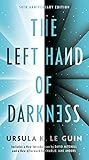
For Science Fiction Readers: The Left Hand of Darkness (1969)
Le Guin’s masterpiece and the best starting point for readers who want science fiction that asks genuinely difficult philosophical questions. The novel uses its central premise — a world without fixed gender — not as a thought experiment but as the foundation for a fully realised culture, politics, and way of being. Genly Ai’s failure to understand the Gethenians, and his eventual understanding through extremity and grief, is also an account of how gender shapes every human perception without our knowing it. The winter journey that forms the novel’s final section is among the great narrative sequences in the genre.
For Fantasy Readers: A Wizard of Earthsea (1968)
The best starting point for readers who prefer fantasy. Ged’s education at the school of wizardry on Roke Island, and his subsequent pursuit of the nameless shadow he accidentally released, is told in a prose of extraordinary simplicity and authority — Le Guin at her most Taoist. The novel is short (under 200 pages) and reads quickly; its philosophical content (the shadow that Ged must face is his own unacknowledged self) becomes apparent on reflection. The foundation of one of the great fantasy series.
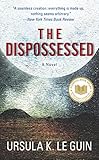
The Political Novel: The Dispossessed (1974)
Le Guin’s most explicitly political and philosophical novel — an ‘ambiguous utopia’ that refuses to endorse either anarchism or capitalism without examining what each actually produces. Shevek’s alternating experience of Anarres (his home, an anarchist world where private property does not exist but conformity is enforced through social pressure) and Urras (wealthy, hierarchical, beautiful, and deeply unjust) is Le Guin’s most sustained intellectual argument. Demanding but rewarding; best approached after The Left Hand of Darkness.
Tehanu (1990)
Le Guin’s return to Earthsea twenty years after the original trilogy — and a conscious revision of its assumptions. Where the first three books are about male power and male heroism, Tehanu is about women’s lives: the ordinary, constrained, domestic experience that the original trilogy largely ignored. Ged, now powerless after the events of The Farthest Shore, is cared for by Tenar (the protagonist of The Tombs of Atuan), and the novel examines what remains of identity and meaning when power is removed. Le Guin’s feminist revision of her own world; essential for readers who have completed the original trilogy.
Reading Le Guin
Le Guin’s prose is among the most carefully crafted in speculative fiction — spare, precise, and capable of sudden lyrical elevation. She came from an academic family (her father was the anthropologist Alfred Kroeber; her mother wrote Ishi in Two Worlds) and brought an anthropologist’s attentiveness to the cultures she invented: the Gethenians, the Anarresti, the Earthsea peoples all have consistent, internally logical social structures. Reading Le Guin slowly and attentively — asking ‘what would these people actually believe?’ — produces the richest experience of her work.
Frequently Asked Questions
Where should I start with Ursula K. Le Guin?
The Left Hand of Darkness (1969) is the best starting point for readers who want Le Guin's science fiction: a novel set on a planet whose inhabitants are neither male nor female, except during a brief period of sexual activity, and an account of what human society might look like without fixed gender. A Wizard of Earthsea (1968) is the best starting point for readers who prefer fantasy: the story of the young mage Ged's education and his pursuit of the shadow he accidentally unleashed. Both are short, brilliant, and immediately accessible. The Dispossessed is best approached after one of these.
What is The Left Hand of Darkness about?
The Left Hand of Darkness (1969) follows Genly Ai, an envoy from the Ekumen (an interplanetary collective) sent to the planet Gethen to persuade its nations to join. The Gethenians are ambisexual — neither male nor female except during kemmer, their period of sexual activity — and Genly Ai's attempt to understand this society, through his friendship with the disgraced politician Estraven, is both a diplomatic mission and a study of how gender shapes every aspect of human perception. The novel's central journey — across a glacier in winter — is one of the great sequences in science fiction. Le Guin won the Hugo and Nebula Awards for it.
What is The Dispossessed about?
The Dispossessed (1974) follows Shevek, a physicist from the anarchist moon Anarres, who travels to the capitalist planet Urras in an attempt to share a new physics theory that could transform interplanetary communication. The novel alternates between Shevek's childhood and adult life on Anarres (which has its own forms of conformism and suppression despite its anarchist principles) and his disorienting, dangerous time on Urras. Le Guin's subtitle — 'An Ambiguous Utopia' — describes the novel's intellectual honesty: neither the anarchist Anarres nor the capitalist Urras is straightforwardly desirable, and the novel demands that readers make their own judgements.
Is the Earthsea series appropriate for adults?
The Earthsea series — beginning with A Wizard of Earthsea (1968) — was written for young adults but is entirely appropriate for adult readers and, indeed, is one of the most philosophically serious fantasy series ever written. Le Guin's Taoism shapes the world: the emphasis is on balance, restraint, and understanding rather than on the conquest of evil. Ged's shadow — the dark thing he unleashed in his pride — is a Jungian figure for the unintegrated parts of the self. The first three books (A Wizard of Earthsea, The Tombs of Atuan, The Farthest Shore) form a complete trilogy; Tehanu (1990) returns to the world twenty years later with a very different perspective.