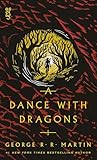
Editors Reads Verdict
A Dance with Dragons is a slow burn of a novel that rewards patience with some of Martin's most psychologically complex character work — particularly the devastating Theon chapters and a genuinely chilling Cersei arc. It suffers from the same structural problem as its predecessor, covering parallel time rather than advancing the story, but the world's density and moral complexity remain unmatched in fantasy.
What We Loved
- Theon Greyjoy's chapters are Martin's finest psychological portrait of trauma and identity dissolution
- Jon Snow's leadership struggles at the Wall are among the series' best political material
- The Meereenese material, while criticized, builds genuine political complexity
- Martin's prose is at its most consistently excellent in this volume
Minor Drawbacks
- Daenerys's Meereen chapters are the series' most criticized for narrative stasis
- The book covers the same timeline as Feast for Crows without fully advancing the overall story
- Six years of waiting and the book ends on multiple cliffhangers without resolution
Key Takeaways
- → Power corrupts even well-intentioned rulers when they lack the institutional support to maintain their values
- → Identity can be dismantled by systematic dehumanization — Theon's arc shows what that costs
- → Martin refuses to allow his world's heroes to succeed through virtue alone
- → The politics of war are as complex and consequential as the battles themselves
- → Liberation without institutional follow-through creates new forms of oppression
| Author | George R.R. Martin |
|---|---|
| Publisher | Bantam Books |
| Pages | 1056 |
| Published | July 12, 2011 |
| Language | English |
| Genre | Fantasy, Epic Fantasy, Fiction |
| Difficulty | Advanced |
| Best For | Song of Ice and Fire series readers, epic fantasy enthusiasts who value political complexity over plot velocity, and readers who followed the series through the HBO adaptation. |
How A Dance with Dragons Compares
A Dance with Dragons at a glance against 3 similar books readers weigh alongside it.
| Book | Author | Rating | Best for |
|---|---|---|---|
| A Dance with Dragons (this book) | George R.R. Martin | ★ 4.4 | Song of Ice and Fire series readers, epic fantasy enthusiasts who value |
| A Clash of Kings | George R.R. Martin | ★ 4.5 | Fantasy readers who loved A Game of Thrones |
| A Game of Thrones | George R.R. Martin | ★ 4.7 | Fantasy readers wanting political complexity, fans of HBO's Game of Thrones who |
| A Storm of Swords | George R.R. Martin | ★ 4.7 | Fans of the series |
The Long Wait and What It Delivered
Six years after A Feast for Crows, George R.R. Martin published A Dance with Dragons — a novel that covers the same narrative timeframe as its predecessor rather than advancing the story, absorbing the Dornish and Iron Islands material from Feast and adding back the characters that book excluded. For many readers who spent those six years in anticipation, it was a disappointment of expectation more than execution.
Read as its own achievement, A Dance with Dragons contains some of Martin’s most sophisticated character writing. The novel is primarily concerned with what power does to people — how ruling requires compromises that cost you your principles, how leadership in impossible circumstances reveals character rather than testing it, how identity can be stripped away by systematic dehumanization.
Theon’s Ruin and Recovery
The Theon Greyjoy chapters, in which the thoroughly broken captive of Ramsay Bolton slowly reconstructs the ghost of a self from the ruins of what he was, are the novel’s finest sustained achievement. Martin renames him Reek, puts him through grotesque degradation, and then asks a question most fantasy novels would not dare: what is left of a person when everything has been taken? The answer he gives is modest and movingly human — something persists, and it can be the seed of recovery.
Jon at the Wall
Jon Snow’s leadership of the Night’s Watch provides the novel’s best political material: a commander making decisions that are tactically correct and politically suicidal, satisfying honor while making enemies. Jon’s attempt to manage the conflicting demands of his oath, his humanity, and the existential threat north of the Wall is Martin’s most Shakespearean political drama.
The Meereen Problem
Daenerys’s Meereenese chapters have become shorthand for the series’ narrative frustrations — a story that spins rather than drives. The political complexity of ruling a liberated slave city is genuinely interesting, but Martin spends too much time in it without sufficient dramatic propulsion. The chapters are not bad; they simply test patience in a novel that already requires it.
Our rating: 4.4/5 — A flawed but genuinely rich entry in one of fantasy’s greatest series, best read as psychological portrait rather than plot machine, with Theon Greyjoy’s arc standing as Martin’s most devastating character work.
Reading Guides
The Series Without an Ending
It is impossible to discuss A Dance with Dragons, published in 2011, without naming the fact that hangs over it: it remains, as of this writing, the most recent volume in the series. The Winds of Winter has been awaited for over a decade, and A Song of Ice and Fire stands unfinished. This changes how the fifth book reads. Every cliffhanger on which it closes — and it closes on several — is a cliffhanger the reader cannot yet resolve. Jon at the Wall, Daenerys on the move, Tyrion adrift in exile: each thread is left suspended at a moment of maximum tension, and the resolution has not come.
Three Studies in Power
Read on its own terms, the novel is a triptych on what power does to the people who hold it. Daenerys, ruling the liberated slave city of Meereen, discovers that liberation without functioning institutions produces new forms of disorder; her chapters, the most criticised in the series for their stasis, are also its most sustained meditation on the difference between winning power and wielding it. Jon Snow, commanding the Night’s Watch, makes decisions that are correct and politically suicidal in equal measure. Tyrion, stripped of family and status, drifts eastward through exile and degradation. Around them, Theon Greyjoy’s chapters — the broken captive slowly reconstructing a self from ruin — supply the volume’s, and arguably the series’, most harrowing psychological portrait. It is a flawed book, structurally compromised by the same parallel-timeline problem as its predecessor, but its best pages are among the finest Martin has written.
The Cost of Liberation
If A Dance with Dragons has a governing argument, it is that tearing down an unjust order is the easy part. Daenerys breaks the slave-masters of Meereen and then finds herself trapped inside the consequences — an insurgency she cannot quell, an economy she has shattered, a peace she can keep only by compromising the very principles that justified the conquest. The chapters that so many readers find static are, read more generously, a sustained refusal of the fantasy convention that the liberator’s work ends at the moment of victory. The same hard logic governs Jon Snow’s command at the Wall, where every correct decision earns him an enemy, and it is the engine of Theon Greyjoy’s slow, agonising reconstruction of a self under the name Reek. Martin’s refusal to let virtue alone carry his characters to safety is the spine of the book, and it is what makes the long wait for the unwritten sequel so genuinely suspenseful.
A Flawed but Indispensable Volume
In the final accounting, A Dance with Dragons is a book best judged by its peaks rather than its plateaus. The Meereen chapters drag, the parallel-timeline structure inherited from the fourth volume blunts its momentum, and after years of waiting it closes on cliffhangers it cannot yet resolve. And yet its strongest pages — Theon’s harrowing reconstruction of a self, Jon’s Shakespearean struggle to reconcile duty and humanity, the genuine moral seriousness of Daenerys’s impossible position — are among the finest Martin has written. It is not the place to begin the series, and it asks for more patience than any volume before it, but it deepens the world’s moral and psychological complexity in ways no other epic fantasy attempts. Read as a character study rather than a plot engine, it rewards the commitment, even as it leaves the larger story suspended in the long silence before The Winds of Winter.
Frequently Asked Questions
What is "A Dance with Dragons" about?
The fifth installment of A Song of Ice and Fire follows Jon Snow at the Wall, Tyrion in exile, Daenerys ruling Meereen, and Stannis marching on Winterfell.
Who should read "A Dance with Dragons"?
Song of Ice and Fire series readers, epic fantasy enthusiasts who value political complexity over plot velocity, and readers who followed the series through the HBO adaptation.
What are the key takeaways from "A Dance with Dragons"?
Power corrupts even well-intentioned rulers when they lack the institutional support to maintain their values Identity can be dismantled by systematic dehumanization — Theon's arc shows what that costs Martin refuses to allow his world's heroes to succeed through virtue alone The politics of war are as complex and consequential as the battles themselves Liberation without institutional follow-through creates new forms of oppression
Is "A Dance with Dragons" worth reading?
A Dance with Dragons is a slow burn of a novel that rewards patience with some of Martin's most psychologically complex character work — particularly the devastating Theon chapters and a genuinely chilling Cersei arc. It suffers from the same structural problem as its predecessor, covering parallel time rather than advancing the story, but the world's density and moral complexity remain unmatched in fantasy.
Ready to Read A Dance with Dragons?
Check the current price on Amazon.
Check Price on Amazon (paid link)Prices and availability are subject to change. See Amazon for current price.
Review last updated: