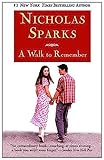
Editors Reads Verdict
A Walk to Remember is Sparks's most structurally accomplished novel — a retrospective narration in which the adult Landon Carter looks back on the year that remade him. The novel earns its emotional weight through restraint: what Landon and Jamie do not say, do not do, makes what happens between them permanent.
What We Loved
- The retrospective first-person narration by the adult Landon gives the romance unusual narrative distance and earned wisdom
- Jamie Sullivan is one of romance fiction's most quietly radical protagonists — her faith and goodness are presented without irony or condescension
- The 1950s Beaufort, North Carolina setting creates a specific moral and social world that enriches the central relationship
- The novel's emotional restraint makes its climactic scenes more powerful than a more sentimental approach would achieve
Minor Drawbacks
- The first half moves slowly as Sparks establishes Landon's social world before disrupting it
- Some readers find the secondary characters' cruelty toward Jamie insufficiently addressed
- The novel's resolution requires an acceptance of the genre's emotional terms that not all readers will bring
Key Takeaways
- → Genuine goodness — not naivety, but committed moral seriousness — is among the most transformative forces one person can bring to another's life
- → Social cruelty toward those who are different is a form of cowardice that its practitioners eventually recognize
- → The most significant relationships are often the ones we resist longest
- → A person can be permanently changed by love even when — especially when — it cannot last
| Author | Nicholas Sparks |
|---|---|
| Publisher | Grand Central Publishing |
| Pages | 215 |
| Published | October 1, 1999 |
| Language | English |
| Genre | Romance, Fiction, Contemporary Fiction |
| Difficulty | Beginner |
| Best For | Nicholas Sparks readers; fans of coming-of-age romance; readers who appreciate retrospective first-person narration in emotional fiction. |
How A Walk to Remember Compares
A Walk to Remember at a glance against 3 similar books readers weigh alongside it.
| Book | Author | Rating | Best for |
|---|---|---|---|
| A Walk to Remember (this book) | Nicholas Sparks | ★ 4.2 | Nicholas Sparks readers |
| Me Before You | Jojo Moyes | ★ 4.4 | Romance readers who want emotional depth and a willingness to engage with |
| The Fault in Our Stars | John Green | ★ 4.3 | YA readers seeking literary depth alongside emotional resonance, and adult |
| The Notebook | Nicholas Sparks | ★ 4.2 | Romance readers looking for an emotionally direct, structurally inventive love |
Looking Back from Adulthood
A Walk to Remember is narrated by Landon Carter, looking back from middle age on the year he was seventeen — on a specific autumn in Beaufort, North Carolina, in the late 1950s, when everything he thought he understood about himself and the world was quietly dismantled by a minister’s daughter named Jamie Sullivan.
The retrospective frame is Sparks’s most careful structural choice in the novel. The adult Landon knows what happened; the teenage Landon does not. This gap generates a gentle dramatic irony in the early sections, as we watch Landon’s social cruelties and casual condescensions with the knowledge of what they will eventually cost him — not in punishment, but in the shame of recognition that someone remarkable was always in front of him.
Jamie Sullivan and the Courage of Conviction
Jamie Sullivan is one of the more unusual protagonists in American popular romance. She carries her Bible to school. She volunteers at the orphanage. She sings in the church choir. She is the target of the kind of low-grade social contempt that high school reserves for those who do not perform their adolescence correctly.
Sparks presents her faith and goodness without a hint of condescension or irony, which is rarer than it should be in literary fiction about religious characters. Jamie is not naive; she has thought about her beliefs and chosen them. She is not joyless; she experiences the school play, the relationship with Landon, the world around her with evident delight. She is simply unwilling to compromise her character to be socially acceptable, and Sparks treats this as a form of courage rather than eccentricity.
What Love Does to Landon Carter
The transformation Sparks tracks in Landon is not a simple moral education story. He does not become good because Jamie teaches him to be good. He becomes capable of seeing what was already in front of him — that his social world is structured on exclusions he has accepted without examination, and that the people his crowd dismisses are often more worthy of admiration than the people it elevates.
His pursuit of Jamie begins in social obligation — they are cast opposite each other in the school play — and becomes genuine before either of them has decided to allow it. The courtship is slow and tentative in a way that feels true to the period and the characters: two people who have no template for what they are becoming to each other.
The Novel’s Emotional Wager
What Sparks risks in the novel’s final third is the reader’s trust that he will not sentimentalise what the story requires. The resolution is not a rescue; it is an acceptance. The adult Landon’s narration has been preparing us for what happens, and when it does, the novel’s restraint — the things it refuses to explain or over-describe — is what makes the ending land with genuine weight rather than manufactured grief.
Our rating: 4.2/5 — Sparks’s most structurally accomplished novel, in which restraint and retrospective narration give a teenage love story the weight and permanence of something remembered rather than merely told.
Reading Guides
The 1950s Beaufort Setting
The choice to set A Walk to Remember in 1958 — more than forty years before the novel’s publication in 1999 — is one of Sparks’s most significant structural decisions. The period provides a moral and social world that enriches the central relationship in ways a contemporary setting could not. In 1958 Beaufort, North Carolina, the minister’s daughter who carries her Bible to school is not merely eccentric — she is a legible social type, embedded in a community that, whatever its individual hypocrisies, still recognizes the category of seriousness she represents. The romance between Landon and Jamie is shaped by the specific social architecture of that world: the respectability of Reverend Hegbert Sullivan’s household, the class dynamics of a small Southern town, the particular way faith and community intertwine in mid-century America.
Reverend Hegbert Sullivan
Jamie’s father — the stern, protective minister — is one of Sparks’s most carefully drawn secondary characters. He is not simply an obstacle to the romance or a figure of parental authority to be overcome. He is a man who has loved his daughter well enough to know what she needs better than she does, and whose reserve toward Landon is not irrational.
The arc of Hegbert’s relationship with Landon — from wariness to reluctant acknowledgment to genuine respect — runs parallel to Landon’s own arc and enriches it. Understanding what it costs Hegbert to trust Landon, given who Landon is at the story’s beginning, makes Landon’s transformation legible in terms beyond the romantic.
The Play and Its Function
The school play — The Christmas Angel, a sentimental piece written by Reverend Sullivan himself — is the mechanism through which Landon and Jamie are thrown together, and it functions in the novel with the precision of a well-designed plot device that also means something thematically. The play is about an angel who brings goodness into an ordinary world; Landon’s private recognition that Jamie is exactly this, however unfashionably the label sits in his social world, is the beginning of his education.
Sparks and His Sister
A Walk to Remember is dedicated to Sparks’s sister Danielle, who was diagnosed with a brain tumour and died in 2000, after the novel’s completion. The dedication — and the biographical parallels to the novel’s plot — have led many readers to understand the book as, in part, an act of love toward her. Sparks has been somewhat circumspect about the direct autobiographical connections, but the dedication suggests that the novel’s emotional stakes were not purely fictional.
The 2002 Film
A Walk to Remember was adapted for film in 2002, directed by Adam Shankman and starring Shane West as Landon Carter and Mandy Moore as Jamie Sullivan. The film moves the story from the late 1950s to the contemporary period and makes various adjustments to the social context, but preserves the essential emotional architecture. Mandy Moore’s performance — warm, specific, and entirely free of the condescension toward Jamie’s faith that a less careful performance might have introduced — was widely praised, and the film became a generation-defining romantic drama for its teenage audience.
The film’s soundtrack, for which Moore recorded multiple songs, became a significant commercial success independently of the film and contributed to the cultural legacy that has kept A Walk to Remember in print and in popular conversation for more than two decades.
Frequently Asked Questions
What is "A Walk to Remember" about?
A rebellious teenager falls for the quiet minister's daughter in a small North Carolina town — and discovers what it truly means to love someone, and what it costs.
Who should read "A Walk to Remember"?
Nicholas Sparks readers; fans of coming-of-age romance; readers who appreciate retrospective first-person narration in emotional fiction.
What are the key takeaways from "A Walk to Remember"?
Genuine goodness — not naivety, but committed moral seriousness — is among the most transformative forces one person can bring to another's life Social cruelty toward those who are different is a form of cowardice that its practitioners eventually recognize The most significant relationships are often the ones we resist longest A person can be permanently changed by love even when — especially when — it cannot last
Is "A Walk to Remember" worth reading?
A Walk to Remember is Sparks's most structurally accomplished novel — a retrospective narration in which the adult Landon Carter looks back on the year that remade him. The novel earns its emotional weight through restraint: what Landon and Jamie do not say, do not do, makes what happens between them permanent.
Ready to Read A Walk to Remember?
Check the current price on Amazon.
Check Price on Amazon (paid link)Prices and availability are subject to change. See Amazon for current price.
Review last updated: