Editors Reads Verdict
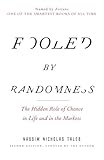
The most personal of Taleb's books and arguably the most readable, Fooled by Randomness draws on his years as a derivatives trader to build a case that luck is chronically underestimated in finance and life. Rougher than his later work but fresher and more autobiographically honest.
What We Loved
- The most accessible entry point to Taleb's ideas, more personal and less hectoring
- The 'alternative histories' mental model is one of the best tools in the book's arsenal
- The trader and investor anecdotes are vivid and sharply observed
- The survivorship bias discussion is exemplary in its clarity
Minor Drawbacks
- Less rigorously structured than The Black Swan, which expanded on many of the same ideas
- Some readers find the Monte Carlo simulation sections technical
- Taleb's disdain for certain colleagues and intellectuals is already apparent here
Key Takeaways
- → Survivorship bias makes successful people look more skilled than they are because the failures are invisible
- → Alternative histories — thinking about the range of outcomes that could have occurred — corrects for hindsight bias
- → In domains with high randomness, short-term performance is nearly meaningless as a measure of skill
- → Human beings are wired to find patterns in noise and attribute outcomes to agency rather than chance
- → The emotional experience of loss is more powerful than its rational weight, distorting decision-making systematically
| Author | Nassim Nicholas Taleb |
|---|---|
| Publisher | Random House |
| Pages | 316 |
| Published | January 1, 2001 |
| Language | English |
| Genre | Philosophy, Economics, Non-Fiction |
| Difficulty | Intermediate |
| Best For | Investors, anyone in a performance-evaluated profession, and readers interested in probability, psychology, and the gap between deserved and actual outcomes. |
How Fooled by Randomness Compares
Fooled by Randomness at a glance against 3 similar books readers weigh alongside it.
| Book | Author | Rating | Best for |
|---|---|---|---|
| Fooled by Randomness (this book) | Nassim Nicholas Taleb | ★ 4.2 | Investors, anyone in a performance-evaluated profession, and readers interested |
| Antifragile | Nassim Nicholas Taleb | ★ 4.2 | Readers who found The Black Swan compelling and want Taleb's prescriptive |
| Skin in the Game | Nassim Nicholas Taleb | ★ 4.1 | Readers who have engaged with Taleb's earlier work and want his ethical |
| The Black Swan | Nassim Nicholas Taleb | ★ 4.2 | Investors, risk managers, policy professionals, and intellectually curious |
The Book That Started an Intellectual Career
Before The Black Swan made Nassim Taleb famous, Fooled by Randomness established the core of his argument: we are systematically bad at distinguishing luck from skill, especially in fields — like finance — where outcomes are highly variable and feedback is slow or misleading.
The book draws heavily on Taleb’s own years as a derivatives trader and his experiences watching colleagues become rich or poor through processes they explained as skill but were largely random. His portrait of the “lucky fool” — the trader who has had a good run, constructed an elaborate narrative of personal genius around it, and will eventually give it all back — is both savage and self-aware.
Alternative Histories
The book’s most powerful conceptual tool is the idea of alternative histories. When a trader makes a fortune on a bet, we observe the one history that occurred. But there is an entire distribution of possible histories — parallel worlds in which the bet went differently — and assessing whether the outcome reflects skill requires thinking about that distribution, not just the outcome.
This is survivorship bias made concrete. The successful hedge fund manager you read about exists in a selection of one from thousands of funds, most of which failed and disappeared. The investment strategy that made 30% last year also lost 60% in a scenario that almost happened. Outcome quality tells you almost nothing about decision quality in high-variance environments.
Emotions and Trading
Taleb is unusually honest about the psychological experience of trading, including his own susceptibility to the biases he critiques. The discomfort of watching a position lose money is real and physical, not merely intellectual, and it produces decisions — cutting winners, holding losers, averaging down into bad bets — that are demonstrably irrational but feel necessary.
He discusses the work of Antonio Damasio on the role of emotion in decision-making, and argues that the goal is not to eliminate emotion but to design systems (rules, pre-commitments, structural constraints) that prevent emotion from overriding rational analysis in the moments when it is most likely to do so.
The Foundation of a Project
Fooled by Randomness is the starting point of a body of work that Taleb extended into The Black Swan, Antifragile, and Skin in the Game. Readers who begin here find a rougher, more personal, more autobiographically honest Taleb than the combative philosopher of later volumes. The ideas are less developed but more immediate.
The Trader Who Became a Public Intellectual
What gives Fooled by Randomness its distinctive authority is that Taleb is not a journalist reporting on markets or an academic theorizing about them from the outside. He spent years as an options trader, a specialist in the rare, violent moves that conventional risk models treat as negligible, and he made his arguments while exposed to their consequences in real money. This is the origin of the idea — central to all his later books — that intellectual claims should carry “skin in the game,” that an opinion costs nothing unless the person voicing it is exposed to being wrong. The book is less a treatise than the field notes of a practitioner who watched colleagues confuse a favorable run of dice with personal brilliance, and who was self-aware enough to watch himself do the same.
That practitioner’s vantage point is also the source of the book’s combative edge. Taleb’s scorn for forecasters, financial journalists, and economists who mistake elegant models for reality is already fully formed here, and it gives the prose a needling energy that some readers find bracing and others find abrasive. The persona that would later become famous — the contrarian flâneur who reads Montaigne and Seneca, lifts heavy weights, and distrusts anyone in a suit who claims to know the future — is recognizably present in this first major book.
A Stoic Argument Dressed as a Finance Book
Beneath the trading anecdotes and the probability lessons, Fooled by Randomness is animated by an older philosophical project: the Stoic effort to distinguish what is within our control from what is not, and to cultivate dignity in the face of a world governed substantially by chance. Taleb draws openly on Seneca, Montaigne, and the classical tradition, and his real subject is less how to make money than how to live wisely when outcomes are noisy and feedback is unreliable. The “lucky fool” is not merely a bad trader; he is a man who has built his self-respect on a foundation that randomness can wash away at any moment.
This is why the book has found an audience far beyond finance. The mechanisms it describes — survivorship bias, the narrative fallacy, the human compulsion to assign agency to outcomes that are mostly noise — operate everywhere that people are judged on results in high-variance environments: in business, in creative careers, in sports, in the assessment of leaders and the worship of winners. Taleb’s wager is that recognizing the role of luck does not make us passive but makes us more rational about what success and failure actually prove.
Where to Start with Taleb
For readers approaching Taleb for the first time, Fooled by Randomness is the right point of entry, and not only because it came first. It is the shortest, the most personal, and the least encumbered by the elaborate apparatus and digressive feuds that fill the later volumes. The core ideas that The Black Swan would systematize — the outsized importance of rare events, the limits of induction, the difference between domains that are “mild” and “wild” in their randomness — appear here in a fresher and more intuitive form. Readers who finish it and want more rigor can proceed to The Black Swan; those who want the constructive sequel can move to Antifragile, which turns the diagnosis of randomness into a prescription for thriving on it.
Our rating: 4.2/5 — The most human entry into Taleb’s work, full of sharp observations about luck, skill, and the stories we tell ourselves about both.
Frequently Asked Questions
What is "Fooled by Randomness" about?
Nassim Taleb's first major book explores how humans systematically mistake luck for skill, especially in financial markets, and the psychological machinery that makes the mistake so persistent.
Who should read "Fooled by Randomness"?
Investors, anyone in a performance-evaluated profession, and readers interested in probability, psychology, and the gap between deserved and actual outcomes.
What are the key takeaways from "Fooled by Randomness"?
Survivorship bias makes successful people look more skilled than they are because the failures are invisible Alternative histories — thinking about the range of outcomes that could have occurred — corrects for hindsight bias In domains with high randomness, short-term performance is nearly meaningless as a measure of skill Human beings are wired to find patterns in noise and attribute outcomes to agency rather than chance The emotional experience of loss is more powerful than its rational weight, distorting decision-making systematically
Is "Fooled by Randomness" worth reading?
The most personal of Taleb's books and arguably the most readable, Fooled by Randomness draws on his years as a derivatives trader to build a case that luck is chronically underestimated in finance and life. Rougher than his later work but fresher and more autobiographically honest.
Ready to Read Fooled by Randomness?
Check the current price on Amazon.
Check Price on Amazon (paid link)Prices and availability are subject to change. See Amazon for current price.
Review last updated: