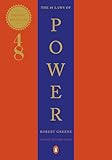
Editors Reads Verdict
Robert Greene's controversial masterwork is simultaneously a history book, a manual for navigating competitive environments, and a cautionary tale — its laws are presented descriptively rather than prescriptively, which is either its greatest intellectual honesty or its most convenient evasion.
What We Loved
- The historical examples are genuinely fascinating and well-researched
- The laws function as both practical guides and analytical frameworks for understanding behavior
- Greene's writing is more engaging than most history books
- The book is most valuable as a map of how power actually operates, regardless of moral preference
Minor Drawbacks
- The amoral framing is genuinely troubling and not always adequately complicated
- Some historical examples are selectively rendered to fit their assigned law
- The book has been used to justify manipulative behavior under cover of 'realism'
- The laws sometimes contradict each other when applied to the same situation
Key Takeaways
- → Power operates according to observable patterns that recur across history and culture
- → Understanding how power works is not the same as endorsing its methods
- → Reputation is a force multiplier — it works for you even when you are not present
- → The appearance of effort is often as important as effort itself
- → Never outshine the master — until you are ready to replace them
| Author | Robert Greene |
|---|---|
| Publisher | Viking |
| Pages | 452 |
| Published | September 1, 1998 |
| Language | English |
| Genre | Self-Help, Psychology, History |
| Difficulty | Intermediate |
| Best For | Readers who want to understand how power operates in human organizations, and who can engage critically with amoral strategic frameworks. |
How The 48 Laws of Power Compares
The 48 Laws of Power at a glance against 3 similar books readers weigh alongside it.
| Book | Author | Rating | Best for |
|---|---|---|---|
| The 48 Laws of Power (this book) | Robert Greene | ★ 4.1 | Readers who want to understand how power operates in human organizations, and |
| Meditations | Marcus Aurelius | ★ 4.8 | Anyone seeking practical philosophical guidance for living with integrity under |
| The Art of War | Sun Tzu | ★ 4.3 | Anyone interested in competitive strategy, negotiation, or leadership who wants |
| Thinking, Fast and Slow | Daniel Kahneman | ★ 4.6 | Investors, doctors, lawyers, managers, policymakers, and any curious person who |
Power as Observable Phenomenon
Robert Greene’s 48 Laws of Power has been banned from multiple prisons (which is itself one of the best marketing facts in publishing history) and has sat permanently on bestseller lists for over two decades. It is read devotedly by people who want to understand power, people who want to acquire it, people who want to protect themselves from it, and people who simply find the historical examples endlessly fascinating.
The book presents itself as descriptive rather than prescriptive — these are not laws Greene invented but patterns he has observed across three thousand years of documented history. Louis XIV, Catherine the Great, P.T. Barnum, Henry Kissinger, Niccolò Machiavelli: each law is illustrated by historical examples of the law applied effectively and a “transgression” example of someone who violated it and suffered the consequences.
The Amoral Question
The most persistent criticism of The 48 Laws of Power is its amorality — the laws are presented without reference to whether applying them is ethical. Law 15 is “Crush Your Enemy Totally.” Law 7 is “Get Others to Do the Work for You, but Always Take the Credit.” These are not laws Greene is recommending as virtuous; they are patterns he is documenting as effective.
The fairest reading of the book treats it the way Greene says it should be read: as a map of how power actually works, which is useful knowledge whether you intend to use the laws or to defend against them. The most dangerous reading treats the laws as a manual for treating other people as obstacles or tools.
What The Book Does Well
Greene is a genuinely skilled synthesizer of historical material, and the case studies in The 48 Laws are frequently fascinating as standalone history. The stories of Nikola Tesla’s lost power struggle with Thomas Edison, of Galileo’s court politics, of figures like the Cardinal de Retz navigating the murderous politics of seventeenth-century France — these read like excellent historical anecdotes regardless of the law they’re illustrating.
Its Cultural Reach
The book became required reading in hip-hop circles beginning in the late 1990s, adopted by artists who saw its analysis of power and vulnerability as relevant to navigating the music industry and broader American systems. This cultural adoption expanded its audience significantly and shaped how certain generations think about power dynamics.
Our rating: 4.1/5 — A fascinating and troubling historical synthesis that is most valuable as a map of how power works and most dangerous when taken as a manual for how to behave.
A Controversial Guide to Power
The 48 Laws of Power is Robert Greene’s notorious and best-selling examination of power, a compendium of strategies and principles for gaining, wielding, and protecting power, drawn from history, philosophy, and the lives of historical figures. Presented as a set of forty-eight “laws,” each illustrated with historical anecdotes and observations, the book offers a frank, often ruthless analysis of how power actually operates in human affairs. It has become enormously popular, particularly among those interested in strategy, business, and self-advancement, while also attracting significant controversy for its amoral and manipulative ethos.
A Frank, Amoral Analysis
The defining and most controversial feature of the book is its unsentimental, amoral approach to power. Greene presents his laws without moral judgment, frankly advocating tactics that are often manipulative, deceptive, or ruthless, such as concealing one’s intentions, exploiting others, and crushing rivals. Readers should approach the book with this firmly in mind: it is a description and endorsement of strategies that many would consider cynical or unethical, presented as the realities of how power works. Whether one reads it as a practical guide or as a disturbing study of manipulation, its amorality is central to its character.
Lessons from History
A distinctive feature of the book is its use of historical anecdotes and examples to illustrate each law, drawing on the lives of rulers, courtiers, con artists, and strategists across history. These stories, ranging from ancient times to the modern era, make the abstract principles concrete and give the book the flavor of a collection of historical case studies in power and intrigue. The breadth of historical reference is part of the book’s appeal, offering entertaining and instructive examples, though readers should recognize that the histories are selected and shaped to fit the laws.
Reading It Critically
Given its content, The 48 Laws of Power is best read critically and thoughtfully rather than as a straightforward manual for living. Some readers value it as a clear-eyed understanding of the often-uncomfortable realities of power and human behavior, useful for recognizing and defending against manipulation as much as for practicing it. Others find its ethos genuinely troubling and its advice corrosive. The wisest approach is to engage it with awareness, extracting insight into how power and manipulation operate while bringing one’s own moral judgment to bear on whether and how to apply its lessons.
A Cultural Phenomenon
Despite, or because of, its controversy, The 48 Laws of Power has become a major cultural phenomenon, widely read and frequently cited across many fields, from business to entertainment. Its frank engagement with power has resonated with a vast audience, even as critics condemn its values. For readers interested in the dynamics of power, strategy, and human manipulation, approached with appropriate critical distance, the book offers a provocative and influential, if morally troubling, exploration of how power has been pursued and wielded throughout history, and it remains one of the most discussed and divisive books of its kind.
Frequently Asked Questions
What is "The 48 Laws of Power" about?
A distillation of three thousand years of history's most effective strategies for acquiring and maintaining power, drawn from historical figures ranging from Sun Tzu to Catherine the Great.
Who should read "The 48 Laws of Power"?
Readers who want to understand how power operates in human organizations, and who can engage critically with amoral strategic frameworks.
What are the key takeaways from "The 48 Laws of Power"?
Power operates according to observable patterns that recur across history and culture Understanding how power works is not the same as endorsing its methods Reputation is a force multiplier — it works for you even when you are not present The appearance of effort is often as important as effort itself Never outshine the master — until you are ready to replace them
Is "The 48 Laws of Power" worth reading?
Robert Greene's controversial masterwork is simultaneously a history book, a manual for navigating competitive environments, and a cautionary tale — its laws are presented descriptively rather than prescriptively, which is either its greatest intellectual honesty or its most convenient evasion.
Ready to Read The 48 Laws of Power?
Check the current price on Amazon.
Check Price on Amazon (paid link)Prices and availability are subject to change. See Amazon for current price.
Review last updated: