Best Books About Negotiation and Influence: Essential Reading
The best books about negotiation and influence — from Never Split the Difference and Thinking Fast and Slow to The 48 Laws of Power and Poor Charlie's Almanack.
By Marcus Webb
Books about negotiation and influence fall into three categories: practical guides to specific negotiation techniques, psychology books about how people make decisions and are influenced, and strategic frameworks for understanding power. The best books in each category are below.
Practical Negotiation
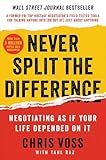
Never Split the Difference — Chris Voss (2016)
The best practical negotiation book. Voss, the FBI’s former chief international hostage negotiator, argues that conventional negotiation advice fails because it treats negotiation as a rational exercise when it is fundamentally an emotional one. The specific techniques — tactical empathy (making the other person feel genuinely heard), labelling emotions (“It sounds like you’re concerned about…”), calibrated questions (“How am I supposed to do that?”) — are immediately applicable and derived from real high-stakes situations. The book’s central insight: the goal of negotiation is not to win arguments but to change behaviour, and that requires understanding the emotional state of the other person.
The Psychology of Decision-Making
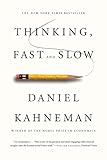
Thinking Fast and Slow — Daniel Kahneman (2011)
The most important book for anyone who wants to understand how people actually make decisions — rather than how they should, in theory, make decisions. Kahneman’s decades of research with Amos Tversky identified the systematic biases (loss aversion, anchoring, availability heuristic, framing effects) that predictably distort human judgment. Understanding these biases matters both for recognising how others are trying to influence your decisions and for understanding how to frame your own proposals more effectively.
Power and Strategic Thinking
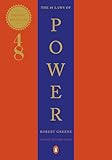
The 48 Laws of Power — Robert Greene (1998)
The most widely read strategic manual for understanding how power actually works — drawing on historical examples from Machiavelli, cardinal Richelieu, Henry Kissinger, and a long tradition of court and military strategists to articulate forty-eight laws. The book is amoral: it describes what effective powerful people do, not what they should do. Most useful as a way of recognising when these dynamics are operating in your own environment.
Poor Charlie’s Almanack — Charles T. Munger (2005)
Munger’s collected speeches and notes — the thinking of Warren Buffett’s partner at Berkshire Hathaway — include the most coherent framework for avoiding the cognitive biases Kahneman identifies. Munger’s concept of the ‘lollapalooza effect’ (multiple biases operating simultaneously in the same direction) and his checklist approach to decision-making are the most practically useful frameworks for clear thinking under pressure.
How the Four Books Fit Together
These four books are less a list than a system, and understanding how they interlock is the fastest way to extract their combined value. Kahneman supplies the underlying science: the catalogue of predictable irrationalities — anchoring, loss aversion, framing — that govern every party at every table, including you. Voss supplies the field application: hostage negotiation is decision science under maximum stakes, and his techniques are essentially tools for working with System 1 emotion rather than futilely appealing to System 2 logic. When Voss says negotiation is emotional rather than rational, he is restating Kahneman’s findings as operational doctrine.
Greene and Munger then form the strategic outer layer, and they function best as a matched pair of opposites. Greene maps the offensive game — how power is actually accumulated, displayed, and defended by people unconstrained by scruple — while Munger maps the defensive one: how a disciplined mind audits itself against the very manipulation and self-deception Greene catalogues. Read Greene to recognise the plays being run on you; read Munger to make sure you are not running them on yourself. A reader who absorbs all four ends up covered at every level: the science of judgment, the tactics of the conversation, the strategy of the relationship, and the ethics of the whole enterprise.
Using These Techniques Without Becoming Manipulative
The uncomfortable question hovering over any influence reading list is whether studying these tools makes you a manipulator, and the honest answer depends on a distinction the best of these authors draw themselves. Voss is explicit that tactical empathy only works when the curiosity is genuine — counterparts detect performed listening quickly, and the technique collapses into its opposite. Influence built on actually understanding what the other side needs is just competent communication; influence built on exploiting what they fear is manipulation, and it tends to win single transactions while destroying the relationships that repeat business, references, and reputations are made of.
The practical test is symmetry: would the technique still work if the other party knew exactly what you were doing? Labelling someone’s concern out loud passes that test — it works better when transparent. Manufacturing false deadlines or exploiting anchoring against an unsophisticated counterpart fails it. Greene’s laws mostly fail the symmetry test, which is precisely why the book is best read as threat intelligence rather than a playbook; Munger’s psychology of human misjudgment passes it completely, because its entire purpose is to be applied to oneself. Negotiation skill compounds over a career only when people leave the table willing to sit across from you again.
What This List Deliberately Leaves Out
A reading list is also defined by its omissions, and two are worth naming. Classic academic negotiation theory — the Harvard “principled negotiation” school built around interests, options, and objective criteria — is the framework Voss explicitly pushes against, and reading him without it slightly overstates his iconoclasm; readers who want the orthodoxy he is correcting should know it exists and that the two approaches are more complementary than the marketing suggests, structure from one, emotional mechanics from the other. Persuasion psychology beyond Kahneman — the experimental literature on reciprocity, social proof, commitment, and scarcity — is the second gap, and it underpins half of modern marketing; the four books here will let you recognise those levers when they are pulled, but a curious reader will eventually want the source research. Start with these four because they cover the deepest layers — judgment, emotion, power, self-command — and the rest of the influence literature slots neatly into the frame they build.
Reading Order
Start practical: Never Split the Difference → Thinking Fast and Slow → The 48 Laws of Power.
Decision-making: Thinking Fast and Slow → Poor Charlie’s Almanack → Never Split the Difference.
Power and strategy: The 48 Laws of Power → Poor Charlie’s Almanack → Thinking Fast and Slow.
Frequently Asked Questions
What is the best book about negotiation?
Never Split the Difference by Chris Voss is the best practical negotiation book — written by the FBI's former lead international hostage negotiator, it applies hostage negotiation techniques (tactical empathy, mirroring, calibrated questions) to everyday negotiation. The insight that most negotiation advice treats it as a rational exercise when it is fundamentally an emotional one is the book's central contribution. Thinking Fast and Slow by Daniel Kahneman is the most important book for understanding the cognitive biases that affect all decision-making and negotiation.
What is Never Split the Difference about?
Never Split the Difference (2016) by Chris Voss argues that conventional negotiation advice (split the difference, aim for win-win, appeal to reason) fails because negotiation is an emotional rather than a rational exercise. Voss draws on FBI hostage negotiation techniques — specifically the discovery that negotiators who focused on understanding the emotional state of the person they were talking to were more effective than those who focused on logical arguments. The specific techniques (tactical empathy, labelling emotions, the 'late night FM DJ voice') are immediately actionable.
What is Thinking Fast and Slow about?
Thinking Fast and Slow (2011) by Daniel Kahneman summarises decades of research on cognitive biases — the predictable ways in which human judgment deviates from rational decision-making. Kahneman's two-systems framework (System 1, fast and intuitive; System 2, slow and deliberative) explains why people are consistently wrong about probability, why they are loss-averse in ways that are economically irrational, why they anchor to irrelevant numbers, and why they substitute easier questions for harder ones. The research is directly applicable to negotiation, pricing, and any other situation in which one person is trying to influence another's decision.
What is The 48 Laws of Power about?
The 48 Laws of Power (1998) by Robert Greene is a manual for acquiring and maintaining power — drawing on historical examples (Machiavelli, court life, con artists) to articulate forty-eight laws of how power actually works. The book is amoral (it describes what effective powerful people do, not what they should do) and has been both widely read and widely criticised for that amorality. It is most useful as an account of how power is exercised by others — understanding the laws allows one to recognise when they are being applied — rather than as a guide to applying them oneself.