Best Books About Negotiation: Essential Reading List
The best books about negotiation — from Never Split the Difference and Getting to Yes to How to Win Friends and Influence People. Practical skills and psychological frameworks that work.
By Marcus Webb
Negotiation is not a rare skill required only by lawyers, diplomats, and hostage negotiators. It is a daily activity — every discussion where two people with different interests try to reach an agreement is a negotiation. Salary discussions, parenting decisions, business deals, relationship conflicts: all are negotiations, and the skills that work in a high-stakes negotiation work in ordinary life.
The books below cover both the theoretical foundations (what negotiation is and how it works) and the practical techniques that actually improve outcomes in specific situations.
The Essential Books
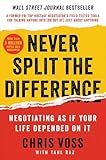
Never Split the Difference — Chris Voss with Tahl Raz (2016)
The most practically useful negotiation book published in the last twenty years. Voss spent fifteen years as an FBI hostage negotiator — a context in which “splitting the difference” is literally fatal — and his framework draws on that experience in ways that apply to any high-stakes negotiation.
His core techniques:
Tactical empathy — not pretending to agree but demonstrating that you understand the other party’s perspective and feelings, which lowers defensiveness and opens them to your position.
Mirroring — repeating the last three words of what someone said, which prompts them to elaborate and gives you information without committing you to anything.
Calibrated questions — “How am I supposed to do that?” rather than “No” — questions that make the other party solve your problem rather than resist your position.
The Ackerman method — a systematic approach to anchoring and countering (start at 65% of your target, then 85%, then 95%, then 100%, with small non-round numbers that signal careful calculation).
The book is readable, anecdote-driven, and specific enough to apply immediately.
How to Win Friends and Influence People — Dale Carnegie (1936)
The bestselling self-help book in American publishing history — 30 million copies and still in print 90 years after publication. Carnegie’s principles are simple: become genuinely interested in others, listen more than you talk, remember and use people’s names, make others feel important rather than small, never criticise directly.
This sounds like obvious advice. It is obvious advice. The reason it remains in print is that obviously true advice is rarely followed, and the consequences of not following it — in negotiations and in all relationships — are real. Carnegie’s book is less a negotiation manual than a reminder of what respectful attention to other people actually requires.
Pre-Suasion — Robert Cialdini (2016)
The follow-up to Cialdini’s Influence (the more famous book, though Pre-Suasion is more useful). Cialdini’s argument: the most powerful moment to influence a decision is not when you make your argument but before — the state of attention you create before you speak determines how your words are received. Pre-Suasion covers the conditions that make people receptive: what they were just thinking about, what they see in their environment, what you asked them to focus on immediately before your proposal.
For salespeople, negotiators, managers, or anyone who communicates for a living, Pre-Suasion is the most practically useful book about influence currently available.
Theoretical Foundations
Getting to Yes — Roger Fisher and William Ury (1981)
The foundational academic text on negotiation. Fisher and Ury’s “principled negotiation” model — separate people from the problem, focus on interests rather than positions, generate multiple options before deciding, insist on objective criteria — is the framework that underlies most professional negotiation training. The concept of BATNA (Best Alternative To a Negotiated Agreement) — knowing your walk-away point before you enter a negotiation — is the most important single idea in negotiation.
Getting to Yes is less immediately practical than Voss but more structurally rigorous. It is the book that teaches you what is happening in a negotiation; Voss’s book teaches you what to do about it.
Psychology of Persuasion
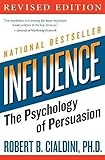
Influence — Robert Cialdini (1984)
The scientific study of what makes people say yes. Cialdini spent years researching the six principles of persuasion: reciprocity, commitment and consistency, social proof, authority, liking, and scarcity. The book is descriptive — it explains why these principles work — but the implications for negotiators and salespeople are direct. If you understand that people are more likely to say yes to someone they like, to an authority figure, or to something scarce, you can both use these principles and protect yourself against others using them on you.
The most important book on the psychology of decision-making for anyone who negotiates for a living.
Negotiation as an Inescapable Human Activity
The first and most liberating insight that the best books on negotiation offer is the recognition that negotiation is not a specialized activity confined to business deals, diplomatic summits, and salary discussions, but a pervasive and inescapable feature of human life, conducted constantly in every relationship and interaction whether we recognize it or not. Most people think of negotiation as something that happens in particular formal settings, a skill needed only occasionally and by certain kinds of professionals, but this narrow conception badly underestimates how central negotiation actually is to human existence. In reality, we negotiate constantly — with our spouses and children, our friends and colleagues, our bosses and employees, the institutions we deal with and the strangers we encounter — whenever our interests, desires, or perspectives differ from another’s and we must find a way forward together. Every disagreement that must be resolved, every difference that must be reconciled, every situation in which two parties want different things and must reach some accommodation, is a negotiation, and the skills of negotiation are therefore among the most broadly useful that a person can develop, applicable not in some narrow professional domain but across the entire range of human relationships and interactions. Recognizing the ubiquity of negotiation is liberating because it transforms the subject from a specialized business skill into a fundamental life skill, one whose mastery can improve virtually every relationship and interaction, and because it reveals that the principles of effective negotiation, far from being relevant only in the boardroom, can be applied to enrich and ease the countless negotiations of everyday life. The best books on the subject make this clear, presenting negotiation not as a narrow professional technique but as a fundamental human competence whose mastery rewards anyone willing to develop it.
Beyond Winning: The Search for Mutual Gain
The most important conceptual advance in the modern understanding of negotiation, and a central theme in the best books on the subject, is the movement beyond the adversarial, win-lose conception of negotiation toward an understanding centered on mutual gain — the recognition that the most effective negotiation is usually not a battle to be won at the other party’s expense but a collaborative search for solutions that serve the genuine interests of both sides. The popular conception of negotiation imagines it as a contest, a zero-sum struggle in which one party’s gain is the other’s loss, and in which success means extracting as much as possible while giving up as little as possible, prevailing over an opponent through toughness, leverage, and the willingness to push hard. The best modern negotiation thinking rejects this adversarial model as both ineffective and unnecessarily destructive, demonstrating that the win-lose conception leaves value on the table, damages relationships, and often produces worse outcomes for both parties than a more collaborative approach. In its place, the wisest books advance an understanding of negotiation as a search for mutual gain, in which the parties work to understand each other’s genuine underlying interests, to find creative solutions that satisfy both, and to expand the available value rather than merely fighting over a fixed pie. This reframing, from adversarial contest to collaborative problem-solving, is transformative, for it reveals that the most successful negotiations are often those in which both parties leave satisfied, that attending to the other side’s real interests is a source of strength rather than weakness, and that the search for mutually beneficial solutions usually produces better outcomes than the struggle for one-sided victory. This understanding of negotiation as the pursuit of mutual gain rather than the winning of a contest is among the most valuable lessons the literature offers, and it has the power to transform not only the outcomes of negotiations but the relationships within which they occur.
The Inner Game of Negotiation
Beneath the techniques and strategies that fill the literature of negotiation lies a deeper truth that the best books emphasize: that the decisive factors in negotiation are often psychological and emotional rather than tactical, and that mastery of the inner game — of one’s own emotions, perceptions, and psychology, and of the emotions and psychology of the other party — is more important than any technique. Negotiation is fundamentally a human interaction, conducted between people with emotions, egos, fears, and psychological needs, and the best books recognize that these human and psychological dimensions, far from being incidental, are central to how negotiations actually unfold and how they can be successfully managed. The skilled negotiator must master their own psychology — managing their emotions, controlling their reactions, maintaining composure under pressure, and resisting the impulses of ego, anger, and fear that lead to poor decisions — and must also understand and attend to the psychology of the other party, recognizing their emotional needs, their underlying fears and motivations, and the human factors that drive their behavior. This emphasis on the inner game reflects a sophisticated understanding that negotiation is not a mechanical application of techniques but a subtle human interaction in which emotional intelligence, self-awareness, and psychological insight are the decisive capacities. The best books therefore devote as much attention to the management of emotion and psychology as to the deployment of tactics, teaching the reader to understand and govern their own emotional responses, to perceive and address the emotional needs of the other party, and to recognize the powerful role that psychology plays in every negotiation. This focus on the inner game is among the literature’s most valuable contributions, for it directs the negotiator’s attention to the human and emotional factors that so often determine outcomes, and it reveals that the path to effective negotiation runs not merely through the mastery of techniques but through the deeper mastery of oneself and the understanding of others.
Reading by Context
For salary and business negotiations: Never Split the Difference → Getting to Yes.
For everyday relationships and communication: How to Win Friends and Influence People → Pre-Suasion.
For understanding persuasion scientifically: Influence → Pre-Suasion → Never Split the Difference.
Frequently Asked Questions
What is the best book on negotiation?
Never Split the Difference by Chris Voss is the most highly regarded negotiation book of the last decade — Voss is a former FBI hostage negotiator, and his techniques (tactical empathy, mirroring, calibrated questions) are specific, learnable, and applicable to salary negotiations, business deals, and everyday conflict as much as to hostage situations. Getting to Yes by Fisher and Ury is the classic academic text — principled negotiation versus positional bargaining — but Voss's framework is more immediately practical.
What is the difference between negotiation and persuasion?
Negotiation is the process of reaching an agreement when two parties have different interests — it involves give-and-take, BATNA (best alternative to negotiated agreement), and the management of competing demands. Persuasion is the process of changing someone's view or behaviour without the explicit structure of a negotiation. In practice the two overlap: good negotiators are also persuasive, and good persuaders use negotiation techniques. The books on this list cover both.
Is How to Win Friends and Influence People still relevant?
Yes — Dale Carnegie's 1936 book has sold 30 million copies and remains in print because its core principles (become genuinely interested in other people, remember names, listen more than you talk, make others feel important) are as true as they were in 1936. The anecdotes are dated but the underlying psychology is sound. It is better understood as a book about respect and attention than as a manipulation manual.
What negotiation books work for salary negotiations specifically?
Never Split the Difference is the most practical for salary negotiations — particularly Voss's techniques of anchoring high, using silence strategically, and the 'Ackerman bargaining method.' Influence by Robert Cialdini covers the psychological principles that make offers more compelling. The more academic Getting to Yes provides the framework (BATNA, principled negotiation) that underlies most professional advice on the subject.