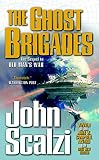
Editors Reads Verdict
A more philosophically interesting book than Old Man's War — Scalzi uses the Ghost Brigades concept to ask genuine questions about identity and what it means to be a person, while delivering everything fans of the first book want.
What We Loved
- The identity question — is Jared Dirac the same person as Charles Boutin whose consciousness he carries? — is handled with real philosophical care
- The Ghost Brigades concept is more original than the Old Man's War premise and generates more interesting story territory
- Scalzi's wit and readability are intact — this is science fiction that works as pure entertainment while smuggling in serious ideas
Minor Drawbacks
- Readers who haven't read Old Man's War will miss the full context, though the novel stands reasonably well alone
- The resolution of the traitor plotline is less surprising than the philosophical setup deserves
Key Takeaways
- → Identity is not continuous consciousness but something more fragmented and reconstructed — the self is more fragile than our experience of it suggests
- → Loyalty can be felt without being rationally justified — and the gap between the feeling and the justification is where Scalzi's most interesting scenes live
- → Military culture's suppression of individual identity is both necessary for unit cohesion and deeply corrosive to the humans within it
| Author | John Scalzi |
|---|---|
| Publisher | Tor Books |
| Pages | 344 |
| Published | February 27, 2006 |
| Language | English |
| Genre | Science Fiction, Military Science Fiction, Space Opera |
How The Ghost Brigades Compares
The Ghost Brigades at a glance against 3 similar books readers weigh alongside it.
| Book | Author | Rating | Best for |
|---|---|---|---|
| The Ghost Brigades (this book) | John Scalzi | ★ 4.2 | Science Fiction |
| Old Man's War | John Scalzi | ★ 4.3 | Science fiction readers looking for smart, accessible, and entertaining |
| Starship Troopers | Robert A. Heinlein | ★ 4.1 | Science Fiction |
| The Forever War | Joe Haldeman | ★ 4.3 | Science fiction readers interested in military SF, anti-war fiction, and |
The Ghost Brigades Review
The Ghost Brigades is the second novel in John Scalzi’s Old Man’s War universe, and in some ways it is a more philosophically interesting book than its predecessor. Where Old Man’s War was a fairly straightforward military SF adventure with a clever central conceit, The Ghost Brigades takes one of the elements introduced in that book — the Special Forces soldiers created from the DNA of the dead, who exist without any memory of their previous lives — and uses it to ask genuine questions about identity, consciousness, and what it means to be a person.
The novel’s protagonist is Jared Dirac, a Ghost Brigades soldier into whom the consciousness of a traitor named Charles Boutin has been inserted — unsuccessfully, as far as the CDF can tell. But as Jared serves in the field, fragments of Boutin’s memories and personality begin to surface, raising the question that structures the novel: Is Jared Dirac a new person? A copy of Boutin? Neither? And what does the answer mean for what he owes to the CDF and what he might owe to Boutin’s cause?
Scalzi handles these questions with more philosophical care than his light, entertaining prose style might suggest. He is not a novelist who asks readers to do heavy lifting, but he has thought seriously about the implications of his premise, and the best sections of The Ghost Brigades take identity apart in genuinely useful ways. The military action sequences are as well-executed as in the first book; the philosophical dividend is considerably larger.
What Distinguishes This Book
Among the qualities that set The Ghost Brigades apart: The identity question — is Jared Dirac the same person as Charles Boutin whose consciousness he carries? — is handled with real philosophical care; The Ghost Brigades concept is more original than the Old Man’s War premise and generates more interesting story territory; and Scalzi’s wit and readability are intact — this is science fiction that works as pure entertainment while smuggling in serious ideas. These strengths are evident from the first pages and sustain across the whole work.
Themes
The thematic concerns of The Ghost Brigades give it weight beyond its surface narrative. Identity is not continuous consciousness but something more fragmented and reconstructed — the self is more fragile than our experience of it suggests. Loyalty can be felt without being rationally justified — and the gap between the feeling and the justification is where Scalzi’s most interesting scenes live. Military culture’s suppression of individual identity is both necessary for unit cohesion and deeply corrosive to the humans within it. These ideas emerge from the texture of the work rather than explicit statement, which is the mark of ambitious fiction done well.
The Reading Experience
The Ghost Brigades is the kind of book that changes slightly depending on when you read it. The surface — plot, character, setting — remains constant, but the reader brings different things to it at different points in life, and the book meets them there. This is a property of enduring work, and it distinguishes The Ghost Brigades from titles that are consumed once and not returned to.
Limitations
Readers who haven’t read Old Man’s War will miss the full context, though the novel stands reasonably well alone. The resolution of the traitor plotline is less surprising than the philosophical setup deserves. These are worth knowing before starting, though they are unlikely to diminish the experience for the readers the book is written for.
Old Man’s War Series and Scalzi’s Career
The Ghost Brigades was published in February 2006 as the second Old Man’s War novel, following Old Man’s War (2005). John Scalzi began Old Man’s War as a web serial, posting it on his blog “Whatever” before submitting it to Tor Books; the novel’s online publication history has been cited as an early example of web-based fiction building a readership before traditional publication.
The series drew explicit comparisons to Robert Heinlein’s Starship Troopers (1959) and Joe Haldeman’s The Forever War (1974), acknowledged by Scalzi as direct influences; critics generally placed it in the tradition of military science fiction that takes the human cost of interstellar war seriously rather than treating combat as adventure. Old Man’s War won the Locus Award for Best First Novel in 2006.
Scalzi served as president of the Science Fiction and Fantasy Writers of America (SFWA) from 2010 to 2013. His blog “Whatever,” where he has published personal and professional commentary since 1998, is among the most widely read by science fiction writers and fans. Redshirts (2012), his metafictional novel about minor characters on a Star Trek-like spaceship, won the Hugo Award for Best Novel in 2013.
Scalzi received the John W. Campbell Award for Best New Writer in 2006, the same year Old Man’s War received its Hugo nomination; The Ghost Brigades reinforced his standing as one of the decade’s most commercially successful SF debuts, selling steadily alongside the original and initiating the multi-novel Old Man’s War series that has continued into the 2020s.
The Special Forces
The Ghost Brigades are the Colonial Defense Forces’ special operations units, composed of soldiers grown from the DNA of people who volunteered to join the CDF and then died before their service began. Their enhanced bodies and accelerated training give them capabilities beyond the regular CDF, but the novel’s interest is in what it means to be a person assembled from someone else’s biological information — and whether consciousness, grown rather than developed, constitutes a self in the full sense. Jane Sagan, introduced in the first novel, continues in this one.
Final Verdict
Our rating: 4.2/5 — A more philosophically interesting book than Old Man’s War — Scalzi uses the Ghost Brigades concept to ask genuine questions about identity and what it means to be a person, while delivering everything fans of the first book want.
Frequently Asked Questions
What is "The Ghost Brigades" about?
The Special Forces soldiers of the Colonial Defense Forces are the Ghost Brigades — created from the DNA of the dead, with no memories of previous lives. When a traitor's consciousness is inserted into one of them, Scalzi explores identity and loyalty in a worthy sequel to Old Man's War.
What are the key takeaways from "The Ghost Brigades"?
Identity is not continuous consciousness but something more fragmented and reconstructed — the self is more fragile than our experience of it suggests Loyalty can be felt without being rationally justified — and the gap between the feeling and the justification is where Scalzi's most interesting scenes live Military culture's suppression of individual identity is both necessary for unit cohesion and deeply corrosive to the humans within it
Is "The Ghost Brigades" worth reading?
A more philosophically interesting book than Old Man's War — Scalzi uses the Ghost Brigades concept to ask genuine questions about identity and what it means to be a person, while delivering everything fans of the first book want.
Ready to Read The Ghost Brigades?
Check the current price on Amazon.
Check Price on Amazon (paid link)Prices and availability are subject to change. See Amazon for current price.
Review last updated: