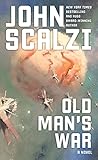
Editors Reads Verdict
Old Man's War is smart, propulsive military science fiction that reinvents the Heinlein-esque space opera for a contemporary audience — funny, fast-moving, and more emotionally complex than its genre packaging suggests.
What We Loved
- The central premise is genuinely original and generates excellent dramatic and philosophical questions
- Scalzi's prose is clean, fast, and frequently very funny
- John Perry is an unusually self-aware and engaging first-person narrator
- The galaxy Scalzi builds is richly imagined without being overwhelming
Minor Drawbacks
- Some readers find the Heinlein influence too direct
- The romance subplot strains credibility in ways the military elements don't
- The philosophical implications of the body-swap conceit are underdeveloped
Key Takeaways
- → What makes us who we are — memory, body, continuity — is genuinely uncertain
- → Military SF's best traditions involve both action and genuine philosophical inquiry
- → Scalzi acknowledges and updates Heinlein's legacy rather than simply repeating it
- → Age and identity are the novel's real subjects beneath the space opera mechanics
- → The series builds considerable complexity on the simple premise of this first volume
| Author | John Scalzi |
|---|---|
| Publisher | Tor Books |
| Pages | 354 |
| Published | January 1, 2005 |
| Language | English |
| Genre | Science Fiction |
| Difficulty | Beginner |
| Best For | Science fiction readers looking for smart, accessible, and entertaining military SF — particularly fans of Heinlein who want a contemporary update of his themes. |
How Old Man's War Compares
Old Man's War at a glance against 3 similar books readers weigh alongside it.
| Book | Author | Rating | Best for |
|---|---|---|---|
| Old Man's War (this book) | John Scalzi | ★ 4.3 | Science fiction readers looking for smart, accessible, and entertaining |
| 2001: A Space Odyssey | Arthur C. Clarke | ★ 4.3 | Science fiction readers interested in hard SF, AI, space exploration, and the |
| Stranger in a Strange Land | Robert A. Heinlein | ★ 4.1 | Classic science fiction readers and anyone interested in the history of |
| The Forever War | Joe Haldeman | ★ 4.3 | Science fiction readers interested in military SF, anti-war fiction, and |
Old Bodies, New Wars
The premise of Old Man’s War is elegantly simple: on Earth, citizens can enlist in the Colonial Defense Forces at age 75 — and receive, in exchange, young bodies enhanced for combat. The catch is that you can never return to Earth, and the nature of the body transfer is kept deliberately mysterious.
John Perry, a retired widower who enlists on his 75th birthday, is Scalzi’s narrator: wry, intelligent, and genuinely interesting in the way that makes military SF protagonists work. He approaches the alien and the horrific with the same pragmatic curiosity he brings to everything, which makes the novel both readable and surprisingly moving in places.
The Heinlein Conversation
Scalzi is writing in conscious dialogue with Heinlein — particularly Starship Troopers — but with a different set of values. His military is more diverse, the politics are more complicated, and Perry’s perspective as someone who has already lived a full life gives the combat sequences a weight that teenage protagonist-driven military SF often lacks. There is no glamour here, though there is action.
The galaxy Scalzi builds is populated with a staggering number of alien species, all of them competing for habitable planets. Humanity’s position as one aggressive species among many is handled without the easy assumption of human superiority.
More Than Genre Exercise
What elevates Old Man’s War above competent military SF is the question at its centre: if you transferred into a new body with new enhancements, would you still be you? Perry’s relationship with his dead wife — and what he finds on the battlefield that relates to her — gives the novel its emotional core and the philosophical question its stakes.
Why Recruit the Old?
The conceit that powers everything is Scalzi’s decision to draft the elderly rather than the young, and it is cleverer than it first appears. Seventy-five-year-olds have nothing left to lose on Earth, a lifetime of accumulated judgment, and a desperate, fully understood reason to want a second body: the alternative is death by old age. That gives the combat a weight teenage-protagonist military SF rarely manages. When Perry and his fellow recruits — a self-named band of geriatric enlistees who call themselves the “Old Farts” — ship out, they bring decades of perspective to the absurdity and horror of what is being done to them. Scalzi mines this for both comedy and pathos: there is something genuinely funny about retirees marveling at their new super-bodies, and something genuinely sad about people who had to die to their old lives to keep living at all.
Becoming a Green Machine
The mystery of the body transfer is the book’s first great hook, and Scalzi pays it off with relish. Recruits do not get rejuvenated; they wake up in entirely new bodies, grown from their own engineered DNA and optimized for war. The skin is chlorophyll-green for photosynthetic energy, the eyes are cat-like and gold, the blood is “SmartBlood” — a nanobot fluid that carries oxygen far more efficiently than the real thing — and wired into the skull is a BrainPal, a neural computer that lets soldiers communicate silently, translate alien languages, target weapons by thought, and absorb information instantly. Perry’s delight and unease at inhabiting this superhuman body is one of the novel’s pleasures, and Scalzi uses it to keep the identity question alive: this is recognizably John Perry, with all his memories and wit, housed in something that is no longer quite human.
The Real Cost of Interstellar War
For all its humor, Old Man’s War is unsentimental about combat. The galaxy Scalzi builds is crowded with species fighting over a finite supply of habitable worlds, and the Colonial Defense Forces are not noble peacekeepers but one aggressive participant in a brutal scramble. Soldiers die constantly, casually, in numbers that the BrainPal tallies with bureaucratic coldness. One early engagement against a tiny alien species is played for queasy comedy and then for horror, forcing Perry — and the reader — to sit with the moral vertigo of slaughter at scale. Scalzi declines the easy assumption of human superiority; humanity survives because it is ruthless and adaptable, not because it is right.
The Ghosts at the Margins
Haunting the edges of the novel are the Special Forces — the Ghost Brigades — soldiers grown from the DNA of people who died before they could enlist, born as adults with no childhood and a BrainPal-generated synthetic consciousness to bootstrap them. They are eerie, formidable, and not quite people in the ordinary sense, and they set up the series’ larger meditation on what manufactured identity means. They also deliver the novel’s emotional gut-punch: a Special Forces soldier named Jane Sagan who wears the face of Perry’s long-dead wife, Kathy, built from her donated genes. That collision of grief, recognition, and impossibility gives the philosophical machinery its human stakes and seeds the sequels.
A Doorway Into a Universe
Old Man’s War was Scalzi’s debut, famously serialized on his blog before Tor picked it up, and it earned a Hugo nomination and launched one of the most reliably entertaining careers in modern SF. It works completely as a standalone, but it is also the front door to a rich sequence — The Ghost Brigades, The Last Colony, and Zoe’s Tale — that takes the questions raised here about consciousness, colonialism, and manufactured life and pushes them considerably further. Read alone, it is a brisk, funny, surprisingly moving adventure; read as an opening, it is the simple premise from which a whole intricate universe unfolds.
Our rating: 4.3/5 — Smart, entertaining, and more philosophically engaged than it looks: a modern military SF classic.
Reading Guides
Frequently Asked Questions
What is "Old Man's War" about?
On his 75th birthday, John Perry enlists in an interstellar military that promises old soldiers a new young body — but at a cost he couldn't have imagined.
Who should read "Old Man's War"?
Science fiction readers looking for smart, accessible, and entertaining military SF — particularly fans of Heinlein who want a contemporary update of his themes.
What are the key takeaways from "Old Man's War"?
What makes us who we are — memory, body, continuity — is genuinely uncertain Military SF's best traditions involve both action and genuine philosophical inquiry Scalzi acknowledges and updates Heinlein's legacy rather than simply repeating it Age and identity are the novel's real subjects beneath the space opera mechanics The series builds considerable complexity on the simple premise of this first volume
Is "Old Man's War" worth reading?
Old Man's War is smart, propulsive military science fiction that reinvents the Heinlein-esque space opera for a contemporary audience — funny, fast-moving, and more emotionally complex than its genre packaging suggests.
Ready to Read Old Man's War?
Check the current price on Amazon.
Check Price on Amazon (paid link)Prices and availability are subject to change. See Amazon for current price.
Review last updated: