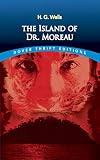
Editors Reads Verdict
Wells's most disturbing novel is also his most philosophically serious — a horror story that doubles as a rigorous interrogation of evolution, ethics, and the thin membrane separating civilisation from savagery.
What We Loved
- The philosophical horror is more unsettling than any monster — the Beast Folk's recited Law is genuinely chilling
- Wells grounds the horror in then-cutting-edge evolutionary science, giving it intellectual weight
- The ambiguity about what separates humans from animals deepens on re-reading
Minor Drawbacks
- The horror occasionally overwhelms the characterisation — Prendick is more witness than protagonist
- The pacing slows in the middle section before the novel's final, devastating act
Key Takeaways
- → The line between human and animal is less biological than behavioural — and behaviour is more fragile than we admit
- → Civilisation is a performance that requires constant maintenance; without it, older instincts reassert themselves
- → Scientific power without ethical constraint does not elevate — it degrades both subject and practitioner
- → The most disturbing thing about Moreau's creatures is not that they are animals becoming human, but that they mirror humanity too closely
| Author | H.G. Wells |
|---|---|
| Publisher | Dover Publications |
| Pages | 160 |
| Published | April 1, 1896 |
| Language | English |
| Genre | Science Fiction, Horror, Classic Fiction |
How The Island of Doctor Moreau Compares
The Island of Doctor Moreau at a glance against 3 similar books readers weigh alongside it.
| Book | Author | Rating | Best for |
|---|---|---|---|
| The Island of Doctor Moreau (this book) | H.G. Wells | ★ 4.5 | Science Fiction |
| Frankenstein | Mary Shelley | ★ 4.8 | Horror |
| The Invisible Man | H.G. Wells | ★ 4.5 | Science Fiction |
| The Time Machine | H.G. Wells | ★ 4.6 | Science Fiction |
The Island of Doctor Moreau Review
Of all H.G. Wells’s scientific romances, The Island of Doctor Moreau is the one that leaves the deepest mark. It is not the most entertaining — that distinction belongs to The Time Machine or The War of the Worlds — but it is the most philosophically serious, and its central horror has only intensified in the century since it was published.
Edward Prendick survives a shipwreck only to be deposited on a remote Pacific island presided over by the disgraced vivisectionist Dr Moreau. Moreau, exiled from England for his experiments, has spent years on this island doing what he could not do at home: surgically remaking animals into humanoid creatures, then training them to speak and to recite the Law — a ritual catalogue of prohibitions designed to suppress animal instinct. The Beast Folk — part pig, part bear, part human — live in the forest and chant their Law like a catechism: Not to go on all-fours. Not to suck up drink. Not to eat Flesh or Fish. That is the Law. Are we not Men?
Wells was writing in the immediate aftermath of Darwin, when the question of what distinguished humans from other animals was genuinely open and genuinely alarming. Moreau’s experiment is a literalisation of evolutionary anxiety: if we are animals shaped by environment and selection, then what we are is provisional. The Law the Beast Folk recite is not so different from human morality — a set of learned prohibitions that suppress older instincts, maintained by social pressure and the fear of punishment.
The novel’s most devastating moment is not the horror of the experiments but what Prendick observes in himself after months on the island: that he can no longer look at human faces without seeing the animal beneath.
The Law and the House of Pain
The chanted Law is the novel’s most chilling invention, and it works because it is so recognisable. The Beast Folk recite their prohibitions — not to go on all-fours, not to eat flesh, not to spill blood — in a droning litany punctuated by dread of “the House of Pain,” Moreau’s surgical laboratory, which functions as both hell and temple. Moreau has made himself a god to his creatures: the law-giver, the punisher, the maker who can return them to agony if they stray. Wells’s point is unmistakable and unsettling: this is what human morality is — a set of learned commandments suppressing older instincts, enforced by fear of punishment and reverence for an authority. The Beast Folk’s catechism is not a parody of religion so much as an X-ray of it.
The God Who Dies
The novel’s structural masterstroke is what happens when the god is removed. Moreau is killed by one of his own creations — a puma he has been torturing into humanity, which breaks free — and with the law-giver dead, the fragile order he imposed begins to rot. Without the authority that gave the Law force, the Beast Folk slowly revert, in mind and body, to the animals they were: the prohibitions fray, the upright postures sag, speech dissolves back into growls. Wells, writing as a committed Darwinian, stages this as a terrifying thought experiment about civilisation itself. If our morality is only a maintained performance, what holds when the maintaining authority vanishes? The island’s descent into savagery is his bleak answer.
Vivisection and Victorian Horror
The novel landed in the middle of a fierce real-world debate. The 1890s saw vivisection — experimental surgery on live animals — denounced across Britain as a moral atrocity, and Wells, who had trained in biology, weaponised that anxiety. Moreau’s methods are described with clinical, stomach-turning specificity: the grafting, the transfusions, the months of agony inflicted in the name of knowledge, all conducted without anaesthetic or conscience. Moreau himself is no mad caricature but something more disturbing — a cold, articulate rationalist who regards pain as irrelevant beside the pursuit of his vision. Wells uses him to pose a question that has only grown sharper since: what are the ethical limits of scientific power, and what does it do to the scientist who refuses to acknowledge any?
Prendick Among Us
The most haunting passage comes after the island. Prendick escapes and returns to London, but he is permanently altered: walking among ordinary people, he cannot stop seeing the Beast Folk in them — the predatory, the swinish, the bovine, the thin animal nature twitching beneath every civilised face. He retreats from society, unable to unsee what the island taught him. This final turn is where the horror becomes universal. Wells implies that the Beast Folk were never really the monsters; we are, barely and temporarily restrained by the same fragile Law, the same fear, the same performance. It is one of the bleakest endings in Victorian fiction, and one of the most quietly devastating.
A Lasting Nightmare
The Island of Doctor Moreau is the darkest and most philosophically penetrating of Wells’s scientific romances — less fun than The War of the Worlds, but far harder to shake. Its weaknesses are minor: Prendick is more witness than hero, and the middle sags slightly before the final act. What lingers is the idea, dramatised with horrible clarity, that the line between human and animal is behavioural rather than biological, and that civilisation is a thin, maintained crust over something older and wilder. More than a century on, as biotechnology makes Moreau’s experiments feel less like fantasy and more like forecast, the novel reads less as Victorian horror than as prophecy.
Our rating: 4.5/5 — Wells’s darkest and most philosophically penetrating novel. Not easily forgotten.
Reading Guides
Frequently Asked Questions
What is "The Island of Doctor Moreau" about?
Edward Prendick, shipwrecked and rescued, finds himself on a remote Pacific island where the reclusive Dr Moreau performs surgical experiments that transform animals into humanoid creatures who speak and live by a recited Law. Wells's most disturbing novel is a horror story, a philosophical fable about evolution and ethics, and one of science fiction's most sustained meditations on what separates humans from animals.
What are the key takeaways from "The Island of Doctor Moreau"?
The line between human and animal is less biological than behavioural — and behaviour is more fragile than we admit Civilisation is a performance that requires constant maintenance; without it, older instincts reassert themselves Scientific power without ethical constraint does not elevate — it degrades both subject and practitioner The most disturbing thing about Moreau's creatures is not that they are animals becoming human, but that they mirror humanity too closely
Is "The Island of Doctor Moreau" worth reading?
Wells's most disturbing novel is also his most philosophically serious — a horror story that doubles as a rigorous interrogation of evolution, ethics, and the thin membrane separating civilisation from savagery.
Ready to Read The Island of Doctor Moreau?
Check the current price on Amazon.
Check Price on Amazon (paid link)Prices and availability are subject to change. See Amazon for current price.
Review last updated: