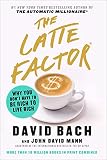
Editors Reads Verdict
Not a technical guide, but a highly effective introduction to the psychology of saving and the power of compounding. Bach's parable format makes the core lesson emotionally resonant in a way that a spreadsheet never could.
What We Loved
- Extremely fast read — accessible to complete beginners
- Parable format makes the compound interest concept emotionally resonant
- Encourages action over analysis
Minor Drawbacks
- Critics argue small savings alone can't substitute for income growth
- Very light on investing mechanics
Key Takeaways
- → Small automatic savings, started early and left alone, compound dramatically
- → The latte factor is a metaphor for any small recurring expense redirected to wealth
- → You don't need to earn more to start building wealth — you need to start
| Author | David Bach |
|---|---|
| Published | April 2, 2019 |
| Language | English |
| Genre | Personal Finance, Non-Fiction |
How The Latte Factor Compares
The Latte Factor at a glance against 3 similar books readers weigh alongside it.
| Book | Author | Rating | Best for |
|---|---|---|---|
| The Latte Factor (this book) | David Bach | ★ 4.1 | Personal Finance |
| 1776 | David McCullough | ★ 4.5 | American history readers, students of leadership, and anyone who wants to |
| 21 Lessons for the 21st Century | Yuval Noah Harari | ★ 4.1 | Readers already familiar with Harari's work who want his take on contemporary |
| A Brief History of Everyone Who Ever Lived | Adam Rutherford | ★ 4.2 | Readers of popular science interested in genetics, human ancestry, evolution, |
A Parable, Not a Manual
David Bach made the unusual choice to deliver his financial philosophy as a piece of fiction. The Latte Factor is a short, fable-like novella rather than a how-to book — a deliberate bet that a story can move people to act in a way that a chapter of charts cannot. Bach, a veteran financial author best known for The Automatic Millionaire, here distills a career’s worth of advice into a single emotionally resonant tale, and the gamble largely pays off. It can be read in an hour or two, demands nothing of the reader in the way of math or jargon, and is aimed squarely at the absolute beginner — the person who feels that wealth is for other people and that their own modest income leaves no room to build anything. The format is the message: this is meant to inspire a first step, not to be a comprehensive reference.
The Story of Zoey and Henry
The narrative follows Zoey, a young woman working in media in expensive New York City, who feels perpetually broke and convinced she will never get ahead despite a decent salary. Her financial awakening comes through Henry, a wise older barista at her local café, who gently challenges her belief that she simply doesn’t earn enough to save. Through their conversations, Zoey discovers that the obstacle is not her income but her assumptions — that she has more power over her financial future than she has ever allowed herself to believe. The deliberately simple, almost folktale structure lets Bach dramatize the emotional barriers to saving (the sense of helplessness, the deferral of “someday”) more vividly than an instructional book could, making the eventual shift in Zoey’s thinking feel earned rather than lectured.
The Three Secrets
At the heart of Henry’s teaching are three “secrets to financial freedom” that form the book’s practical spine. The first is to pay yourself first — to save a portion of every dollar you earn before paying bills and spending the rest, rather than hoping to save whatever happens to be left over (which is usually nothing). The second is to make it automatic — to remove willpower from the equation entirely by setting up automatic transfers into savings and investments, so that wealth-building happens in the background whether or not you remember or feel motivated. The third is to live and give richly now — a reminder that the goal is not joyless deprivation but a life of meaning, and that financial security should serve a fuller life rather than replace it. None of these ideas is new, but Bach’s gift is making them land emotionally.
The Metaphor Everyone Misunderstands
No concept in personal finance is more famous, or more frequently attacked, than Bach’s “latte factor,” and the book is in part a defense of it. Critics have spent years mocking the idea that skipping a daily coffee will make you rich, pointing out, correctly, that small indulgences are not why most people struggle — stagnant wages, soaring rents, and large fixed costs are. Bach’s reply, made clearly here, is that the latte was always a metaphor: it stands for any recurring small expense, mindlessly repeated, that could instead be redirected and compounded over decades. The point was never literally about coffee but about awareness — the recognition that money leaks out in habits we never examine, and that redirecting even a few of them, automatically and early, compounds into something significant. Understood as metaphor rather than literal prescription, the idea is sound; the controversy mostly stems from taking it too literally.
Why the Format Works
What makes The Latte Factor effective is its understanding that personal finance is more a problem of psychology than of arithmetic. Most people already know, abstractly, that they should save and invest; what stops them is inertia, fear, and the belief that it’s hopeless or too late. By embedding the lessons in Zoey’s emotional journey, Bach addresses those barriers directly, and by championing automation he removes the single biggest practical obstacle — the need to rely on ongoing willpower. The book trades depth for accessibility quite deliberately, and for its intended reader that is the right trade: a beginner is far more likely to actually open an investment account after a moving two-hour parable than after a dense 300-page manual they never finish.
Strengths and Limits
The book’s strengths are its brevity, its warmth, and its genuine power to motivate a hesitant first-timer to act. Its limits are the flip side of the same coin. It is extremely light on the actual mechanics of investing — which accounts, which funds, how to begin — so readers will need a second, more practical resource to act on its inspiration. And its core claim that small savings alone can build wealth is, fairly, criticized as incomplete: for many people, raising income and cutting large fixed costs matter far more than trimming small ones. The Latte Factor is a doorway, not a house: it gets people moving, but it cannot take them the whole way.
The Verdict
The Latte Factor is a charming, fast, and genuinely effective introduction to the psychology of saving, built on the sound and often-misunderstood idea that awareness and automation, applied early, compound into real security. It is not a technical guide and should not be mistaken for one — it is deliberately thin on mechanics and broad on inspiration. But as the first book to hand a beginner who feels hopeless about money, or as a gentle nudge toward paying yourself first and automating the habit, it does its modest job beautifully, and the story stays with you in a way a spreadsheet never would.
Our rating: 4.1/5 — A short, warm parable that turns the psychology of saving into a story: light on mechanics but genuinely motivating, and far wiser about its famous “latte” metaphor than its critics allow.
Reading Guides
Frequently Asked Questions
What is "The Latte Factor" about?
A short parable about a young woman who discovers how small daily savings, invested consistently, can grow into life-changing wealth — the accessible summary of Bach's core philosophy.
What are the key takeaways from "The Latte Factor"?
Small automatic savings, started early and left alone, compound dramatically The latte factor is a metaphor for any small recurring expense redirected to wealth You don't need to earn more to start building wealth — you need to start
Is "The Latte Factor" worth reading?
Not a technical guide, but a highly effective introduction to the psychology of saving and the power of compounding. Bach's parable format makes the core lesson emotionally resonant in a way that a spreadsheet never could.
Ready to Read The Latte Factor?
Check the current price on Amazon.
Check Price on Amazon (paid link)Prices and availability are subject to change. See Amazon for current price.
Review last updated: