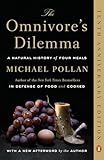
Editors Reads Verdict
Pollan's most ambitious food book is a landmark of American environmental writing — a systematic examination of the food chains that feed us, the politics and ecology that shape them, and the moral questions that arise when we pay attention to where our food actually comes from.
What We Loved
- The four-meal structure is a brilliant organizing device for otherwise diffuse material
- Pollan's investigation of industrial corn is one of the most important pieces of food journalism written
- The Polyface Farm sections are genuinely inspiring
- The hunting and mushroom-gathering sections are unexpectedly moving
Minor Drawbacks
- At 450 pages, the book is longer than In Defense of Food — requires more commitment
- The organic food politics have evolved since 2006 in ways not reflected in the text
- Pollan's perspective is that of an educated, economically comfortable liberal — this shapes the analysis
Key Takeaways
- → Everything in the American food system ultimately depends on corn — in ways most Americans cannot see
- → Industrial organic is not what most people imagine when they buy organic products
- → Genuinely sustainable food production exists but is economically precarious
- → Hunting and foraging force an intimacy with the origins of food that purchasing entirely avoids
- → The question of what to eat is inescapably a political and ecological question, not merely a personal one
| Author | Michael Pollan |
|---|---|
| Publisher | Penguin Press |
| Pages | 450 |
| Published | April 11, 2006 |
| Language | English |
| Genre | Non-Fiction, Food Writing, Environmental Science |
| Difficulty | Intermediate |
| Best For | Readers who want to understand the political, ecological, and moral dimensions of what Americans eat — and who can commit to a comprehensive investigation of the food system. |
How The Omnivore's Dilemma Compares
The Omnivore's Dilemma at a glance against 3 similar books readers weigh alongside it.
| Book | Author | Rating | Best for |
|---|---|---|---|
| The Omnivore's Dilemma (this book) | Michael Pollan | ★ 4.4 | Readers who want to understand the political, ecological, and moral dimensions |
| In Defense of Food | Michael Pollan | ★ 4.3 | Readers who want clear, evidence-based guidance on diet and food culture, and |
| Sapiens | Yuval Noah Harari | ★ 4.6 | Curious readers of all backgrounds who want to understand how Homo sapiens came |
| The Body: A Guide for Occupants | Bill Bryson | ★ 4.5 | General readers who want to understand human biology without medical training, |
Four Meals, Four Food Chains
Michael Pollan organizes The Omnivore’s Dilemma around the question that the book’s title names: what should an omnivore eat? For most of human history, this question was answered by culture and geography — tradition told you what to eat, scarcity limited the options, and the knowledge of how to prepare available food was transmitted within communities. The modern American food environment has abolished all of these constraints without providing a replacement framework, leaving Americans with infinite choice and minimal guidance.
Pollan’s structural answer to this situation is to trace four meals from their origins to the table. The four food chains he investigates are: industrial (a McDonald’s meal, its ingredients traced to the industrial corn and soy system that underlies virtually all American processed food), industrial organic (a Whole Foods meal, its “organic” ingredients examined with some skepticism), local pastoral (a meal sourced from Joel Salatin’s Polyface Farm in Virginia), and hunter-gathered (a meal Pollan sourced himself through hunting, gathering mushrooms, and foraging).
The Corn Chapter
The book’s most important passage may be Pollan’s investigation of industrial corn — the crop that underlies almost everything in the American food system, from the high-fructose corn syrup in soda to the corn-based feed that produces the meat in fast food. American agricultural policy has been organized for decades around the maximization of corn production, which has made corn the cheapest and most abundant ingredient in the food system and has generated a series of consequences — dietary, ecological, and economic — that most corn consumers are entirely unaware of.
The sheer ubiquity of corn in processed food (typically appearing in 30-40% of the ingredients in any given supermarket product) is both absurd and invisible. Pollan makes it visible.
Polyface Farm
Joel Salatin’s Polyface Farm in Virginia — which Pollan visits for a week to understand how the pastoral food chain operates — is the book’s most inspiring section. Salatin’s integration of chickens, cattle, pigs, rabbits, and turkeys into a system that mimics natural ecosystems, builds soil rather than depleting it, and produces food of dramatically higher quality than industrial alternatives, is presented as proof that sustainable and economically viable food production is not merely theoretical.
The section also honestly examines why Salatin’s model has not scaled more broadly — the economic and regulatory barriers that make industrial food production far easier than genuinely sustainable alternatives.
Our rating: 4.4/5 — One of the most important American food books of the century: a comprehensive examination of where our food comes from that makes it impossible to eat without awareness.
Where Does Our Food Come From?
The Omnivore’s Dilemma is Michael Pollan’s landmark work of food writing, an influential and eye-opening investigation into the question of what we should eat and where our food actually comes from. Pollan traces several food chains from their origins to the dinner plate, following the industrial food system built on corn, the world of organic and “industrial organic” agriculture, a sustainable farm, and finally a meal he hunts and gathers himself. Through this structure, he illuminates the complex, often hidden systems that produce modern food and the consequences of our eating choices for health, the environment, and ethics.
The Industrial Food Chain
A central and influential part of the book is Pollan’s exploration of the industrial food system and its dependence on corn. He reveals how corn, heavily subsidized and ubiquitous, underlies an enormous proportion of the modern American diet, processed into countless products and used to feed the animals we eat, and he examines the environmental, economic, and health consequences of this system. This investigation into the hidden realities of industrial food production opened many readers’ eyes to where their food really comes from and at what cost.
Ethics and the Question of Eating
Beyond its investigation of food systems, the book grapples with the ethical and philosophical dimensions of eating, the “omnivore’s dilemma” of the title, which refers to the challenge faced by creatures who can eat almost anything and must therefore decide what to eat. Pollan considers questions of animal welfare, environmental sustainability, and the moral implications of our food choices, including a thoughtful engagement with the ethics of eating meat. This reflective dimension gives the book depth beyond mere reportage and invites readers to consider the consequences of their own eating.
Engaging and Accessible
Pollan is celebrated for his engaging, accessible, and personable writing, which combines rigorous research and investigation with vivid storytelling and his own experiences and reflections. He makes complex subjects, from agricultural economics to ecology to food science, comprehensible and compelling, and his personal, curious, and thoughtful voice draws readers into his investigations. This combination of substance and readability has made the book both influential and widely enjoyed, accessible to general readers interested in food and its implications.
A Transformative Influence
The Omnivore’s Dilemma has had an enormous influence on how many people think about food, contributing significantly to the growth of interest in food origins, sustainable agriculture, and conscious eating. The book helped spark a broader cultural conversation about the food system and inspired many readers to reconsider their eating habits and to seek out more sustainable and ethical food. For anyone interested in understanding where their food comes from and the consequences of how it is produced, The Omnivore’s Dilemma remains a landmark and transformative work. Its influence on the food movement and on how a generation thinks about eating has been profound, and it remains essential reading for anyone seeking to understand the true cost and origins of what they eat.
Frequently Asked Questions
What is "The Omnivore's Dilemma" about?
Michael Pollan traces four meals from their origins to the table — industrial, industrial organic, local pastoral, and hunted-gathered — and asks what we should eat in a world of infinite choice.
Who should read "The Omnivore's Dilemma"?
Readers who want to understand the political, ecological, and moral dimensions of what Americans eat — and who can commit to a comprehensive investigation of the food system.
What are the key takeaways from "The Omnivore's Dilemma"?
Everything in the American food system ultimately depends on corn — in ways most Americans cannot see Industrial organic is not what most people imagine when they buy organic products Genuinely sustainable food production exists but is economically precarious Hunting and foraging force an intimacy with the origins of food that purchasing entirely avoids The question of what to eat is inescapably a political and ecological question, not merely a personal one
Is "The Omnivore's Dilemma" worth reading?
Pollan's most ambitious food book is a landmark of American environmental writing — a systematic examination of the food chains that feed us, the politics and ecology that shape them, and the moral questions that arise when we pay attention to where our food actually comes from.
Ready to Read The Omnivore's Dilemma?
Check the current price on Amazon.
Check Price on Amazon (paid link)Prices and availability are subject to change. See Amazon for current price.
Review last updated: