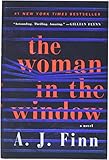
Editors Reads Verdict
The Woman in the Window is an unabashedly Hitchcockian thriller that wears its influences proudly and delivers the genre's pleasures with genuine craft — the unreliable narrator with a substance problem, the witnessed crime no one believes, the creeping uncertainty about what was actually seen. Finn's homage is both transparent and effective.
What We Loved
- The agoraphobia-as-locked-room device creates genuine claustrophobic tension
- The film-noir and Hitchcock references are charming and well-deployed rather than derivative
- Anna's voice is distinctive and her unreliability is plausibly motivated
- The mystery resolves with structural integrity — the answer is in the text
Minor Drawbacks
- Rear Window comparisons are unavoidable and somewhat limiting
- Some readers find Anna's film-viewing habits overdetermined as a thematic signifier
- The pacing in the novel's middle drags somewhat before the final-act acceleration
Key Takeaways
- → Agoraphobia is not simply fear but a complex accommodation with trauma that becomes its own world
- → Alcohol and medication compromise perception in ways the compromised person cannot fully assess
- → Being disbelieved about witnessed violence has a particular psychological texture
- → The observer behind the window is a figure for the voyeuristic pleasures of fiction itself
- → Grief can reconstitute itself as illness when the direct experience of it is too overwhelming
| Author | A.J. Finn |
|---|---|
| Publisher | William Morrow |
| Pages | 427 |
| Published | January 2, 2018 |
| Language | English |
| Genre | Psychological Thriller, Mystery, Suspense |
| Difficulty | Beginner |
| Best For | Psychological thriller readers; Hitchcock and film-noir enthusiasts; fans of unreliable narrator mysteries with agoraphobic or housebound protagonists. |
How The Woman in the Window Compares
The Woman in the Window at a glance against 3 similar books readers weigh alongside it.
| Book | Author | Rating | Best for |
|---|---|---|---|
| The Woman in the Window (this book) | A.J. Finn | ★ 4.0 | Psychological thriller readers |
| Behind Closed Doors | B.A. Paris | ★ 4.1 | Domestic thriller readers |
| Gone Girl | Gillian Flynn | ★ 4.2 | Readers who want their thrillers to also function as literary fiction and |
| The Silent Patient | Alex Michaelides | ★ 4.2 | Psychological thriller readers |
Rear Window in a Brownstone
A.J. Finn is explicit about his debt to Alfred Hitchcock: Anna Fox, the novel’s protagonist, watches old films obsessively, discusses Rear Window explicitly, and has constructed a life whose basic structure — housebound observer, witnessed crime, disbelieving authorities — is clearly drawn from Hitchcock’s vocabulary. The novel does not try to hide this influence; it celebrates it.
Anna is a child psychologist with a specialty in agoraphobia who has developed agoraphobia herself — the specific irony is noted — following a trauma that the novel withholds and then reveals. She has not left her four-story Manhattan brownstone in ten months. She drinks too much wine and takes too much medication. She watches films and watches her neighbors and eventually watches something happen to a woman across the park that she cannot explain and that no one believes.
The Unreliable Observer
The novel’s central technical challenge is calibrating Anna’s unreliability precisely enough that the reader doubts her without dismissing her. Finn succeeds: the substance issues, the trauma, the acknowledged perceptual uncertainty all provide plausible explanations for why Anna might be wrong — but also leave genuine space for her to be right. The uncertainty is maintained without tipping into either direction until the resolution demands it.
The Claustrophobic World
The brownstone is meticulously rendered: its rooms, its tenants, its particular social ecosystem. Anna’s world has contracted to these walls, and Finn makes the reader understand how a person can fill a contracted world — the internet boards, the films, the wine, the neighbor-watching — until it feels nearly sufficient. Nearly.
Finn’s Craft
What distinguishes The Woman in the Window from lesser Hitchcock homages is Finn’s genuine plotting craft. The resolution is embedded in the text honestly; the clues are there; the answer doesn’t require a retroactive rule change. For readers who appreciate genre work done with care, this matters considerably.
The Hitchcock Inheritance
The novel wears its influences openly, and they are part of its texture rather than a liability. Anna’s days are spent watching classic suspense films — Rear Window, Gaslight, the noir canon — and the book is consciously built from their parts: the housebound witness of Rear Window, the woman made to doubt her own perceptions of Gaslight, the black-and-white moral atmosphere of mid-century thrillers. Finn is not hiding the borrowing; he is curating it, asking the reader to enjoy a contemporary remix of forms they already love. The black-and-white films Anna watches function almost as a chorus, commenting on her situation and priming the reader to wonder whether she is a reliable witness to a real crime or a woman who has watched too many movies in too much wine.
The Author Behind the Pseudonym
The book carries an unusual real-world coda. “A.J. Finn” is the pen name of Daniel Mallory, a publishing editor whose 2018 debut became a runaway bestseller and a major film property — and who became the subject of a widely discussed 2019 New Yorker profile that documented a pattern of fabrications and misrepresentations in his personal and professional life. The controversy complicated the book’s reception and became part of its story, raising uncomfortable questions about the relationship between a thriller built on deception and unreliable narration and the circumstances of its creation. Readers can set this aside or let it color the experience, but it is now inseparable from the novel’s history and worth knowing.
The Adaptation and the Verdict
Long anticipated as a film, The Woman in the Window eventually reached screens in 2021 as a Netflix release directed by Joe Wright, with Amy Adams as Anna — a troubled production whose muted reception underscored how much of the book’s effect depends on interiority that is difficult to film. The novel itself remains a more satisfying experience than its adaptation, precisely because the claustrophobia of Anna’s narration, her perceptual unreliability, and the slow contraction of her world are literary effects. For all the noise surrounding its author and its film, the book endures as a skillfully plotted, atmospheric homage that delivers its genre’s pleasures with more craft than most of its imitators.
A Wave of Unreliable Narrators
The Woman in the Window arrived in 2018 at the crest of a particular vogue — the domestic thriller narrated by a woman whose grip on reality the reader is invited to doubt, a lineage running through Gone Girl, The Girl on the Train, and a hundred imitators with “Girl” or “Window” or “Wife” in the title. What distinguishes Finn’s entry from the weakest of that crowd is the care of its construction: the unreliability is grounded in specific, coherent causes — agoraphobia, trauma, the interaction of wine and medication — rather than asserted for convenience, and the resolution plays fair with the clues laid down along the way. The novel is, in this sense, both a product of a trend and one of its more competent examples — a book that understood the formula well enough to execute it cleanly even as the formula was beginning to tire. That craftsmanship is why it has outlasted many of the titles it was shelved beside. Years after most of those interchangeable thrillers have faded from view, Finn’s remains in print and in conversation — its own quiet verdict on the difference that careful plotting makes within a crowded and formulaic genre.
Our rating: 4.0/5 — An unapologetically Hitchcockian thriller that delivers its genre’s pleasures with genuine technical skill, anchored by an unreliable narrator whose uncertainty is exactly the right kind of troubling.
Reading Guides
Frequently Asked Questions
What is "The Woman in the Window" about?
An agoraphobic child psychologist who has not left her Manhattan brownstone in ten months witnesses what she believes is a murder through her window — and no one believes her.
Who should read "The Woman in the Window"?
Psychological thriller readers; Hitchcock and film-noir enthusiasts; fans of unreliable narrator mysteries with agoraphobic or housebound protagonists.
What are the key takeaways from "The Woman in the Window"?
Agoraphobia is not simply fear but a complex accommodation with trauma that becomes its own world Alcohol and medication compromise perception in ways the compromised person cannot fully assess Being disbelieved about witnessed violence has a particular psychological texture The observer behind the window is a figure for the voyeuristic pleasures of fiction itself Grief can reconstitute itself as illness when the direct experience of it is too overwhelming
Is "The Woman in the Window" worth reading?
The Woman in the Window is an unabashedly Hitchcockian thriller that wears its influences proudly and delivers the genre's pleasures with genuine craft — the unreliable narrator with a substance problem, the witnessed crime no one believes, the creeping uncertainty about what was actually seen. Finn's homage is both transparent and effective.
Ready to Read The Woman in the Window?
Check the current price on Amazon.
Check Price on Amazon (paid link)Prices and availability are subject to change. See Amazon for current price.
Review last updated: