Best Psychological Thriller Books: 15 Essential Reads (2026)
The best psychological thriller novels — from Gone Girl and The Silent Patient to Verity and The Housemaid — ranked and reviewed with honest assessments of what makes each one work.
Psychological thrillers are the most reliably gripping genre in contemporary fiction — books built around the question of who can be trusted, what is real, and what is happening inside the minds of people who may be lying to you and to themselves. The best of them deliver a twist that reframes everything, a protagonist whose reliability is in question from page one, and a final act that makes you want to immediately reread the opening chapter.
This guide ranks the 15 most essential psychological thrillers for readers new to the genre and those hunting for the next book that will keep them up too late.
Quick answer: Start with The Silent Patient for the most satisfying first read, or Gone Girl for the book that defined the modern genre. Verity is the BookTok favourite. All three will have you questioning everything.
All 15 Books at a Glance
| # | Title | Author | Best For |
|---|---|---|---|
| 1 | The Silent Patient | Alex Michaelides | Best overall entry point; cleanest twist |
| 2 | Gone Girl | Gillian Flynn | The book that defined the modern genre |
| 3 | Verity | Colleen Hoover | Most viral; most disturbing |
| 4 | The Housemaid | Freida McFadden | Most compulsive; fastest read |
| 5 | Sharp Objects | Gillian Flynn | Flynn’s most literary; gothic and precise |
| 6 | The Girl on the Train | Paula Hawkins | Classic unreliable narrator |
| 7 | Behind Closed Doors | B.A. Paris | Best domestic thriller; terrifying marriage |
| 8 | The Woman in the Window | A.J. Finn | Most atmospheric; Hitchcock influences |
| 9 | The Wife Between Us | Hendricks & Pekkanen | Best structural twist; multiple rereads |
The Tier 1 Reads
The Silent Patient — Alex Michaelides
The most accessible and satisfying entry point to the genre. Alicia Berenson, a famous painter, has shot her husband five times in the face and not spoken a word since. Theo Faber is a criminal psychotherapist who has spent his career waiting for the chance to treat her. The premise alone is a perfectly constructed hook.
Michaelides — who has a background in Greek tragedy — structures the novel around a final act reversal that is genuinely earned and genuinely surprising. The twist is not a trick. It is the answer to a question the novel has been asking from its first pages, and on rereading, the clues were there. The Silent Patient has sold over ten million copies globally and remains the standard against which psychological thriller debuts are measured.
Read if: You want the best-constructed first psychological thriller.
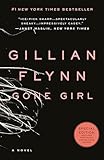
Gone Girl — Gillian Flynn
The book that established the template for everything that followed. Nick and Amy Dunne have been married five years when Amy disappears on their wedding anniversary. The investigation that follows, told in alternating first-person chapters between Nick and Amy’s diary entries, is a systematic dismantling of every assumption the reader has made.
Gone Girl is darker and more unsettling than most of its imitators. Gillian Flynn is not interested in likeable characters or comfortable conclusions. She is interested in the performance of marriage, the performance of the self, and what people are willing to do to win. The novel generated a cultural conversation about female characters in fiction that is still ongoing.
Read if: You want the definitive psychological thriller — the one everything else is responding to.
Verity — Colleen Hoover
The most discussed psychological thriller on BookTok, and for good reason. Lowen Ashleigh, a struggling writer, is offered the chance to complete the remaining books in bestselling thriller author Verity Crawford’s series. While working in the Crawford home, Lowen finds an autobiography Verity wrote that contains a confession so disturbing she cannot decide whether it is true.
Verity is constructed around an ambiguity that the novel refuses to resolve — and the reader’s answer to the central question says something about their own psychology. It is more disturbing than Gone Girl in specific ways. Read the content notes: the book contains material around harm to children that some readers find deeply upsetting.
Read if: You want the most psychologically destabilising reading experience in the genre.
The Housemaid — Freida McFadden
The most compulsively readable thriller on this list. Millie Calloway takes a job as a live-in housekeeper for the Winchester family. Nina Winchester is increasingly erratic. Andrew Winchester is charming. Something is very wrong. McFadden’s plotting is lean and relentless — the book reads in a sitting, and the twist reframes the entire first half.
The sequel and the extended series from McFadden continue the formula; start here.
Read if: You want the fastest, most plot-driven read in the genre.
Sharp Objects — Gillian Flynn
Sharp Objects is Flynn’s debut and, by most measures, her most literary novel. Reporter Camille Preaker returns to her small Missouri hometown to cover the murders of young girls and confronts the family dynamics that shaped her deeply damaged psychology. The novel is gothic, precise, and genuinely disturbing — less about the mystery than about what the past does to a person.
Less plot-forward than Gone Girl and better for it. The HBO adaptation with Amy Adams is excellent and faithful.
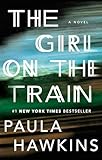
The Girl on the Train — Paula Hawkins
The Girl on the Train follows Rachel Watson, who observes the life of a couple from the train window every day and becomes obsessed with them — until one day she sees something disturbing. The novel’s unreliable narrator — Rachel is an alcoholic with genuine memory gaps — is its defining feature and its most discussed element.
Often compared to Gone Girl (published two years later), but quieter in tone, less interested in narrative games, and more focused on the psychological reality of addiction and obsession.
Behind Closed Doors — B.A. Paris
Behind Closed Doors is a domestic thriller built around a marriage that looks perfect from the outside and is a prison from the inside. Grace and Jack Angel seem like the ideal couple to their friends. The truth of their marriage, revealed in alternating chapters (past and present), is one of the most sustained depictions of coercive control in popular fiction.
Deeply uncomfortable, very difficult to put down.
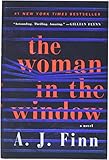
The Woman in the Window — A.J. Finn
The Woman in the Window follows Anna Fox, an agoraphobic child psychologist who drinks too much and watches her neighbours through her window. When she witnesses something she shouldn’t, no one believes her — including herself. The Hitchcock influences (Rear Window primarily) are explicit and effective.
The most atmospherically cinematic novel on the list. The film adaptation (Netflix) is considerably weaker than the book.
Frequently Asked Questions
What psychological thrillers have been adapted for film or TV?
Gone Girl (2014 film, David Fincher — highly regarded), Sharp Objects (2018 HBO miniseries, Amy Adams — excellent), The Girl on the Train (2016 film — weaker than the book), The Silent Patient (in development), The Housemaid (in development), Verity (in development as of 2026).
What should I read after The Silent Patient?
Verity (Colleen Hoover — the most psychologically disturbing follow-up), The Housemaid (McFadden — fastest pacing), and Gone Girl (Flynn — the genre’s foundational text). If you want more from Alex Michaelides specifically, The Maidens (2021) is his second novel.
What is the scariest psychological thriller?
Opinions vary, but Verity (Hoover) is most often cited for genuinely disturbing content. Sharp Objects (Flynn) is the most psychologically dark. Behind Closed Doors (Paris) is the most relentlessly uncomfortable in its depiction of a real-world horror.
For more thriller recommendations, see our Best Thriller Books of All Time guide, and the Freida McFadden Books in Order and Gillian Flynn Books in Order author guides.
Affiliate disclosure: Links on this site are affiliate links. We earn a small commission at no extra cost to you. This does not influence our editorial recommendations.
Frequently Asked Questions
What is a psychological thriller?
A psychological thriller is a suspense novel that derives its tension from the inner workings of its characters' minds rather than primarily from external action or crime-solving. Unreliable narrators, questions about what is real, manipulative relationships, and twists that reframe everything the reader thought they understood are characteristic features. The genre sits at the intersection of literary fiction and thriller, and its most acclaimed examples — Gone Girl, The Silent Patient, Verity — are typically darker and more character-driven than standard crime fiction.
What is the best psychological thriller to start with?
The Silent Patient by Alex Michaelides is the most recommended starting point — it is tightly plotted, its twist is genuinely surprising without feeling cheap, and it is accessible to readers who don't usually read thrillers. Gone Girl is the other classic entry point, though its tone is considerably darker and more unsettling.
What are the best psychological thrillers on BookTok?
Verity by Colleen Hoover is the most viral psychological thriller on BookTok — its twist is among the most discussed in the community. The Housemaid by Freida McFadden is the second most BookTok-prominent thriller. The Silent Patient and Gone Girl have also had major BookTok moments.
What is the best psychological thriller with an unreliable narrator?
Gone Girl by Gillian Flynn is the canonical example — the novel's structure is built entirely around unreliable dual narration. The Silent Patient and Behind Closed Doors both use narrator unreliability effectively. The Woman in the Window by A.J. Finn is the most extreme example — the narrator's perception of reality is completely compromised throughout.
Are psychological thrillers appropriate for all readers?
Most psychological thrillers contain dark themes — murder, manipulation, toxic relationships, domestic abuse, addiction. They are adult fiction. Readers who are sensitive to depictions of domestic violence should approach Behind Closed Doors and some Colleen Hoover titles with awareness. Verity contains disturbing content that some readers find deeply upsetting. Always check content notes for specific books if this is a concern.