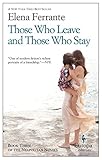
Editors Reads Verdict
The third Neapolitan novel is the most politically charged of the series, expanding the frame from neighbourhood to nation as the 1970s convulse Italy. The divergence between Elena's relatively privileged literary life and Lila's physical, dangerous factory work produces the series' sharpest account of class, feminism, and the costs of escape.
What We Loved
- The political dimension — Italy's 1970s worker movements and left-wing violence — adds historical richness to the personal story
- Lila's factory sequences are among the most viscerally powerful writing in the series
- Elena's growing awareness of her own compromises as a published writer is rendered with unflinching honesty
- The divergence of the two women's paths generates the series' most acute class analysis
Minor Drawbacks
- The momentum slows in Elena's domestic sections, which deliberately mirror the constriction of her circumstances
- Some secondary political characters are less developed than the first two volumes' neighbourhood cast
Key Takeaways
- → Escaping your origins does not free you from them — Elena's success is shadowed by guilt and inauthenticity
- → The body is a political site — Lila's factory labour makes abstract political theory unbearably concrete
- → Female friendship survives enormous divergence but is changed by it
- → The 1970s Italian left reveals how political movements can simultaneously liberate and exploit the people they claim to serve
- → Marriage and motherhood are not neutral — they impose structural constraints that intellectual achievement cannot dissolve
| Author | Elena Ferrante |
|---|---|
| Publisher | Europa Editions |
| Pages | 418 |
| Published | September 3, 2013 |
| Language | English |
| Genre | Literary Fiction, Historical Fiction, Fiction |
| Difficulty | Intermediate |
| Best For | Readers following the Neapolitan series; readers interested in Italian history, feminist literature, and 20th-century political fiction; fans of literary fiction about friendship, class, and ambition. |
How Those Who Leave and Those Who Stay Compares
Those Who Leave and Those Who Stay at a glance against 3 similar books readers weigh alongside it.
| Book | Author | Rating | Best for |
|---|---|---|---|
| Those Who Leave and Those Who Stay (this book) | Elena Ferrante | ★ 4.4 | Readers following the Neapolitan series |
| Little Women | Louisa May Alcott | ★ 4.8 | Classic Fiction |
| My Brilliant Friend | Elena Ferrante | ★ 4.4 | Literary fiction readers |
| Normal People | Sally Rooney | ★ 4.1 | Literary fiction readers interested in contemporary Irish society, millennial |
Two Paths Through Naples
By the third volume of the Neapolitan series, Elena Greco has published a novel, married a university professor from a respectable northern Italian family, and moved away from Naples to Florence and then Genoa. Lila Cerullo has left her husband, worked in a sausage factory under conditions that are destroying her body, and become involved with the worker organising movements that are beginning to reshape Italian industrial life. The divergence of their paths — which began in My Brilliant Friend when Elena stayed in school and Lila did not — is now absolute, and the novel’s central question is what their friendship can possibly mean across that gulf.
Ferrante is unsparing about both women. Elena’s life of relative privilege — a husband with connections, a literary career, a comfortable apartment — is rendered as a series of compromises that she does not fully acknowledge. Her feminism is the feminism of women with options. Lila’s existence in the sausage factory, by contrast, is a matter of physical endurance: the cold, the machinery, the supervisors’ control over her body and time, the way the work erodes her health systematically and without interest in the fact of her intelligence.
The Factory as Political Reality
The factory sequences in Those Who Leave and Those Who Stay are the series’ most politically direct writing. Ferrante uses Lila’s experience not as symbol but as material fact — the labour movement is not an idea here but an organised response to conditions that the novel makes you understand in your body rather than your mind.
The 1970s Italian context is essential. Italy’s autunno caldo — the hot autumn of 1969 — set off a decade of worker agitation, political violence from both left and right, and the broad social transformation that the previous volumes’ characters had glimpsed only theoretically. The third novel puts its protagonists inside that history, and the result is the series’ most explicitly political volume.
Elena’s Compromises
Elena’s storyline in this volume is a study in the costs of assimilation. She has arrived at the place she spent her childhood desperate to reach — published, educated, married into a respectable family — and finds it hollow in ways she struggles to articulate. Her second-wave feminist awakening, catalysed partly by the movements around her and partly by a chance encounter with a feminist collective, begins to provide language for what she has been feeling, but the language comes with its own contradictions: she is a woman writing feminist essays while managing a household and two children for a husband who treats her intellectual work as a hobby.
The friendship with Lila, renewed when Elena returns to Naples and finds Lila in the factory, shakes Elena out of the particular complacency that success imposes. Lila’s reality functions as a corrective — brutal, inconvenient, and impossible to aestheticise.
A Series That Keeps Deepening
What distinguishes the Neapolitan series from comparable multi-volume literary fiction is that each volume does not simply advance the same story but expands the frame of what the story is about. Those Who Leave and Those Who Stay is the volume that makes the series’ personal drama explicitly political, and the connection between the women’s intimate lives and the history surrounding them becomes, for the first time, not backdrop but structure.
Our rating: 4.4/5
Reading Guides
Italy’s 1970s in the Novel’s Frame
The years of lead (anni di piombo) — Italy’s period of political violence from the late 1960s through the 1980s — form the background of Those Who Leave and Those Who Stay in a way that distinguishes the third volume from its predecessors. The earlier novels had engaged with Italian history at a level of neighbourhood economics and social constraint; this volume puts the characters inside the political upheaval directly. Elena encounters communist party intellectuals, feminist collectives, and the aftermath of factory floor violence; Lila’s work in the sausage factory places her at the epicentre of the labour movement that the autunno caldo had generated.
Ferrante is careful not to aestheticise the politics. The intellectual left that Elena encounters in her publishing circles is largely male, largely self-congratulatory, and largely willing to deploy women as symbols of commitment while treating them as domestic support staff. The feminism Elena begins to find through her reading and through a chance encounter with a women’s collective is not simply an alternative to this; it is also complicated by Elena’s own position — a published woman married to a man with connections, benefiting from the system even as she begins to criticise it.
Lila’s Body as Political Statement
Lila working in the sausage factory is the novel’s central political image, and Ferrante resists converting it into symbol. The cold is cold. The machinery is dangerous. The supervisors’ power over the workers’ bodies — when they can eat, when they can use the bathroom, what physical risks they must accept — is material and continuous. Lila’s health deteriorates in ways that are documented rather than dramatised.
What Ferrante accomplishes with these sequences is a connection between the personal and the political that the novel’s feminist framework invokes explicitly but that the narrative earns through accumulation of physical detail. The argument is not that Lila represents working-class women but that Lila is a working-class woman whose intelligence has no institutional outlet, and that this fact has concrete daily consequences.
The Friendship Across the Gulf
The series’ most acute examination of what class difference does to friendship runs through the third volume. Elena can visit the factory; she cannot stay. She can feel horror at the conditions; she cannot share them for more than an afternoon. The gap between the women’s lives has become so wide that their friendship requires explicit negotiation — they must agree, when together, to manage the asymmetry rather than pretend it doesn’t exist.
Ferrante is honest about this negotiation in ways that most literary treatments of class and friendship avoid. Elena’s guilt about her relative comfort is real, but it is also a form of self-involvement; Lila is not interested in being Elena’s occasion for political education. The friendship survives these tensions but is changed by them, and the change is rendered with the same psychological precision that has characterised the series from its first pages.
The Novel in the Series
Those Who Leave and Those Who Stay is the volume that most clearly demonstrates the Neapolitan quartet’s ambition to be not just a personal story but a historical one. The title — with its deliberate echo of the Italian immigration experience and the binary choice that Naples imposed on its inhabitants throughout the twentieth century — announces this ambition explicitly. The novel is not just about Elena and Lila; it is about everyone who had to choose between leaving and staying, and about what that choice cost in either direction. Ferrante’s answer, worked out across all four volumes, is that neither choice is clean — and that the friendship between these two women is, among other things, the record of what both choices cost the people who made them.
Frequently Asked Questions
What is "Those Who Leave and Those Who Stay" about?
Elena pursues academic success and marriage while Lila works in brutal factory conditions; their lives diverge further as political upheaval grips 1970s Naples.
Who should read "Those Who Leave and Those Who Stay"?
Readers following the Neapolitan series; readers interested in Italian history, feminist literature, and 20th-century political fiction; fans of literary fiction about friendship, class, and ambition.
What are the key takeaways from "Those Who Leave and Those Who Stay"?
Escaping your origins does not free you from them — Elena's success is shadowed by guilt and inauthenticity The body is a political site — Lila's factory labour makes abstract political theory unbearably concrete Female friendship survives enormous divergence but is changed by it The 1970s Italian left reveals how political movements can simultaneously liberate and exploit the people they claim to serve Marriage and motherhood are not neutral — they impose structural constraints that intellectual achievement cannot dissolve
Is "Those Who Leave and Those Who Stay" worth reading?
The third Neapolitan novel is the most politically charged of the series, expanding the frame from neighbourhood to nation as the 1970s convulse Italy. The divergence between Elena's relatively privileged literary life and Lila's physical, dangerous factory work produces the series' sharpest account of class, feminism, and the costs of escape.
Ready to Read Those Who Leave and Those Who Stay?
Check the current price on Amazon.
Check Price on Amazon (paid link)Prices and availability are subject to change. See Amazon for current price.
Review last updated: