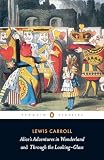
Editors Reads Verdict
More formally elaborate than Alice in Wonderland and, many argue, philosophically richer — the chess-game structure gives Carroll's nonsense a satisfying architecture, and Humpty Dumpty's disquisition on language is still cited in philosophy seminars.
What We Loved
- Humpty Dumpty's chapter on words meaning what he chooses them to mean is one of the most influential passages in the philosophy of language
- The chess-game structure gives the sequel a more elaborate formal architecture than its predecessor
- Tweedledee and Tweedledum, the Red Queen, and the White Knight are as memorable as any characters in the first book
Minor Drawbacks
- The chess-game logic is less consistently applied than Carroll scholars sometimes claim — it can feel more gestured at than rigorously followed
- Readers who prefer the anarchic energy of the first book may find the more structured approach less spontaneous
Key Takeaways
- → Humpty Dumpty's position — that words mean what the speaker intends — anticipated debates in the philosophy of language by decades
- → The Looking-Glass world's reversed logic (running to stay in place, living backward through time) is a serious inversion of physical intuition
- → The framing device — Alice playing the chess game — suggests that narrative itself imposes order on what is experienced as chaos
| Author | Lewis Carroll |
|---|---|
| Publisher | Penguin Classics |
| Pages | 272 |
| Published | December 27, 1871 |
| Language | English |
| Genre | Children's Fiction, Fantasy, Literary Nonsense |
How Through the Looking-Glass Compares
Through the Looking-Glass at a glance against 3 similar books readers weigh alongside it.
| Book | Author | Rating | Best for |
|---|---|---|---|
| Through the Looking-Glass (this book) | Lewis Carroll | ★ 4.0 | Children's Fiction |
| Alice's Adventures in Wonderland | Lewis Carroll | ★ 4.8 | Classic Fiction |
| The Little Prince | Antoine de Saint-Exupéry | ★ 4.7 | Everyone — children who will understand it differently than adults, adults who |
| The Phantom Tollbooth | Norton Juster | ★ 4.5 | Children aged 8-12 and every adult who wants to be reminded what curiosity |
Through the Looking-Glass Review
Through the Looking-Glass, and What Alice Found There was published six years after Alice’s Adventures in Wonderland, and it shows: Carroll has refined his methods, elaborated his philosophical games, and produced a sequel that is in many ways more formally accomplished than its predecessor, even if it lacks the explosive freshness of the original.
Alice steps through a looking-glass in her living room into a reversed world, where she sets about becoming a Queen in a chess game being played across the landscape. The chess structure is more present as an organizing principle than the card game of Wonderland — the world is divided into squares, movement follows chess logic (more or less), and the goal of Alice’s journey is always forward through the ranks toward her own coronation.
The philosophical density of Looking-Glass is extraordinary. Humpty Dumpty’s chapter — in which he tells Alice that words mean exactly what he chooses them to mean, “neither more nor less,” and that the question is “which is to be master — that’s all” — is one of the most cited passages in the philosophy of language, anticipating debates about meaning and reference that occupied academic philosophy well into the twentieth century. The White Queen’s memory, which works backward through time, raises genuine questions about the relationship between time, identity, and experience. The poem “Jabberwocky,” which appears early in the book, is the greatest example of phonaesthetic nonsense in English — words that mean nothing but that nonetheless carry emotional weight through pure sound.
Together with Alice’s Adventures in Wonderland, it forms one of the most intellectually rich works in the children’s literary canon.
What Distinguishes This Book
Among the qualities that set Through the Looking-Glass apart: Humpty Dumpty’s chapter on words meaning what he chooses them to mean is one of the most influential passages in the philosophy of language; The chess-game structure gives the sequel a more elaborate formal architecture than its predecessor; and Tweedledee and Tweedledum, the Red Queen, and the White Knight are as memorable as any characters in the first book. These strengths are evident from the first pages and sustain across the whole work.
Themes
The thematic concerns of Through the Looking-Glass give it weight beyond its surface narrative. Humpty Dumpty’s position — that words mean what the speaker intends — anticipated debates in the philosophy of language by decades. The Looking-Glass world’s reversed logic (running to stay in place, living backward through time) is a serious inversion of physical intuition. The framing device — Alice playing the chess game — suggests that narrative itself imposes order on what is experienced as chaos. These ideas emerge from the texture of the work rather than explicit statement, which is the mark of ambitious fiction done well.
The Reading Experience
Through the Looking-Glass is the kind of book that changes slightly depending on when you read it. The surface — plot, character, setting — remains constant, but the reader brings different things to it at different points in life, and the book meets them there. This is a property of enduring work, and it distinguishes Through the Looking-Glass from titles that are consumed once and not returned to.
Limitations
The chess-game logic is less consistently applied than Carroll scholars sometimes claim — it can feel more gestured at than rigorously followed. Readers who prefer the anarchic energy of the first book may find the more structured approach less spontaneous. These are worth knowing before starting, though they are unlikely to diminish the experience for the readers the book is written for.
Jabberwocky, Portmanteau Words, and the Red Queen Effect
Through the Looking-Glass, and What Alice Found There was published on 27 December 1871 (dated 1872). Carroll had been asked to write a sequel almost immediately after Alice’s Adventures in Wonderland was published; the six years between them were partly spent ensuring that Tenniel would agree to illustrate again.
The “Jabberwocky” poem, which Alice reads in a mirror in the second chapter and has Humpty Dumpty interpret for her, introduced several words into the English language: “chortle” (a blend of chuckle and snort), “galumph” (from gallop and triumph), and the general category of “portmanteau words” — words formed by blending two others — which Humpty Dumpty names and explains. “Portmanteau word” has passed into linguistic terminology and is now used across multiple disciplines. “Slithy” (lithe and slimy), “mimsy” (flimsy and miserable), and “brillig” (the time when you broil things) demonstrate the system.
The Red Queen’s explanation to Alice that “it takes all the running you can do, to keep in the same place” provided evolutionary biologist Leigh Van Valen with a metaphor for his 1973 hypothesis that species must continually evolve merely to maintain their fitness relative to co-evolving competitors, parasites, and pathogens — the Red Queen Hypothesis, now standard terminology in evolutionary biology. Carroll organized the entire narrative around a chess game, with Alice beginning as a White Pawn and advancing toward queenhood — a structural experiment that gives the episodic encounters a cumulative formal logic.
Jabberwocky in Linguistic History
“Jabberwocky” is taught in linguistics courses as an example of how morphosyntactic rules operate independently of semantic content: readers can immediately identify “slithy” as an adjective and “toves” as a noun from their syntactic position, even though neither word has any conventional meaning. Noam Chomsky’s famous “colorless green ideas sleep furiously” (1957) is a more rigorous demonstration of the same principle; Carroll’s poem preceded it by almost a century and made the point through comedy rather than technical argument.
Final Verdict
Our rating: 4.0/5 — More formally elaborate than Alice in Wonderland and, many argue, philosophically richer — the chess-game structure gives Carroll’s nonsense a satisfying architecture, and Humpty Dumpty’s disquisition on language is still cited in philosophy seminars.
Frequently Asked Questions
What is "Through the Looking-Glass" about?
Alice steps through a mirror into a reversed world organized as a chess game. Carroll's sequel to Alice's Adventures in Wonderland introduces Tweedledee and Tweedledum, Humpty Dumpty, and the White Queen — and refines his philosophical games with language, identity, and time.
What are the key takeaways from "Through the Looking-Glass"?
Humpty Dumpty's position — that words mean what the speaker intends — anticipated debates in the philosophy of language by decades The Looking-Glass world's reversed logic (running to stay in place, living backward through time) is a serious inversion of physical intuition The framing device — Alice playing the chess game — suggests that narrative itself imposes order on what is experienced as chaos
Is "Through the Looking-Glass" worth reading?
More formally elaborate than Alice in Wonderland and, many argue, philosophically richer — the chess-game structure gives Carroll's nonsense a satisfying architecture, and Humpty Dumpty's disquisition on language is still cited in philosophy seminars.
Ready to Read Through the Looking-Glass?
Check the current price on Amazon.
Check Price on Amazon (paid link)Prices and availability are subject to change. See Amazon for current price.
Review last updated: