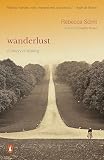
Editors Reads Verdict
An erudite, discursive, beautifully written history and philosophy of walking. Solnit ranges brilliantly across philosophy, art, and politics, even if the very breadth that makes the book rich also makes it meander.
What We Loved
- Erudite, wide-ranging, and intellectually rich
- Beautifully written and thought-provoking
- Connects walking to thought, art, and politics
Minor Drawbacks
- Discursive breadth can meander and lack focus
- More essayistic than narrative or systematic
Key Takeaways
- → Walking and thinking are deeply intertwined
- → How we move shapes culture, politics, and the self
- → The pace of walking resists a speeding, mechanized world
| Author | Rebecca Solnit |
|---|---|
| Publisher | Penguin Books |
| Pages | 336 |
| Published | January 1, 2000 |
| Language | English |
| Genre | Essays, History, Nature |
| Difficulty | Intermediate |
| Best For | Readers of literary nonfiction and cultural history who enjoy erudite, discursive, beautifully written essays on everyday subjects. |
How Wanderlust Compares
Wanderlust at a glance against 3 similar books readers weigh alongside it.
| Book | Author | Rating | Best for |
|---|---|---|---|
| Wanderlust (this book) | Rebecca Solnit | ★ 4.1 | Readers of literary nonfiction and cultural history who enjoy erudite, |
| A Field Guide to Getting Lost | Rebecca Solnit | ★ 4.2 | Readers of literary essays and nature writing, and anyone interested in the |
| Men Explain Things to Me | Rebecca Solnit | ★ 4.1 | Readers interested in feminist thought, essays, and the politics of language |
| The Old Ways | Robert Macfarlane | ★ 4.3 | Readers of literary nature writing and travel writing — anyone interested in |
A History of Putting One Foot Forward
Rebecca Solnit’s Wanderlust: A History of Walking, published in 2000, is an erudite, discursive, and beautifully written exploration of one of the most ordinary and universal of human activities — walking — and of the surprisingly vast web of meaning, culture, thought, and politics that radiates from it. Solnit, one of the most admired essayists and cultural critics of her generation (later famous for Men Explain Things to Me and the concept of “mansplaining”), brings to the subject her characteristic intellectual range, her graceful prose, and her gift for finding profound significance in unexpected places. Wanderlust is not a how-to or a travel narrative but a wide-ranging meditation — part history, part philosophy, part cultural criticism — on what it means to walk, and on how this simple act has shaped, and been shaped by, the human mind, body, and society. It is a book that makes the reader see a familiar activity entirely anew.
Solnit ranges across an astonishing variety of terrain. She explores the deep connection between walking and thinking, from the peripatetic philosophers of ancient Greece who walked as they reasoned, to the Romantic poets like Wordsworth for whom walking and the creation of poetry were inseparable. She considers walking as a spiritual practice in pilgrimage and the labyrinth; as a political act in marches, protests, and the claiming of public space; as an urban experience in the figure of the flâneur strolling and observing the modern city; as a gendered activity, with the freedoms and dangers that walking has held differently for women; and as a bodily and evolutionary fact. She moves from anatomy to architecture, from the mountaineer’s ascent to the suburban sidewalk’s disappearance, weaving together history, literature, philosophy, and personal reflection into a rich tapestry. The unifying thread is the conviction that walking, far from being trivial, is bound up with the deepest aspects of human experience — thought, freedom, embodiment, and our relationship to the world and to time.
Erudite, Rich, and Beautifully Written
The great strength of Wanderlust is its intellectual richness and the quality of Solnit’s writing and thinking. She is enormously well-read and intellectually curious, and the book is a feast of ideas, connections, and illuminations, drawing together philosophy, art, history, and politics with an associative brilliance that is consistently stimulating. Her central insight — that walking and thinking are deeply intertwined, that the pace and rhythm of walking shape the mind and resist the acceleration of a mechanized world — is developed with subtlety and resonance, and her exploration of walking’s many cultural and political dimensions is genuinely eye-opening. Solnit makes the reader understand walking as a meaningful, even radical, human activity, and her reflections on its place in thought, art, freedom, and the body are rich and rewarding.
The prose, too, is a pleasure. Solnit writes with grace, intelligence, and a poet’s attention, and the book is full of beautiful passages and arresting observations. Her ability to move from the concrete to the philosophical, to find the universal in the particular, and to render her wide learning in lucid, elegant language makes Wanderlust a deeply satisfying example of the literary essay at its best. For readers who love discursive, erudite nonfiction that illuminates everyday life through the lens of a brilliant, ranging mind, the book offers continual pleasures of thought and language.
The Costs of Breadth
The honest limitation of Wanderlust is the flip side of its richness: its discursive, wide-ranging structure can meander and lack focus. The very breadth that makes the book so stimulating — its movement across philosophy, history, art, politics, and personal reflection — also means it can feel diffuse, wandering from topic to topic without the propulsion of a central narrative or a tightly built argument. The book proceeds essayistically, by association and accumulation rather than by linear development, and readers who prefer a focused thesis or a driving story may find it loose, even rambling, in places. It is a book to wander through, much like walking itself, rather than one that marches toward a destination.
This essayistic, meditative quality is intrinsic to the book’s nature and much of its charm — Wanderlust is meant to be a ramble, not a forced march — but it does mean the experience is more contemplative and discursive than gripping or systematic. Readers should come to it for the pleasures of erudition, reflection, and beautiful writing, and be willing to follow Solnit’s wide-ranging mind wherever it leads, rather than expecting tight structure or narrative momentum. Approached in that spirit, its meandering is a feature; approached expecting focus, it can frustrate. It rewards the reader willing to walk alongside it at its own unhurried pace.
A Rich, Rewarding Ramble
Wanderlust endures as one of the finest examples of the discursive literary essay — an erudite, wide-ranging, beautifully written meditation on walking and the vast world of thought, culture, and politics it opens onto. Solnit’s intellectual richness, her graceful prose, and her gift for revealing the profundity of the ordinary make the book a continual delight for the right reader. Its breadth can make it meander and it is more essayistic than focused, but for those who love a brilliant mind ranging freely over a rich subject, it is deeply rewarding, and it permanently changes how one thinks about the simple act of walking.
For readers of literary nonfiction and cultural history who enjoy erudite, discursive, beautifully written essays, Wanderlust is a rich and stimulating read.
Final Verdict
Our rating: 4.1/5 — An erudite, discursive, beautifully written history and philosophy of walking. Solnit ranges brilliantly across philosophy, art, and politics, illuminating the profundity of an everyday act. The breadth that makes it rich also makes it meander, and it’s more essayistic than focused, but it’s a rewarding intellectual ramble.
For more of Solnit and discursive nonfiction, see A Field Guide to Getting Lost, Men Explain Things to Me, and The Old Ways.
Frequently Asked Questions
What is "Wanderlust" about?
Rebecca Solnit's wide-ranging history and philosophy of walking. From peripatetic philosophers and Romantic poets to pilgrims, protesters, and flâneurs, Solnit explores how walking has shaped thought, culture, politics, and the body — a discursive, erudite meditation on putting one foot in front of the other.
Who should read "Wanderlust"?
Readers of literary nonfiction and cultural history who enjoy erudite, discursive, beautifully written essays on everyday subjects.
What are the key takeaways from "Wanderlust"?
Walking and thinking are deeply intertwined How we move shapes culture, politics, and the self The pace of walking resists a speeding, mechanized world
Is "Wanderlust" worth reading?
An erudite, discursive, beautifully written history and philosophy of walking. Solnit ranges brilliantly across philosophy, art, and politics, even if the very breadth that makes the book rich also makes it meander.
Ready to Read Wanderlust?
Check the current price on Amazon.
Check Price on Amazon (paid link)Prices and availability are subject to change. See Amazon for current price.
Review last updated: