Non-fiction at its best is indistinguishable from great writing — rigorous, surprising, and impossible to put down. These are the non-fiction books that deliver on that promise.
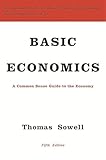
Thomas Sowell delivers a comprehensive, jargon-free introduction to economic thinking that trains readers to see beyond immediate effects to the full consequences of policies and actions.
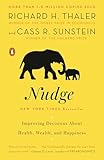
Richard Thaler and Cass Sunstein show how small changes to the way choices are presented can steer people toward better decisions without restricting freedom.
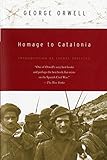
George Orwell's first-person account of fighting for the POUM militia in the Spanish Civil War — the trenches outside Huesca, the revolutionary Barcelona of 1936, the May Days street fighting, the Stalinist suppression of the independent left, and his narrow escape from arrest and execution.
Nobel laureate Richard Thaler tells the inside story of how behavioral economics upended the rational-actor model and transformed our understanding of human decision-making.
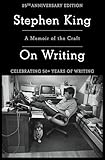
Part memoir, part writing guide, Stephen King reflects on his life, his near-fatal accident, and the craft principles that have made him one of the most productive writers in American literature.
Stephen Ambrose follows Easy Company of the 101st Airborne Division from training through D-Day, the Battle of the Bulge, and the fall of Hitler's Eagle's Nest.
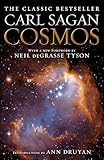
Carl Sagan's companion to his landmark PBS series explores the history of science, the nature of the universe, and humanity's place in the cosmos with breathtaking scope and lyrical prose.
Known publicly as 'Emily Doe,' Chanel Miller reclaims her full identity and tells the complete story of the assault, trial, and aftermath of the Brock Turner case.
William Shirer's definitive account of Nazi Germany — from Hitler's birth to the Reich's collapse — written by a journalist who witnessed much of it firsthand.
Wall Street Journal reporter John Carreyrou tells the complete story of how Elizabeth Holmes and Theranos defrauded investors and endangered patients with a blood-testing technology that didn't work.
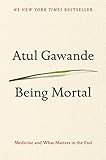
Surgeon Atul Gawande examines how medicine has failed dying patients by prioritizing survival over quality of life, and what better approaches to aging and end-of-life care look like.
A narrative history of the first month of World War I — August 1914 — tracing how Europe's powers stumbled into catastrophe through a combination of rigid military planning, diplomatic failure, and the momentum of mobilization.
Michelle Alexander's landmark argument that mass incarceration is the newest system of racial caste control in America — the functional successor to Jim Crow laws and before them, slavery.
Erik Larson's account of Winston Churchill's first year as Prime Minister — May 1940 to May 1941 — when Britain stood alone against Nazi Germany and Churchill forged a nation's will to endure.
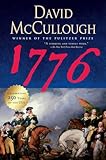
David McCullough narrates the military history of 1776 — the year of American independence — through the campaigns, retreats, and nearly disastrous reverses that shaped the Revolutionary War's decisive year.
Written as a letter to his teenage son, Ta-Nehisi Coates examines the history and present reality of anti-Black racism in America — its origins in the destruction of Black bodies, its persistence through white supremacy — with unsparing intellectual force.
The Japanese Breakfast musician writes about her Korean-American identity, her mother's death from cancer, and how food became the medium for grief and memory.
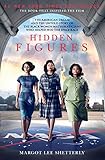
The true story of the Black female mathematicians who served as 'human computers' at NASA during the Space Race — women whose calculations helped launch America into space while they navigated the segregated South.
The late Michelle McNamara chronicles her obsessive investigation into the East Area Rapist, later called the Golden State Killer — a serial criminal who terrorized California in the 1970s and 80s.
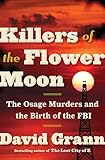
In 1920s Oklahoma, members of the Osage Nation were being systematically murdered for their oil wealth in a conspiracy that eventually drew in J. Edgar Hoover's nascent FBI.
The story of how Oakland A's general manager Billy Beane used statistical analysis to build a competitive baseball team on a fraction of the payroll of richer clubs.
The intertwined stories of the 1893 Chicago World's Fair — one of the most ambitious construction projects in American history — and the serial killer H.H. Holmes, who used the fair's crowds as cover for his murders.