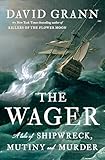
The true story of the 1741 shipwreck of HMS Wager off the coast of Patagonia, the murderous castaways who survived, and the competing accounts of what happened that constituted a kind of 18th-century trial.
A comprehensive, revisionist history of ancient Rome from its murky origins to the extension of citizenship across the empire, written with the authority of Britain's greatest living classicist.
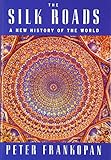
A radical reorientation of world history centered on the Silk Roads — the trade routes connecting East and West — arguing that Asia, the Middle East, and Central Asia have been the world's true centers for most of recorded history.
Joan Didion's unflinching account of the year following her husband John Gregory Dunne's sudden death while their daughter lay critically ill in the hospital.
Adapted from her viral TEDx talk, Chimamanda Ngozi Adichie makes a passionate and personal case for feminism rooted in the realities of both African and Western experience.
A collection of essays on culture, politics, race, and feminism by Roxane Gay, who refuses the pressure to be a perfect feminist and argues for the political power of imperfect, contradictory humanity.
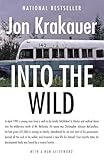
The story of Christopher McCandless, a young man from a privileged background who walked into the Alaskan wilderness alone in 1992 — and was found dead in an abandoned bus four months later.
The story of Daniel Kahneman and Amos Tversky, the Israeli psychologists whose collaboration upended our understanding of human judgment and decision-making.
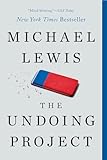
An investigation into the U.S. federal government's most consequential departments and what happens when the incoming administration fails to prepare for managing them.
After the collapse of her marriage and her mother's death, Cheryl Strayed impulsively hiked 1,100 miles of the Pacific Crest Trail alone — unprepared, grieving, and ultimately transformed.
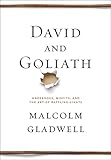
Malcolm Gladwell argues that what we consider disadvantages — dyslexia, class backgrounds, weak institutions — can become hidden sources of strength in the right circumstances.
The story of a group of idealistic American airmen in the 1930s who dreamed precision bombing could make war more humane — and why their dream collided with catastrophic reality over Tokyo.
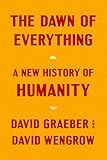
An anarchist anthropologist and an archaeologist argue that conventional narratives of social evolution — from bands to tribes to states — are wrong, and that human history shows far more political experimentation and freedom than we have assumed.
A sequel to The Tipping Point that revisits the science of social epidemics twenty-five years later, exploring how the mechanisms of contagion have become darker and more destructive.
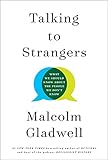
Malcolm Gladwell examines how our faulty assumptions about strangers — particularly our default to truth and our coupling of behavior to context — lead to systematic errors with devastating consequences.
A collection of Malcolm Gladwell's best New Yorker essays exploring the hidden side of everyday phenomena, from dog training to hair dye to the Challenger disaster.
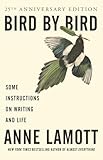
Beloved writer Anne Lamott offers funny, compassionate advice on the writing life — from dealing with the blank page to navigating publication — grounded in her personal experience as a novelist and teacher.
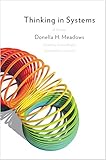
Environmental scientist Donella Meadows provides a primer on systems thinking — the art of seeing the world as interconnected structures of feedback, stocks, and flows — with applications from ecology to economics to policy.
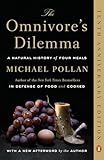
Michael Pollan traces four meals from their origins to the table — industrial, industrial organic, local pastoral, and hunted-gathered — and asks what we should eat in a world of infinite choice.
A sweeping vision of humanity's future as Homo sapiens pursues the ancient goals of immortality, bliss, and divinity — and what we risk losing in the process.
Michael Pollan's response to the nutritionism that has dominated American food culture — a short, elegant argument that the answer to the question of what to eat is simpler than the food industry and nutrition science want us to believe.