Editors Reads Verdict
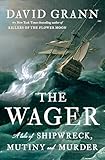
The Wager is Grann at his best — a maritime survival story that becomes a meditation on truth, loyalty, authority, and the stories we tell to justify our worst behavior under extreme pressure. The narrative tension is extraordinary, and Grann's archival research is both meticulous and invisible.
What We Loved
- The narrative drive is extraordinary — this reads as propulsively as a thriller despite being meticulously researched history
- Grann's thematic depth transforms what could be a survival adventure into a genuinely philosophical exploration
- The competing accounts structure — with mutineers and officers returning to England with different stories — is brilliantly used
- The Patagonian setting is rendered with vivid, specific detail
Minor Drawbacks
- Readers who know nothing of maritime history may need to adjust to the nautical vocabulary
- Some of the supporting characters remain relatively thin compared to the central figures
- The ending, while appropriately unresolved given the historical record, may leave some readers wanting more
Key Takeaways
- → Extreme conditions reveal character in ways ordinary life cannot — and the revelation is not always flattering
- → Authority and hierarchy depend on shared belief — when survival is at stake, those structures collapse quickly
- → History is always told by survivors, and survivors always have reasons to shape the story in their favor
- → The British Navy's court martial system was as much about protecting institutional honor as finding truth
- → Human endurance is both extraordinary and surprisingly fragile under sustained deprivation
| Author | David Grann |
|---|---|
| Publisher | Doubleday |
| Pages | 352 |
| Published | April 18, 2023 |
| Language | English |
| Genre | History, Adventure, Nonfiction |
| Difficulty | Beginner |
| Best For | Readers who love narrative nonfiction, maritime history, survival stories, or explorations of truth, authority, and moral compromise under extreme circumstances. |
How The Wager Compares
The Wager at a glance against 3 similar books readers weigh alongside it.
| Book | Author | Rating | Best for |
|---|---|---|---|
| The Wager (this book) | David Grann | ★ 4.5 | Readers who love narrative nonfiction, maritime history, survival stories, or |
| 1776 | David McCullough | ★ 4.5 | American history readers, students of leadership, and anyone who wants to |
| Dead Wake | Erik Larson | ★ 4.5 | History readers, fans of narrative nonfiction, and anyone fascinated by World |
| The Splendid and the Vile | Erik Larson | ★ 4.6 | History readers, Churchill enthusiasts, anyone interested in leadership under |
Shipwreck, Mutiny, and the Problem of Truth
In 1741, HMS Wager, a British man-of-war participating in a covert imperial mission around Cape Horn, wrecked on a desolate island off the coast of Patagonia. Of the hundred and forty men aboard, dozens died immediately. The survivors — desperate, starving, divided — collapsed into competing factions, and then into what was effectively a murder. Years later, the survivors straggled home to England with wildly different accounts of what had happened: who was responsible, who had led, who had broken, and who had killed.
David Grann, whose Killers of the Flower Moon demonstrated his mastery of the narrative nonfiction form, takes this extraordinary story and makes it into something even more extraordinary. The Wager is an adventure, a courtroom drama, a survival narrative, and a meditation on how power works when the structures that support it have been stripped away.
The Competing Narratives
The book’s central formal innovation is the tripartite structure: we see the wreck and its aftermath from multiple perspectives, each shaped by the narrator’s self-interest and survival. The captain, David Cheap, was a rigid disciplinarian who made catastrophic decisions before the wreck and what may have been a murderous one after it. The gunner John Bulkeley was a skilled sailor and a shrewd writer who understood that whoever published first would shape the historical record. And then there were the men — hundreds of ordinary sailors whose names appear only in muster lists and burial records.
Grann uses this structure to ask a genuinely interesting question: in the absence of institutional authority, what counts as truth? Who gets to define mutiny? What happens when the law of the sea and the law of survival cannot both be honored?
Research Made Invisible
One of Grann’s great skills is that his research is invisible. The Wager is built on archival sources — court records, published accounts, private letters, Admiralty files — but it reads nothing like a documentary. The details that appear on the page are the ones that serve the story. The ones that don’t disappear without trace. This is the hardest skill in narrative nonfiction, and Grann has it.
The Moral Weight of Survival
What elevates The Wager above comparable shipwreck narratives is its interest in what the disaster reveals about the men involved, and by extension about human nature under sustained extremity. Grann does not moralize, but he does not look away. The hunger that drives men to eat anything, the hierarchies that collapse and then reconstitute, the creativity of human self-justification — all of it is rendered with a clear, unsparing precision that makes the book as morally serious as it is thrilling.
David Grann and the Narrative Nonfiction Craft
By the time The Wager appeared in 2023, David Grann had established himself as one of the most accomplished narrative nonfiction writers working in English. A longtime staff writer at The New Yorker, he made his name with The Lost City of Z (2009), the story of the explorer Percy Fawcett’s fatal obsession with a vanished Amazonian civilization, which was adapted into a feature film. Killers of the Flower Moon (2017), his account of the systematic murder of members of the Osage Nation in 1920s Oklahoma and the early FBI investigation that followed, became a landmark of the form and the basis for Martin Scorsese’s acclaimed film. Grann also writes superb long-form journalism, collected in The Devil and Sherlock Holmes. What recurs across all of it is a method: he finds a true story with the architecture of a thriller, immerses himself in archives until he can render scenes with novelistic specificity, and then steps back to let larger questions — about empire, justice, obsession, truth — rise out of the particulars. The Wager is a textbook demonstration of that method applied to the age of sail.
The History Behind the Book
The events Grann reconstructs were a genuine scandal in eighteenth-century Britain. HMS Wager was part of a squadron sent under Commodore George Anson to harass Spanish possessions during the War of Jenkins’ Ear, and its wreck on a remote island off the Chilean coast set in motion one of the era’s most notorious survival ordeals. The castaways’ descent into factionalism, the breakaway voyage led by the gunner John Bulkeley that carried a group thousands of miles to Brazil in a patched-together boat, the separate survival of Captain David Cheap and his loyalists, and the eventual reunion of these enemies before a naval court martial — all of it is drawn from the historical record, including the published narratives the survivors raced to print in order to control the story. Grann’s achievement is to take these competing primary sources and let their contradictions become the book’s subject, so that the reader is never allowed to forget that history is assembled from the testimony of people with reasons to lie.
Who Should Read It
The Wager is an ideal read for anyone who loves narrative nonfiction that reads with the propulsion of a novel — fans of Erik Larson’s Dead Wake and The Splendid and the Vile will feel immediately at home, as will readers drawn to survival epics and maritime history. It also rewards readers interested in deeper questions about authority, truth, and how institutions protect themselves, since the court martial at the book’s climax is as much about the Royal Navy’s need to manage its own reputation as about establishing what actually happened. Readers with no nautical background should not be deterred; Grann supplies the vocabulary as he goes, and the human story needs no specialist knowledge to grip. It stands among Grann’s very best work and confirms his place as a master of turning the archival record into irresistible storytelling.
Our rating: 4.5/5 — A masterpiece of narrative nonfiction that uses a true 18th-century survival story to explore timeless questions about truth, authority, and what humans will do to survive.
Frequently Asked Questions
What is "The Wager" about?
The true story of the 1741 shipwreck of HMS Wager off the coast of Patagonia, the murderous castaways who survived, and the competing accounts of what happened that constituted a kind of 18th-century trial.
Who should read "The Wager"?
Readers who love narrative nonfiction, maritime history, survival stories, or explorations of truth, authority, and moral compromise under extreme circumstances.
What are the key takeaways from "The Wager"?
Extreme conditions reveal character in ways ordinary life cannot — and the revelation is not always flattering Authority and hierarchy depend on shared belief — when survival is at stake, those structures collapse quickly History is always told by survivors, and survivors always have reasons to shape the story in their favor The British Navy's court martial system was as much about protecting institutional honor as finding truth Human endurance is both extraordinary and surprisingly fragile under sustained deprivation
Is "The Wager" worth reading?
The Wager is Grann at his best — a maritime survival story that becomes a meditation on truth, loyalty, authority, and the stories we tell to justify our worst behavior under extreme pressure. The narrative tension is extraordinary, and Grann's archival research is both meticulous and invisible.
Ready to Read The Wager?
Check the current price on Amazon.
Check Price on Amazon (paid link)Prices and availability are subject to change. See Amazon for current price.
Review last updated: