Lucy Honeychurch travels to Florence with her cousin and chaperone, encounters a room with a view and a young man who insists on honesty, and discovers that choosing her own life is harder than she expected.
Wallace's first essay collection includes his piece on the Illinois State Fair, an extended essay on David Lynch, 'E Unibus Pluram' on television and American fiction, and the title essay on a Caribbean cruise — the funniest and most formally inventive piece of literary journalism of the 1990s.
Anne Shirley is now sixteen and a teacher at Avonlea school, navigating new friendships, her growing responsibilities at Green Gables, and the same imaginative intensity that has always defined her.
Ravic, a German surgeon living illegally in Paris in 1939, practises medicine under a false name and pursues the Gestapo officer who destroyed his life. Remarque's wartime novel was written in American exile and captures the atmosphere of Paris just before the German occupation with the precision of someone who knew the city and understood what was about to happen to it.
George F. Babbitt, a real estate agent in the fictional Midwestern city of Zenith, is the model American businessman — boosterish, conformist, self-satisfied — who attempts a brief, doomed rebellion against his own life. Lewis's most famous novel gave English a common noun and remains the defining portrait of the American businessman as a social type.
A Wall Street lawyer hires a copyist named Bartleby who performs his duties adequately, then one day begins responding to every request with 'I would prefer not to.' Melville's most modern story anticipates Kafka, Beckett, and the literature of passive resistance.
Billy Budd, a young sailor of exceptional beauty and goodness, is falsely accused by the malicious master-at-arms Claggart, strikes him accidentally and kills him, and must be hanged for mutiny. Melville's posthumously published final work is a philosophical meditation on innocence, law, and justice.
Eliot's final novel follows Gwendolen Harleth, who makes a disastrous marriage to a cruel man for financial security, and Daniel Deronda, who discovers his Jewish heritage and commits himself to the Zionist cause — a dual portrait of what English society does to intelligent women and what Jewish identity means.
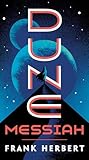
Twelve years after his jihad swept across the known universe, Paul Muad'Dib sits on the throne of an empire built on ten billion dead. His prescience is a prison, his legend a weapon turned against him, and a conspiracy is forming to finally bring him down.
Two stories: 'Franny,' in which a young woman has a breakdown at a Yale football weekend while clutching a book about the Jesus Prayer, and 'Zooey,' in which her brother attempts to help her recover. The Glass family — seven exceptionally intelligent siblings raised on comparative religion — are Salinger's sustained meditation on the problem of being too smart for the ordinary world.
Jack Boughton and Della Miles, a Black schoolteacher, meet in St. Louis in the late 1940s and fall in love in a state where their relationship is illegal.
The Loftis family of Port Warwick, Virginia, is disintegrating: the father drinks, the mother is cold, the beautiful daughter Peyton has been driven mad by the love and hatred of both parents. Styron's first novel — written in the shadow of Faulkner but not trapped by it — is the most accomplished American debut novel of the postwar period, and its account of Peyton's stream-of-consciousness interior monologue rivals the master's best.
In a small Illinois town in October, a carnival arrives just after midnight — Cooger and Dark's Pandemonium Shadow Show — and two thirteen-year-old boys discover that its attractions offer exactly what people most desire, at a price that cannot be paid.
The friendship between Nel Wright and Sula Peace, two Black women in the Bottom — a hilltop community in Ohio — over five decades, and what Sula's freedom costs both of them.
When a young woman's body is found in the library at Gossington Hall, the owners call on their friend Miss Jane Marple. Investigating from St Mary Mead, the village spinster must determine who the victim was before she can determine who killed her.
Plath's debut poetry collection, published when she was twenty-seven, reveals a poet of extraordinary technical command working in the shadow of her influences — Yeats, Dylan Thomas, Roethke — and beginning to discover the voice that would produce Ariel.
Maggie Tulliver grows up on the River Floss, trapped between her fierce intelligence and her society's refusal of it, between loyalty to her beloved but conventional brother Tom and her own ungovernable desires — Eliot's most autobiographical and psychologically penetrating early novel.
James Axton, a risk analyst working in Athens in the early 1980s, becomes entangled with a cult that commits murders based on alphabetical correspondences between victims' initials and the place-names where they are killed. DeLillo's most purely thriller-shaped novel is also his most explicit meditation on language: the cult's strange grammar of death is the extreme version of the novel's central question — what is the relationship between words and the world?
Albertine is living with the narrator in Paris, and he is consumed by jealousy, surveillance, and the impossibility of knowing another person's inner life — Proust's most claustrophobic and psychologically intense volume.
A double agent for the Russian embassy in London is ordered to commit a terrorist act that can be blamed on anarchists. Conrad's London novel — simultaneously thriller, black comedy, and study of how political violence is always manipulated by those who profit from its effects.
Three veterans of the First World War try to build ordinary lives in the Weimar Republic while Nazi violence rises around them, and one of them falls in love with a woman dying of tuberculosis. Remarque's most romantic novel is also his most political — the personal tenderness and the historical catastrophe are inseparable, and the love story is written with the knowledge of what is coming.
Anna Morgan, a young West Indian chorus girl in England, is kept by an older man and then abandoned, and drifts into a series of diminishments. Rhys's most autobiographical novel — the closest to her own experience of arriving in England from Dominica — is also her most economical: the prose is stripped to the bone, and the cold English world that Anna cannot navigate is rendered entirely through what it refuses to give her.
Chopin's second collection of Louisiana stories deepens her exploration of desire, independence, and social constraint in the Creole and Cajun communities, with a new boldness in rendering women's inner lives.