Editors Reads Verdict
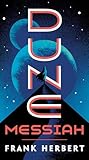
Deliberately uncomfortable, structurally subversive, and far shorter than Dune — Dune Messiah is Herbert's correction to anyone who missed the warning embedded in the first book. If Dune asks whether the messiah myth is dangerous, Messiah answers: catastrophically, yes.
What We Loved
- Systematically dismantles the hero-worship the first book might have accidentally encouraged
- Paul's tragedy is rendered with genuine pathos — Herbert doesn't let him off the hook
- Compact and focused; a lean 272 pages that moves with purpose
- The Tleilaxu and the conspiracy plot deepen the political world considerably
Minor Drawbacks
- Readers expecting the sweep and world-building of Dune will find it jarring by design
- Alia and the secondary characters get less room than they deserve
- The ending, while earned, is bleak in ways that require Children of Dune to fully process
Key Takeaways
- → The messiah who achieves his destiny destroys more than he saves — power corrupts the prophetic as readily as the mundane
- → Prescience is not a gift but a trap; seeing all possible futures forecloses the freedom to choose any of them
- → Legends, once loose, cannot be recalled — Paul is as much a prisoner of his myth as his enemies are
- → Herbert intended Dune as a warning; Messiah is that warning made unavoidable
| Author | Frank Herbert |
|---|---|
| Publisher | Ace |
| Pages | 272 |
| Published | January 1, 1969 |
| Language | English |
| Genre | Science Fiction, Classic Literature |
| Difficulty | Intermediate |
| Best For | Anyone who read Dune and found Paul's arc triumphant — Herbert wrote this book specifically for you. Also essential for readers of political philosophy embedded in science fiction. |
How Dune Messiah Compares
Dune Messiah at a glance against 2 similar books readers weigh alongside it.
| Book | Author | Rating | Best for |
|---|---|---|---|
| Dune Messiah (this book) | Frank Herbert | ★ 4.3 | Anyone who read Dune and found Paul's arc triumphant — Herbert wrote this book |
| Children of Dune | Frank Herbert | ★ 4.1 | Readers who have completed Dune and Dune Messiah and want to follow Herbert's |
| Dune | Frank Herbert | ★ 4.7 | Readers of ambitious fiction, fans of the films who want the deeper version, |
The Correction
Frank Herbert was frustrated. Readers of Dune had come away, in considerable numbers, with exactly the wrong response: they admired Paul Atreides. They cheered his jihad. They found the desert messiah romantic. Herbert had spent six years writing a warning about the seductive danger of charismatic leadership and the manufactured messiah myth, and a significant portion of his readership had read it as an adventure story with a satisfying hero.
Dune Messiah, published in 1969, four years after Dune, is his correction. It is a shorter, harder, far less comfortable book, and it is designed that way. Herbert is not here to give you another sweep of desert politics and ecological wonder. He is here to show you what Paul’s victory actually cost.
The Price of the Jihad
Twelve years have passed since Paul Muad’Dib seized the throne at the end of Dune. In those twelve years, his Fremen warriors have spread across the known universe in a holy war that has killed approximately sixty-one billion people. Paul knows this. He knew it before it happened — his prescience showed him every path, and the jihad was the least catastrophic option visible to him. That is Herbert’s most devastating point: the best available future still required sixty-one billion dead.
Paul now rules an empire he despises from a throne he cannot leave. His prescience, once an advantage, has narrowed into a prison — the more clearly he sees possible futures, the less able he is to act freely within them. The conspiracy forming against him, involving the Tleilaxu, the Spacing Guild, and the Bene Gesserit, is almost a relief. At least it is something that might surprise him.
Subverting the Hero
What Herbert is doing structurally in Messiah is demanding that the reader hold two incompatible truths simultaneously: Paul is sympathetic, and Paul is responsible for one of the greatest catastrophes in human history. The genius is that he never lets you resolve the tension into a simple verdict. Paul is not a villain who fooled us in book one. He is a person who was placed, by circumstance and breeding and prophecy, into a position where all the available choices were terrible — and he made the least terrible one, and it was still terrible.
The novel is also a meditation on what happens when a legend outgrows its originator. The Paul who rides with the Fremen and defeats the Harkonnens is a person. The Muad’Dib who has spread across ten thousand worlds as an object of worship is something else entirely — a force that no longer requires the man’s participation and cannot be recalled. Herbert understood, with uncomfortable clarity, that the messiah-making machinery of politics and religion operates independently of whatever the messiah actually believes or does.
Essential, Not Optional
There is a temptation to treat Dune Messiah as optional — a darker, thinner companion to the real achievement of Dune. This is a mistake. The two books form a single argument, and reading Dune without Messiah is like reading only the premise of that argument. Herbert did not write a sequel; he wrote the second half of what the first book was actually about.
Children of Dune continues the story and resolves certain narrative threads, but Messiah is where the moral reckoning happens. It is, by design, a hard read. That is the point.
Our rating: 4.3/5 — Deliberately subversive and emotionally unflinching. Less immediately pleasurable than Dune, more necessary.
A Deliberate Subversion of Its Predecessor
Dune Messiah, the second novel in Frank Herbert’s saga, is one of science fiction’s most fascinating sequels precisely because it refuses to give readers what they expect. Where Dune could be read as a triumphant hero’s journey, Dune Messiah deliberately complicates and darkens that story, exploring the catastrophic consequences of the messianic rise of Paul Atreides — the holy war waged in his name, the billions dead, the trap of his own prophecy and power. Herbert wrote it in part as a corrective, a warning against the very charismatic-hero mythology that Dune seemed to celebrate, and the result is a more sombre, philosophical, and politically searching book. It is shorter and more inward than the first novel, concerned less with desert adventure than with the burdens of leadership, the dangers of prophecy, and the corruption inherent in absolute power, as Paul becomes a prisoner of the empire and the religion he created. Some readers, expecting a repeat of the first book’s grandeur, are disappointed; others find it the more thoughtful and prescient work. Read as Herbert intended — as a deliberate interrogation of heroism and messianic politics — Dune Messiah is essential to the saga and a striking demonstration of an author turning his own most famous creation against the reader’s easy assumptions. It must be read after Dune, and it deepens the saga’s central themes considerably.
Reading Guides
- Dune Books in Order: What to Read After Dune Part Two (2026)
- Dune vs A Game of Thrones: Which Epic to Read First?
Herbert’s Revision of the Hero
Dune Messiah (1969) was published by Putnam and is the shortest of the six Dune novels — Herbert’s deliberately lean rejoinder to the mythologising tendency he identified in readers’ responses to the first novel. Herbert had been disturbed by letters from readers who read Paul Atreides as a straightforward hero, and wrote the sequel to demonstrate that Paul’s prescience has made him a prisoner of the future he can see: he cannot deviate from his path without causing greater suffering than following it. The jihad Paul’s followers have waged across twelve years and ten billion lives is presented not as a triumph but as a catastrophe he has been unable to prevent.
The Tleilaxu Ghola
The Bene Tleilax, introduced in Dune Messiah, are a society of genetic engineers who have mastered the creation of gholas — bodies grown from dead tissue and then reactivated. Their gift to Paul of a ghola of Duncan Idaho — his dead swordmaster — is both tribute and weapon, and the mystery of whether Duncan’s memories can be restored (and what he will do if they are) runs through Dune Messiah and the subsequent novels of the series.
Reception and Legacy
The novel was not well-received on publication: readers and critics expecting a sequel to Dune’s epic adventure found instead a philosophical meditation on power, religion, and the costs of prophecy. Its critical reassessment, which began in the 1980s, positions it as the most intellectually honest of the Dune novels — the book in which Herbert makes explicit what the first novel left implicit: that the messiah is a catastrophe, that charismatic leaders are dangerous regardless of their intentions, and that the systems that create them are more dangerous still.
Frequently Asked Questions
What is "Dune Messiah" about?
Twelve years after his jihad swept across the known universe, Paul Muad'Dib sits on the throne of an empire built on ten billion dead. His prescience is a prison, his legend a weapon turned against him, and a conspiracy is forming to finally bring him down.
Who should read "Dune Messiah"?
Anyone who read Dune and found Paul's arc triumphant — Herbert wrote this book specifically for you. Also essential for readers of political philosophy embedded in science fiction.
What are the key takeaways from "Dune Messiah"?
The messiah who achieves his destiny destroys more than he saves — power corrupts the prophetic as readily as the mundane Prescience is not a gift but a trap; seeing all possible futures forecloses the freedom to choose any of them Legends, once loose, cannot be recalled — Paul is as much a prisoner of his myth as his enemies are Herbert intended Dune as a warning; Messiah is that warning made unavoidable
Is "Dune Messiah" worth reading?
Deliberately uncomfortable, structurally subversive, and far shorter than Dune — Dune Messiah is Herbert's correction to anyone who missed the warning embedded in the first book. If Dune asks whether the messiah myth is dangerous, Messiah answers: catastrophically, yes.
Ready to Read Dune Messiah?
Check the current price on Amazon.
Check Price on Amazon (paid link)Prices and availability are subject to change. See Amazon for current price.
Review last updated: