Dune Books in Order: What to Read After Dune Part Two (2026)
Dune Part Two (2024) brought millions of new readers to Frank Herbert's saga. Here's the complete reading guide — which sequels are worth it, which to skip, and what comes next.
All Dune Books at a Glance
| # | Title | Year | Type |
|---|---|---|---|
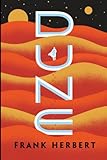
| 1 | Dune | 1965 | Frank Herbert — Book 1 |
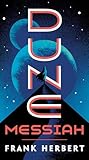
| 2 | Dune Messiah | 1969 | Frank Herbert — Book 2 |
| 3 | Children of Dune | 1976 | Frank Herbert — Book 3 |
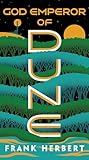
| 4 | God Emperor of Dune | 1981 | Frank Herbert — Book 4 |
| 5 | Heretics of Dune | 1984 | Frank Herbert — Book 5 |
| 6 | Chapterhouse: Dune | 1985 | Frank Herbert — Book 6 |
Denis Villeneuve’s Dune: Part Two arrived in March 2024 and completed the cinematic adaptation of Frank Herbert’s first novel. Paul Atreides became the Kwisatz Haderach. The Fremen rode to war. The Emperor fell. The screen went dark on a note of triumph that Herbert — and Villeneuve — intended to be deeply unsettling.
And then millions of people went looking for the books.
This guide is for them: the complete picture of the Dune saga, what to read next, what to prepare yourself for, and an honest assessment of where the series goes from the ending Villeneuve gave us.
The Original Dune — What the Films Covered
Dune by Frank Herbert was published in 1965. It remains the best-selling science fiction novel of all time — not because it delivers straightforward adventure, but because it operates simultaneously as an ecological treatise, a political thriller, a meditation on religion and prophecy, and a deconstruction of the hero narrative. Arrakis, the spice, the Fremen, the Bene Gesserit, the Great Houses — Herbert built a civilization with genuine internal logic, and Herbert’s questions — about how power works, how myths are manufactured, how messiahs are made — give the world weight that pure world-building never quite achieves.
Villeneuve’s two films adapt the first novel faithfully and seriously. Part One (2021) covers Paul’s arrival on Arrakis, the destruction of House Atreides, and his flight into the desert. Part Two covers his rise among the Fremen, his growing manipulation of their religious beliefs, his duel with Feyd-Rautha, and his seizure of power. The films end where the first book ends — with Paul on the Imperial throne, the Fremen armies unleashed, and Chani riding away into the desert.
Chani’s departure is not in Herbert’s novel. Villeneuve added it specifically to crystallize the unease Herbert builds throughout: that what looks like a triumph is the beginning of something terrible. If that ending left you unsettled and wanting to know what comes next, Herbert already wrote the answer.
Dune Messiah — The Essential Sequel
Dune Messiah was published in 1969, four years after Dune. Herbert wrote it in direct response to the reception of the first book.
The problem Herbert had with Dune’s success was this: readers loved Paul. They found his rise triumphant. They wanted to be Paul. Herbert had intended the novel as a warning — about charismatic leaders, about the dangers of surrendering your judgment to a messiah, about how prophetic movements are created and exploited — and his readers had missed the point entirely and written him fan mail about how much they admired Paul Atreides.
Dune Messiah is Herbert’s correction.
The novel is set twelve years after the end of Dune. Paul now rules a galactic empire, and his Jihad — the holy war fought in his name — has killed sixty-one billion people across the known universe. This is stated plainly in the opening pages. The most devastating wars in human history killed tens of millions; Paul’s rise killed sixty-one billion. Herbert will not let you forget this figure.
Paul himself is trapped. His prescient vision has narrowed into a corridor from which he cannot escape without triggering even greater catastrophe. He is the most powerful human being alive and he is almost completely helpless. The Bene Gesserit, the Tleilaxu, the Guild, and the political remnants of the old order are conspiring against him. His consort Chani wants a child he cannot protect. His sister Alia — born as an Abomination, a pre-born who absorbed the memories of the dead — is her own kind of disaster in the making.
Dune Messiah is a short novel, around half the length of Dune, and it is deliberately claustrophobic where the first book was expansive. The scope contracts; the interiority deepens. Readers who approach it expecting another sweeping adventure are sometimes disappointed. Readers who approach it as a political tragedy — as Herbert’s deliberate dismantling of the hero he built — find it essential.
It is essential. You should read it.
Rating: Essential reading. Read it before forming any final opinion of the Dune saga.
Children of Dune — The Golden Path
Children of Dune was published in 1976 and is the third novel in Herbert’s original sequence. It follows Dune Messiah directly, picking up nine years later with Paul’s twins, Leto II and Ghanima, as children navigating the ruins of Paul’s empire.
The novel’s central concept is the Golden Path — Leto II’s vision of the only future in which humanity survives as a species. It is not a comfortable future. It requires Leto to make a decision that is simultaneously the most self-sacrificing and the most authoritarian act in the series. Children of Dune is where Herbert’s philosophical ambition becomes fully explicit, and where the books require the most active intellectual engagement from the reader.
Alia, possessed by the memories of her grandfather Baron Harkonnen, is the novel’s other major thread — a study in the horror of losing oneself to inherited identity, of what it means when the past overwhelms the present. Her arc is among the most tragic in the series.
Children of Dune is a darker and more demanding book than either Dune or Dune Messiah. It is less a political thriller and more a philosophical novel about time, sacrifice, and what it costs to save a civilization that doesn’t want to be saved. It rewards readers who engaged with Dune Messiah as more than just plot continuation. For readers primarily interested in Paul’s story, it offers closure; for readers interested in Herbert’s larger project, it opens a door onto something stranger and more ambitious.
Who it’s for: Readers willing to commit to Herbert’s ideas on his terms, not theirs.
God Emperor, Heretics, and Chapterhouse — The Further Sequels
Herbert wrote three more novels in the original sequence: God Emperor of Dune (1981), Heretics of Dune (1984), and Chapterhouse: Dune (1985).
The honest assessment is that these books are for a specific kind of reader, and that kind of reader will find them extraordinary. Everyone else will struggle.
God Emperor of Dune jumps 3,500 years into the future. Leto II — who at the end of Children of Dune began fusing with sandtrout to become something no longer entirely human — is now an ancient, massive, half-worm god-emperor ruling over a deliberately stagnant empire. The novel is composed largely of dialogues between Leto and various characters he’s manufactured to challenge him. It is less a story than a sustained philosophical monologue about the nature of power, freedom, and what enforced peace does to a species. It is also, in places, genuinely funny in a dry and deeply strange way. It demands an unusual tolerance for philosophical abstraction.
Heretics of Dune and Chapterhouse: Dune jump another 1,500 years, with an almost entirely new cast, exploring the aftermath of the Golden Path and a new threat from outside the known universe. They are dense, complex, and reward Herbert’s existing committed readers. Chapterhouse ends on a cliffhanger — Herbert died in 1986 before writing the conclusion.
We don’t yet have reviews of these three novels on the site, but they are worth flagging for context: they exist, they are serious work, and they are not entry points. Read them after the first three if you find yourself genuinely hungry for more Herbert and willing to meet his later ambitions on their own terms.
Who they’re for: Committed Herbert readers who found God Emperor irresistible rather than impenetrable after the first fifty pages.
The Brian Herbert and Kevin J. Anderson Books
After Frank Herbert’s death, his son Brian Herbert and co-author Kevin J. Anderson continued the saga with prequels, sequels, and eventually an attempt to complete the story Herbert left unfinished.
The general critical consensus — and the consensus among most serious Dune readers — is that these books do not reach the standard of Frank Herbert’s originals. They are more action-oriented, more conventionally plotted, less philosophically demanding, and more interested in explaining the backstory of the Dune universe than in interrogating it. The Butlerian Jihad prequels (Legends of Dune trilogy), the House prequel trilogy, the Hunters of Dune / Sandworms of Dune conclusion to Frank Herbert’s unfinished arc, and the Schools of Dune trilogy all fall into this category.
This does not mean they are without merit. For readers who love the world of Dune and want more of it — for the completionist who has read all six Herbert originals and wants to spend more time on Arrakis — they provide that. They are not the place to look for Herbert’s intellectual rigour or his habit of writing characters whose victories contain the seeds of catastrophe.
The honest recommendation: Read Frank Herbert’s six novels first. Return to the Brian Herbert / Anderson books only if you’ve finished those and still want more of the world.
The Reading Order: Clear and Actionable
Here is the unambiguous recommendation, depending on where you are:
If you’ve only seen the films:
Start with Dune itself. The films are excellent adaptations but Herbert’s prose operates at a different level — you hear the thoughts of multiple characters simultaneously, you feel the weight of the ecology, you understand the full horror of what Paul is becoming because Herbert is inside his head as it happens. Reading the novel after seeing the films is not redundant; it is a different, deeper experience.
If you’ve read Dune (or watched both films and want to go straight to the sequels):
Read Dune Messiah next. It is short, it is essential, and without it you cannot understand what Herbert was actually doing. Do not stop after Dune and call yourself a Dune reader.
If you’ve read Dune and Dune Messiah:
Children of Dune completes the original trilogy and resolves the story arcs of Paul’s children. It is the natural endpoint for readers who want a complete and emotionally resolved experience of the saga without committing to the more demanding later books.
If you’ve read the first three and want more:
God Emperor of Dune is where you go next, with realistic expectations about what kind of book it is. The final two Herbert novels follow from there.
If you want the prequel background:
The Brian Herbert / Kevin J. Anderson prequels are available when you’ve exhausted the originals. Approach them as expanded-universe material rather than canonical Herbert.
The Villeneuve Films and the Books: One Final Note
Villeneuve has spoken publicly about wanting to adapt Dune Messiah as a third film. As of 2026, that project has not been formally greenlit, but it remains his stated intention. This makes Dune Messiah not just the logical next read but potentially the next theatrical event in this saga.
Reading Dune Messiah now means arriving at that film — if and when it appears — having fully understood what Herbert was doing and why. Paul’s fall, in Herbert’s conception, is not a betrayal of the first book. It is its completion. Villeneuve understands this. His Chani ending telegraphed it clearly. The book will make it unmistakable.
Start with Dune Messiah. Herbert is waiting for you on the other side of the triumph.
Books Like Dune
For science fiction epics that share Dune’s political philosophy, world-building depth, and moral complexity, see our Books Like Dune guide.
For the Best Fantasy Books
For the definitive guide to fantasy fiction — from Tolkien and Le Guin to Brandon Sanderson and George R.R. Martin — see our Best Fantasy Books of All Time list.
Frequently Asked Questions
What order should I read the Dune books?
Read Frank Herbert's original six novels in publication order: Dune, Dune Messiah, Children of Dune, God Emperor of Dune, Heretics of Dune, and Chapterhouse: Dune. The Brian Herbert and Kevin J. Anderson prequel and sequel novels are optional and generally recommended only for dedicated fans of the original six.
Are the Dune sequels worth reading?
Dune Messiah and Children of Dune are considered essential by most fans and deepen the original novel significantly. God Emperor of Dune is a major departure that reads more like philosophical fiction and divides readers sharply. Heretics of Dune and Chapterhouse are set thousands of years later and can feel disconnected. Most readers recommend stopping after Children of Dune if you are uncertain.
What is the best Dune book after the original?
Dune Messiah is the best Dune sequel. It is a deliberate inversion of the first novel and recontextualises Paul Atreides as a tragic rather than triumphant figure. Children of Dune completes that arc. Together the three books form the most coherent and satisfying unit within the larger series.
How many Dune books did Frank Herbert write?
Frank Herbert wrote six Dune novels: Dune (1965), Dune Messiah (1969), Children of Dune (1976), God Emperor of Dune (1981), Heretics of Dune (1984), and Chapterhouse: Dune (1985). He died in 1986 before completing the final novel he had planned. His son Brian Herbert and co-author Kevin J. Anderson have written numerous additional novels in the universe using Herbert's notes.