An undercover narc in near-future California becomes addicted to the drug he's surveilling, losing his grip on his own identity in this partly autobiographical novel by Philip K. Dick.
A German soldier on the Eastern Front is given three weeks' leave, returns to his bombed city, falls in love, marries, and must return to the front. Remarque's most compassionate novel about the Second World War gives a German protagonist genuine humanity in a story almost no fiction had attempted: the ordinary German soldier who is neither hero nor monster, simply a man caught in what his country has done.
David Winkler, a hydrologist who has prophetic dreams, flees his family to prevent a drowning he has dreamed — and spends twenty-five years unable to return. Doerr's debut novel shows the same qualities as his later work: attention to natural science, prose of careful beauty, and concern with memory and guilt.
Eliot's first novel follows a carpenter in rural England, a young woman whose illegitimate child she kills in a moment of terror, and a Methodist preacher who bears witness to both — a profound exploration of how communities judge transgression and how love survives judgment.
Newly married, Anne and Gilbert settle in their dream home by the sea in Four Winds Harbour, where Anne befriends the tragic and beautiful Leslie Moore and the loveable ship's captain Jim Boyd.
An American family on holiday in Petra, Jordan, is controlled by a tyrannical matriarch, Mrs Boynton. When she is found dead at an archaeological dig, Poirot must determine which of her long-oppressed family members finally snapped.
Martin Arrowsmith, a doctor and scientist, moves through the American medical world — country practice, public health, pharmaceutical research — trying to maintain his commitment to pure science against the commercial and social pressures that corrupt everything around him. Lewis's Pulitzer Prize-winning novel is his most sympathetic — Arrowsmith is the only Lewis hero who earns genuine admiration — and the most thorough of his institutional satires.
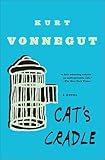
A writer researching the life of the atomic bomb's inventor discovers ice-nine — a form of water that freezes solid at room temperature — in the hands of dangerous and careless people. Vonnegut's darkest comedy.
George Orwell's first book: a memoir of destitution — months spent penniless in Paris, working as a plongeur in restaurant kitchens, and then weeks tramping between workhouses in England — written with the observational precision that would define everything that followed.
Elmer Gantry, a salesman who discovers that religious revivals are a better business than hardware, becomes a successful evangelist — fraudulent, lustful, charismatic, and eventually powerful. Lewis's most controversial novel provoked death threats and bans across the United States and remains the definitive account of American religious hypocrisy and the specific American type — the con man who believes his own con.
Three families — the cultivated Schlegels, the commercial Wilcoxes, and the struggling Basts — collide and connect in Edwardian England around the meaning of a country house and the possibilities of human connection.
Cincinnatus C. is condemned to death for 'gnostical turpitude' — the crime of being opaque in a world where everyone is transparent. A surreal novel of imprisonment and execution that is also a meditation on consciousness, totalitarianism, and the artist's isolation.
Constance Chatterley, married to a paralysed, emotionally remote aristocrat, begins an affair with Mellors, the estate's gamekeeper. Lawrence's most notorious novel was banned for obscenity in Britain until 1960, but beneath the explicit content is a serious argument about industrialism, class, and the body's need for genuine tenderness.
Bill Gray, a reclusive novelist who has not published in decades, is drawn into a situation involving a poet held hostage by a terrorist group in Beirut. DeLillo's meditation on the relationship between writers and terrorists — both of whom claim the power to change how people see the world — is his most concentrated statement of his themes: the crowd, the image, the person who withdraws from visibility and the person who seeks it at any cost.
Aristotle asks: what is the good life for a human being? His answer — eudaimonia, often translated as happiness but better understood as flourishing — requires virtue, practical wisdom, and the right social conditions. The foundational text of virtue ethics and one of the most influential works in the history of moral philosophy.
In the fictional South American republic of Costaguana, revolution tears the country apart while the silver mine that funds both sides becomes the novel's true subject — the material interest that corrupts every idealism. Conrad's most ambitious novel is the first great political novel of the twentieth century.
Alexandra Bergson inherits her immigrant father's Nebraska farm and builds it into a prosperous enterprise over decades, while the land itself becomes the novel's most enduring presence.
Thirteen-year-old Joel Harrison Knox travels to a decaying Louisiana mansion to find the father he has never met, and discovers instead a world of eccentrics, decay, and his own nascent desires. Capote's debut is the definitive Southern Gothic coming-of-age novel.
A linen weaver falsely accused of theft retreats into misanthropy and the hoarding of gold — until his gold is stolen and a golden-haired foundling child appears at his hearth, drawing him slowly back into human life.
K. arrives in a village dominated by an enormous castle and attempts to gain access to the authorities who have apparently summoned him as a land surveyor — an attempt that proves endlessly deferred, interrupted, and obscured.
Fabrizio del Dongo, a young Italian nobleman, wanders onto the field of Waterloo (without understanding what is happening), flees various entanglements, falls in love with the actress Marietta, and becomes caught in the political intrigues of the court of Parma, where his aunt, the Duchess Sanseverina, rules through her relationship with the Count.
Styron's Pulitzer Prize-winning novel inhabits the first-person voice of Nat Turner, leader of the 1831 Virginia slave rebellion, as he awaits execution. The most controversial American novel of the 1960s — attacked by ten Black writers as a white man's appropriation of Black history — it is also a work of extraordinary formal achievement and moral seriousness.
Ray Smith and the poet Japhy Ryder climb mountains, attend rucksack parties, and discuss Buddhism — embodying the 'rucksack revolution' Kerouac imagined for young Americans who had dropped out of the postwar dream. More focused and more spiritually serious than On the Road.
Two elderly cousins and a boy go to live in a treehouse in a chinaberry tree rather than conform to the small town's expectations, and the town decides to bring them down. Capote's most gentle novel is a celebration of eccentricity, chosen family, and the prose is some of the most beautiful he ever wrote.