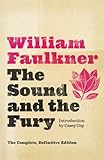
The decline of the Compson family in Mississippi is told four times — by Benjy, Quentin, Jason, and a third-person narrator — each section dissolving further the coherent narrative that preceded it. Faulkner's most formally radical novel is also his most emotionally devastating: a meditation on loss, time, and the American South's refusal to grieve honestly.
Three short masterpieces: 'A Simple Heart,' in which a servant woman's life of devotion is rendered with complete moral seriousness; 'The Legend of Saint Julian Hospitator,' a medieval tale of guilt and redemption; and 'Hérodias,' a retelling of the story of Salome.
Stephen Dedalus grows from infant to young artist through Dublin, school, religious crisis, and the discovery of aesthetic vocation. Joyce's first novel uses style itself as autobiography — the prose changes register as Stephen ages.
Sir Robert Chiltern, an upright politician, is being blackmailed by Mrs Cheveley over an early indiscretion that made his fortune and his career. Wilde's second great society comedy is his most politically serious — an examination of the gap between public virtue and private corruption, and of what an 'ideal husband' actually is when the idealism is tested.
Anne Shirley leaves Avonlea for Redmond College, where she discovers new friendships, navigates romantic confusion, and must finally decide between the persistent Roy Gardner and the friend she has always taken for granted.
A novel based on a real 1869 political murder — a charismatic revolutionary named Stavrogin and the nihilist cell he inspires drive a provincial Russian town toward catastrophe.
After her father's death, Emily Starr goes to live with her strict Murray aunts at New Moon Farm on Prince Edward Island, where she discovers her calling as a writer and resists every pressure to suppress it.
Sasha Jensen, an aging Englishwoman alone in Paris on borrowed money, drinks and remembers and encounters a young man who may be a gigolo. Rhys's fourth novel is the most formally accomplished of her pre-Wide Sargasso Sea work — the stream-of-consciousness narration spirals inward toward a final scene that is simultaneously sexual, violent, and ambiguous. The title is from Emily Dickinson.
Jim, a first mate on a passenger ship, abandons eight hundred Muslim pilgrims during an apparent emergency — and must spend the rest of his life with the knowledge of what he did. Conrad's novel of cowardice, guilt, and the impossibility of redemption is narrated by Marlow, who reconstructs Jim's story from fragments.
Philip Ashley becomes obsessed with Rachel — the widow who may have poisoned his cousin Ambrose in Italy and who may now be poisoning Philip. Du Maurier's most disturbing novel is an exercise in sustained ambiguity that never resolves.
Frédéric Moreau arrives in Paris from the provinces and spends twenty years pursuing an idealized love, a political career, wealth, and artistic ambition — achieving none of them. Flaubert's most autobiographical novel is his most devastating account of an entire generation's failure.
The fourth volume opens with the narrator's discovery that the Baron de Charlus is homosexual and follows the consequences through the upper echelons of French society — Proust's most extended treatment of same-sex desire and his most sociological.
Edna Pontellier, a married woman in nineteenth-century New Orleans, awakens to her own desires — for independence, for art, for love — in a society that offers her no way to live them.
The sixth volume of In Search of Lost Time. After Albertine flees and then dies, the narrator descends into a forensic study of grief, jealousy, and the slow, uneven work of forgetting — Proust's most piercing anatomy of love's aftermath.
Prince Lev Myshkin returns to Russia after years of Swiss treatment for epilepsy — gentle, sincere, and incapable of the social calculus that governs everyone around him. Dostoevsky's attempt to portray a truly good man, and what happens when such a man meets the world.
A British poet working in Hollywood attends a funeral at the Forest Lawn-inspired Whispering Glades and falls in love with the cosmetician for the corpses. Waugh's novella about the American funeral industry and Hollywood expatriate culture.
A series of linked stories following the colonisation of Mars by humans fleeing an increasingly troubled Earth — a work less concerned with the science of space travel than with what humanity brings with it, and what it destroys in the process.
Charles Darwin's world-changing 1859 work, which set out the theory of evolution by natural selection. Marshalling two decades of evidence with patience and care, Darwin transformed our understanding of life on Earth and the place of humanity within it.
Three generations of the Brangwen family in the English Midlands — from the 1840s to the early twentieth century — each straining toward something beyond the agricultural life that made them. Seized and destroyed by police on publication for its frank treatment of sexuality.
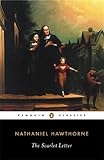
Hester Prynne, condemned to wear the scarlet letter A for adultery in Puritan New England, lives with her illegitimate daughter Pearl while the father of her child — the revered minister Dimmesdale — declines into secret guilt.
A cipher message leads Holmes to Birlstone Manor and a suspicious death, before the novel pivots to the Pennsylvania coalfields and the brutal secret society known as the Scowrers. The fourth and final Holmes novel draws on the real Molly Maguires to give its American backstory genuine historical weight.
The Bright Young Things of 1920s London party relentlessly while Adam Fenwick-Symes tries and fails to marry Nina. Waugh's second novel captures the feverish emptiness of the interwar generation with satirical accuracy that becomes, by the end, something closer to despair.
Anne Shirley is now sixteen and a teacher at Avonlea school, navigating new friendships, her growing responsibilities at Green Gables, and the same imaginative intensity that has always defined her.