Prospero, the rightful Duke of Milan, has been stranded on an enchanted island for twelve years with his daughter Miranda, the spirit Ariel, and the monster Caliban — until his enemies' ship is wrecked nearby. Believed to be Shakespeare's final solo-authored play, The Tempest functions as both a romance about forgiveness and a meditation on art, power, and colonialism.
An unnamed Victorian inventor builds a machine that carries him to the year 802,701, where he discovers humanity has diverged into two degenerate species: the frail, childlike Eloi who live in crumbling palaces, and the subterranean Morlocks who tend the machines below ground. Wells's slim, ferocious novella invented time travel as a literary device and deployed it as a savage critique of Victorian class divisions.
Marine biologist Professor Aronnax, his manservant Conseil, and harpooner Ned Land are captured by the enigmatic Captain Nemo and taken aboard the technologically miraculous submarine Nautilus for an involuntary voyage across the world's oceans. Verne's 1870 novel imagined submarine travel decades before it existed and created in Nemo one of fiction's great compelling anti-heroes.
White Fang — three-quarters wolf, one-quarter dog — is born in the Yukon wilderness, tamed and brutalised into a fighting dog, and finally rescued by a kind master who teaches him that love exists. The companion novel to The Call of the Wild tells the reverse story: where Buck moves from civilisation to the wild, White Fang moves from the wild toward civilisation and love.
Ursula and Gudrun Brangwen and their relationships with Rupert Birkin and Gerald Crich — Lawrence's most sustained philosophical novel, a diagnosis of modern civilisation's death wish conducted through the most intense pair of love relationships in English fiction.
When Sara Crewe's father dies, she is stripped of her privileged status at Miss Minchin's Seminary and reduced to a servant in the attic she once occupied as a princess. But Sara refuses to surrender her imagination or her sense of herself — and her story becomes one of children's literature's most powerful studies of dignity under humiliation.
Four generations of a Lübeck merchant family are traced from their commercial peak in 1835 to their dissolution by the turn of the century — the novel that won Mann the Nobel Prize, and the German equivalent of The Forsyte Saga.
Paul Pennyfeather is expelled from Oxford for indecent behaviour not his own, becomes a schoolmaster at a chaotic Welsh school, enters the English aristocracy through an engagement, and is imprisoned for white slavery not his own — Waugh's first novel and the funniest debut in the English language.
A German composer of genius makes a Faustian bargain — syphilitic infection in exchange for twenty-four years of musical creativity — as Germany makes its own bargain with Nazism. Told through the biography of his lifelong friend, Mann's most ambitious novel.
Fifteen stories of Dublin life, from childhood through public life to death, structured as an account of paralysis — the inability to escape, to act, to live fully. The collection ends with 'The Dead,' one of the greatest short stories ever written.
The second volume of In Search of Lost Time follows the narrator's adolescent infatuations, his deepening friendships, and above all his summer at the seaside resort of Balbec — where he meets the circle of girls, including Albertine, who will dominate his inner life.
Fanny Price is brought from poverty to Mansfield Park, her wealthy cousins' estate, where she watches and witnesses while others perform and transgress. Austen's most morally serious novel — quieter, deeper, and more uncomfortable than her others.
Catherine Morland, a thoroughly unromantic heroine raised on gothic novels, visits Bath and then a genuine abbey and finds — to her disappointment and then relief — that real life obeys very different rules from fiction. Austen's earliest and most playful novel is a literary parody of the gothic tradition that also manages to be a sincere coming-of-age story.
An orphan boy escapes the workhouse only to fall in with a gang of London pickpockets led by the scheming Fagin. Dickens's second novel is his most socially radical — a direct attack on the Poor Laws and a vivid portrait of the Victorian criminal underworld.
A 999-line poem by fictional American poet John Shade, followed by an obsessive commentary by his neighbour Charles Kinbote — who may be the exiled king of a fictional country called Zembla. One of the most formally inventive novels ever written.
A country nature columnist is accidentally sent to cover a war in the fictional African nation of Ishmaelia by a press baron who wanted a different journalist — Waugh's satire of foreign correspondents, Fleet Street, and the construction of news.
Paul Morel grows up in a Nottinghamshire mining village, caught between his possessive mother's ambitions for him and his own desires — for art, for independence, for women who are not his mother. The first great working-class bildungsroman in English.
Dick Diver, a brilliant American psychiatrist on the French Riviera in the 1920s, has married his former patient Nicole and constructed a life of exquisite social grace — which we watch unravel across the novel.
The narrator moves to Paris and becomes obsessed with the aristocratic Guermantes family — particularly the Duchess — whose drawing rooms represent the pinnacle of French society, while his grandmother's death delivers the most affecting grief in any novel.
Quasimodo, the deformed bell-ringer of Notre-Dame, loves the Romani dancer Esmeralda, who is pursued by the archdeacon Frollo and a captain of the guard. Hugo's second great novel is the one that made him famous and established historical fiction as a serious literary form in France.
Griffin, a scientist who has discovered how to render himself invisible, arrives at a village inn in bandages and dark glasses — and rapidly descends from scientific triumph into paranoia and violence. Wells's dark comedy is simultaneously a thriller, a satire of scientific hubris, and a warning that power without accountability corrupts absolutely.
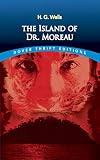
Edward Prendick, shipwrecked and rescued, finds himself on a remote Pacific island where the reclusive Dr Moreau performs surgical experiments that transform animals into humanoid creatures who speak and live by a recited Law. Wells's most disturbing novel is a horror story, a philosophical fable about evolution and ethics, and one of science fiction's most sustained meditations on what separates humans from animals.
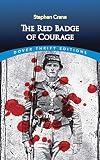
Henry Fleming, a young Union soldier, flees from his first battle and spends a day wrestling with cowardice and shame before returning to fight. Crane had never witnessed combat when he wrote this novel — yet his hallucinatory, impressionistic account of a single soldier's experience in the American Civil War remains the most psychologically honest war novel ever written by an American.
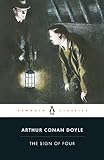
The second Sherlock Holmes novel weaves stolen treasure, a mysterious four-man pact, and a chase through the fog-bound Thames into a tightly plotted adventure. Watson falls in love with their client while Holmes remains coldly analytical — a contrast that gives the story much of its warmth.