The final volume of In Search of Lost Time returns to the narrator's childhood world — now transformed by war and age — and arrives at the great epiphany: the experience of involuntary memory that he finally understands as the material of which his novel must be made.
Jim Hawkins, a young inn-keeper's son, sets sail with squire and doctor to find buried pirate treasure — and finds the charismatic, dangerous Long John Silver along the way. Stevenson's adventure novel invented the pirate genre and remains the definitive treasure-hunt story.
Tony Last, owner of a crumbling Gothic pile called Hetton Abbey, loses his wife to a fatuous socialite and ends up imprisoned in the Amazon jungle, reading Dickens aloud forever to a mad old man. Waugh's darkest comedy — the ending is among the most horrifying in British fiction.
Four young lovers flee into an enchanted Athens forest where Oberon and Titania quarrel, Puck applies love potion to the wrong eyes, and Bottom the weaver acquires a donkey's head. Shakespeare's most purely comic play is also his most formally inventive — three interlocking worlds that never quite touch but mutually illuminate each other.
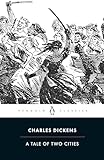
Set across London and Paris during the French Revolution, Dickens's most dramatic novel is a tale of sacrifice, resurrection, and the violence of revolutionary change. At its centre is Sydney Carton, a dissolute barrister whose unrequited love drives him to history's most selfless act.
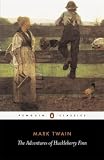
Huck Finn and the escaped slave Jim raft down the Mississippi River through the antebellum American South — a story about freedom whose treatment of race remains the subject of serious literary debate.
The unflappable English gentleman Phileas Fogg bets his fortune at the Reform Club that he can circumnavigate the globe in eighty days — and immediately sets off with his new valet Passepartout, pursued by a detective who believes Fogg is a bank robber. Verne's most beloved novel is propulsive, funny, and ingeniously plotted: an argument that the world is finite, knowable, and worth racing across.
The Personal History, Adventures, Experience and Observation of David Copperfield the Younger — Dickens's self-declared favourite child, a semi-autobiographical bildungsroman that follows David from childhood misery to eventual peace, populated by some of the most vivid characters in all of Victorian fiction.
Told entirely through journals, letters, and newspaper clippings, Dracula follows a group of English protagonists as they hunt the ancient Transylvanian vampire Count Dracula across Europe and London. Bram Stoker's 1897 gothic masterpiece invented the modern vampire and remains genuinely unsettling more than a century later.
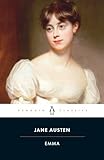
Emma Woodhouse is handsome, clever, and rich — and catastrophically wrong about almost everyone's romantic situation. Austen's most technically accomplished novel features an unreliable protagonist and one of literature's great comic ironies.
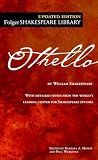
Othello, the Moorish general of Venice, is manipulated by his ensign Iago into believing his wife Desdemona has been unfaithful. Shakespeare's most claustrophobic tragedy is a study in the anatomy of jealousy and the mechanics of manipulation — Iago is arguably the most intelligent villain in literature, and the most chilling precisely because his motives remain so obscure.
Tess Durbeyfield, a young country woman from a poor family, is sent to claim kinship with the wealthy d'Urbervilles and is seduced and abandoned by Alec d'Urberville. Hardy's most controversial novel insists on calling its ruined heroine 'a pure woman,' a provocation that scandalized Victorian readers and made the book one of the most emotionally shattering novels in the English language.
Buck, a large mixed-breed dog living comfortably on a California estate, is stolen and sold into the brutal sled-dog trade of the Yukon during the Klondike Gold Rush. Through successive owners, cold, hunger, and violence, he is stripped of domestication and hears ever more clearly the ancient call of the wild. London's short novel is a survival story, a philosophical meditation, and a study in what instinct and adaptation actually mean.
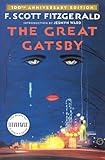
Jay Gatsby's lavish parties, his green light across the bay, and his impossible dream of recapturing the past define Fitzgerald's short, perfect novel about the American Dream's fatal beauty — the defining American novel of the twentieth century.
Mowgli, a human child, is raised by wolves in the Indian jungle, mentored by the bear Baloo and the panther Bagheera, and threatened by the tiger Shere Khan. Kipling's collection of linked stories — plus separate tales about Rikki-Tikki-Tavi the mongoose, a white seal, and the elephants' dance — is simultaneously a thrilling adventure story, a meditation on belonging, and one of the founding documents of modern children's literature.
Dorian Gray has his portrait painted and makes a Faustian bargain: the portrait will age while he remains young and beautiful. Wilde's only novel is simultaneously a gothic horror story, a philosophical fable about hedonism and conscience, and a scandalous document of fin-de-siecle aestheticism.
Cylinders from Mars crash into the English countryside and open to reveal tentacled Martians who begin methodically annihilating human civilization with heat-rays and tripod war machines. Wells's 1898 novel invented the alien invasion genre and used it to turn the logic of British imperial power inside out, placing England in the position of the colonised.
The novel that introduced Sherlock Holmes and Dr. Watson to the world. A locked-room murder in London, a flashback to Mormon Utah, and the birth of the world's only consulting detective make this the essential origin of the greatest figure in detective fiction.
The aging writer Gustav von Aschenbach travels to Venice for rest and becomes obsessed with a beautiful Polish boy, unable to leave even as cholera spreads through the city — Mann's most concentrated masterpiece.
Bathsheba Everdene, an independent and beautiful woman, inherits a farm and finds herself courted by three very different men: the steady shepherd Gabriel Oak, the wealthy neighbouring farmer William Boldwood, and the reckless soldier Sergeant Troy. Hardy's first major success is his most pastoral novel — a celebration of Dorset's agricultural world that he would spend his career elegising.
Professor Otto Lidenbrock finds a runic message revealing a route to the centre of the earth through an Icelandic volcano. He drags his reluctant nephew Axel and a taciturn Icelandic guide into the depths — through vast underground seas, prehistoric forests, and geological wonders — in Verne's most rapturously imaginative novel.
Captain Ahab's obsessive hunt for the white whale has driven sailors mad, inspired philosophers, and occupied literary scholars for 170 years — part adventure story, part cetology treatise, part cosmic meditation on obsession, fate, and human insignificance.
The Dashwood sisters — sensible Elinor and passionate Marianne — navigate love, loss, and limited options in Regency England. Austen's debut novel introduces her central theme: the tension between feeling and social propriety.
Tom Sawyer, a spirited and imaginative boy in the Mississippi river town of St Petersburg, whitewashes fences, falls in love with Becky Thatcher, witnesses a murder at the graveyard, runs away to Jackson's Island, testifies against Injun Joe, and finds treasure in a cave. Twain's quintessential American boyhood story is lighter than Huckleberry Finn and entirely unsentimental despite its nostalgic surface.