Ravic, a German surgeon living illegally in Paris in 1939, practises medicine under a false name and pursues the Gestapo officer who destroyed his life. Remarque's wartime novel was written in American exile and captures the atmosphere of Paris just before the German occupation with the precision of someone who knew the city and understood what was about to happen to it.
George F. Babbitt, a real estate agent in the fictional Midwestern city of Zenith, is the model American businessman — boosterish, conformist, self-satisfied — who attempts a brief, doomed rebellion against his own life. Lewis's most famous novel gave English a common noun and remains the defining portrait of the American businessman as a social type.
A Wall Street lawyer hires a copyist named Bartleby who performs his duties adequately, then one day begins responding to every request with 'I would prefer not to.' Melville's most modern story anticipates Kafka, Beckett, and the literature of passive resistance.
Billy Budd, a young sailor of exceptional beauty and goodness, is falsely accused by the malicious master-at-arms Claggart, strikes him accidentally and kills him, and must be hanged for mutiny. Melville's posthumously published final work is a philosophical meditation on innocence, law, and justice.
Eliot's final novel follows Gwendolen Harleth, who makes a disastrous marriage to a cruel man for financial security, and Daniel Deronda, who discovers his Jewish heritage and commits himself to the Zionist cause — a dual portrait of what English society does to intelligent women and what Jewish identity means.
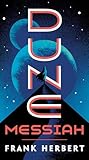
Twelve years after his jihad swept across the known universe, Paul Muad'Dib sits on the throne of an empire built on ten billion dead. His prescience is a prison, his legend a weapon turned against him, and a conspiracy is forming to finally bring him down.
The complete fairy tales of the Brothers Grimm. Gathered from German oral tradition in the early nineteenth century, these two hundred-odd tales — Cinderella, Hansel and Gretel, Rapunzel, Snow White, and many darker, stranger lesser-known stories — are a foundational treasury of Western folklore.
Tayeb Salih's landmark Sudanese novel, often called the finest Arabic novel of the twentieth century. A young man returns from England to his village on the Nile and becomes obsessed with the enigmatic Mustafa Sa'eed, whose violent history in colonial London mirrors and shadows his own.
In a small Illinois town in October, a carnival arrives just after midnight — Cooger and Dark's Pandemonium Shadow Show — and two thirteen-year-old boys discover that its attractions offer exactly what people most desire, at a price that cannot be paid.
Giovanni Boccaccio's fourteenth-century masterpiece. As the Black Death ravages Florence, ten young men and women flee to the countryside and pass the time telling stories — one hundred tales of love, wit, fortune, lust, and folly that founded the European prose tradition.
Maggie Tulliver grows up on the River Floss, trapped between her fierce intelligence and her society's refusal of it, between loyalty to her beloved but conventional brother Tom and her own ungovernable desires — Eliot's most autobiographical and psychologically penetrating early novel.
Albertine is living with the narrator in Paris, and he is consumed by jealousy, surveillance, and the impossibility of knowing another person's inner life — Proust's most claustrophobic and psychologically intense volume.
A double agent for the Russian embassy in London is ordered to commit a terrorist act that can be blamed on anarchists. Conrad's London novel — simultaneously thriller, black comedy, and study of how political violence is always manipulated by those who profit from its effects.
Isaac Bashevis Singer's masterful novel of seventeenth-century Poland. Jacob, a Jewish scholar enslaved after a massacre, falls in love with Wanda, the gentile woman who owns him, in a profound story of faith, forbidden love, and moral struggle by the Nobel laureate.
Tadeusz Borowski's devastating Auschwitz stories. Drawn from his own survival in the camps, these unflinching tales depict a world where the will to live overrides all compassion, and prisoners eat, work, and sleep yards from where others are murdered — a masterwork of Holocaust literature.
Three veterans of the First World War try to build ordinary lives in the Weimar Republic while Nazi violence rises around them, and one of them falls in love with a woman dying of tuberculosis. Remarque's most romantic novel is also his most political — the personal tenderness and the historical catastrophe are inseparable, and the love story is written with the knowledge of what is coming.
Anna Morgan, a young West Indian chorus girl in England, is kept by an older man and then abandoned, and drifts into a series of diminishments. Rhys's most autobiographical novel — the closest to her own experience of arriving in England from Dominica — is also her most economical: the prose is stripped to the bone, and the cold English world that Anna cannot navigate is rendered entirely through what it refuses to give her.
A German soldier on the Eastern Front is given three weeks' leave, returns to his bombed city, falls in love, marries, and must return to the front. Remarque's most compassionate novel about the Second World War gives a German protagonist genuine humanity in a story almost no fiction had attempted: the ordinary German soldier who is neither hero nor monster, simply a man caught in what his country has done.
Eliot's first novel follows a carpenter in rural England, a young woman whose illegitimate child she kills in a moment of terror, and a Methodist preacher who bears witness to both — a profound exploration of how communities judge transgression and how love survives judgment.
David Hume's classic of empiricist philosophy. With elegance and devastating rigor, Hume examines the limits of human knowledge, the problem of induction, the idea of causation, and the credibility of miracles — a foundational and still-unsettling work that shaped all subsequent philosophy.
Newly married, Anne and Gilbert settle in their dream home by the sea in Four Winds Harbour, where Anne befriends the tragic and beautiful Leslie Moore and the loveable ship's captain Jim Boyd.
Martin Arrowsmith, a doctor and scientist, moves through the American medical world — country practice, public health, pharmaceutical research — trying to maintain his commitment to pure science against the commercial and social pressures that corrupt everything around him. Lewis's Pulitzer Prize-winning novel is his most sympathetic — Arrowsmith is the only Lewis hero who earns genuine admiration — and the most thorough of his institutional satires.
George Orwell's first book: a memoir of destitution — months spent penniless in Paris, working as a plongeur in restaurant kitchens, and then weeks tramping between workhouses in England — written with the observational precision that would define everything that followed.
Elmer Gantry, a salesman who discovers that religious revivals are a better business than hardware, becomes a successful evangelist — fraudulent, lustful, charismatic, and eventually powerful. Lewis's most controversial novel provoked death threats and bans across the United States and remains the definitive account of American religious hypocrisy and the specific American type — the con man who believes his own con.