Latin American literature reshaped the twentieth-century novel — above all through the 'Boom' generation of García Márquez, Vargas Llosa, Cortázar, and Fuentes, and the magical realism that became their global signature. From those masters to Roberto Bolaño and a vital contemporary scene, these are the works that define the tradition.
Lima in the 1950s under the Odría dictatorship. Santiago Zavala and Ambrosio, his father's former driver, talk for four hours in a bar called the Cathedral. Their conversation reconstructs the corruption of an entire society—told in multiple simultaneous timelines that interlace without warning. Vargas Llosa's most ambitious novel, which he called his best.
Young Varguitas, an eighteen-year-old aspiring writer working at a Lima radio station, falls in love with his Aunt Julia (his uncle's ex-wife, fifteen years older). Meanwhile, the brilliant and possibly mad scriptwriter Pedro Camacho is turning out radio soap operas at an impossible rate—and slowly losing his mind. Vargas Llosa's most autobiographical and most comic novel.
Rafael Trujillo, dictator of the Dominican Republic for thirty-one years, is assassinated in 1961. The novel weaves three narratives: Trujillo on his final day, the conspirators planning the ambush, and Urania Cabral returning to Santo Domingo forty years later to face what Trujillo did to her father—and to her. Vargas Llosa's most politically searing work.
1890s Brazil: a messianic prophet leads the poor and desperate to the remote community of Canudos. The new Brazilian republic sends four military expeditions to destroy them. Based on the real Canudos War (documented by Euclides da Cunha), this is Vargas Llosa's most epic novel—a portrait of religious fervor, political incomprehension, and mass violence.
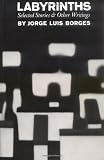
The essential Borges collection for English readers: twenty-three stories and ten essays, including 'The Garden of Forking Paths,' 'Pierre Menard Author of the Quixote,' 'The Library of Babel,' 'Tlön, Uqbar, Orbis Tertius,' and 'The Lottery in Babylon.'
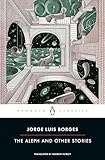
The title story — in which the narrator discovers a point in space that contains all other points simultaneously — is Borges's most ambitious and most affecting piece, alongside 'The Zahir,' 'The Dead Man,' 'The Theologians,' and other stories engaging with infinity, identity, and the impossibility of complete knowledge.
Eliza Sommers, a young Chilean woman, follows her lover to California during the Gold Rush of 1849 and, dressed as a man, makes her way across a country shaped by greed, violence, and the collision of races and cultures. Allende's most adventurous novel in structure — a picaresque across two continents.
Eva Luna, an illegitimate child who grew up among eccentric employers, becomes a storyteller and eventually a writer of telenovelas, navigating a South American country's political violence and social upheaval. Allende's most playful novel — a celebration of the female storyteller whose power resides entirely in her ability to invent.
Ricardo Somocurcio, a Peruvian exile in Paris, has loved the same woman since he was fifteen—a woman who appears and disappears, reinventing herself as a Peruvian guerrilla, a Cuban revolutionary, a diplomat's wife, a gangster's moll. Each time she returns she uses him and leaves. Vargas Llosa's most Flaubert-influenced novel.
Lima's Leoncio Prado Military Academy: the cadets live under brutal hierarchy, organize theft rings, and maintain codes of silence. When a cadet is killed, someone informs. The search for the informer consumes the novel. Vargas Llosa's debut—written at twenty-six—was burned publicly in Peru and made him internationally famous.
An Andean village where three people have disappeared. A corporal and his assistant investigate: the suspects are Shining Path guerrillas, but the mystery deepens into something older and stranger—the Andean world of pishtacos (fat-extracting demons) and ancient violence. Vargas Llosa's novel about Peru's civil conflict as seen from the highlands.
One Hundred Years of Solitude by Gabriel García Márquez and The Savage Detectives and 2666 by Roberto Bolaño are landmark works. Julio Cortázar's Hopscotch and Mario Vargas Llosa's The Feast of the Goat are also essential.
The Boom was a flourishing of Latin American fiction in the 1960s and 70s, when writers like Gabriel García Márquez, Mario Vargas Llosa, Julio Cortázar, and Carlos Fuentes won international acclaim and brought magical realism and bold formal experiment to a global readership.
One Hundred Years of Solitude by Gabriel García Márquez is the essential starting point and the genre's defining novel. For something shorter, his Chronicle of a Death Foretold is a perfect introduction to his style.
Disclosure: Amazon links on this page are affiliate links. If you purchase through them we earn a small commission at no extra cost to you.
We use cookies to understand how visitors use our site (Google Analytics). No data is collected until you accept.
Privacy Policy