Magical realism treats the impossible as unremarkable: ghosts attend dinner, time loosens, the dead give advice, and no one is surprised. Pioneered by Latin American writers like Gabriel García Márquez and Isabel Allende and carried forward by Haruki Murakami and Salman Rushdie, it uses the marvellous to tell deeper truths about memory, grief, and history.
Pi Patel, the son of an Indian zookeeper, survives a shipwreck in the Pacific Ocean and spends 227 days in a lifeboat with a 450-pound Bengal tiger named Richard Parker, in a story about survival, faith, and the nature of truth itself.
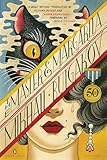
Satan visits Stalinist Moscow, accompanied by a giant black cat, a hitman, and a naked witch — exposing Soviet bureaucracy's absurdities while a novelist's story of Pontius Pilate and Jesus unfolds within the novel.
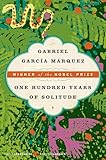
Gabriel García Márquez's Nobel Prize-winning epic follows the Buendía family through seven generations in the mythical town of Macondo, blending magical and real with luminous prose.
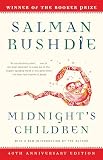
Born at the exact moment of Indian independence, Saleem Sinai discovers he is telepathically connected to the 1,001 children born in the first hour of a free India — and that his own life is fatally, inextricably entwined with the history of his nation.
Toru Okada's cat goes missing, then his wife, and his investigation takes him from the quiet streets of suburban Tokyo through visions of World War II-era Manchuria into the deepest well of his unconscious.
An unnamed Caribbean dictator—ancient, powerful, possibly immortal—is discovered dead in his palace. Six long chapters, each a single paragraph, circle around his life and reign from multiple perspectives, accumulating a portrait of absolute power, absolute loneliness, and absolute corruption.
Portugal, 1711. A soldier with a missing hand and a woman who can see inside human bodies fall in love against the backdrop of the Inquisition, the building of the great Mafra Convent by King João V, and a mad priest's plan to build a flying machine powered by human wills. Saramago's most romantic novel.
A landlord executed in 1950 is reincarnated through a series of animals—donkey, ox, pig, dog, monkey—on the farm his family was forced to surrender during China's land reform, witnessing half a century of Chinese history from a uniquely non-human vantage point. Mo Yan considered this his finest novel.
18th-century Cartagena. A twelve-year-old marquesa bitten by a rabid dog is sent to a convent to be exorcised. A young priest is assigned to document her case and falls in love with her. Based on a real crypt García Márquez discovered as a journalist, this is his most compact late novel.
Saeed and Nadia meet in a city being overtaken by militants. Around the world, doors have appeared that transport people instantly to different countries. They flee through doors — from their home city to Mykonos to London to California — and the novel follows their relationship as migration transforms them both.
Two interwoven stories: a fifteen-year-old boy runs away from Tokyo to Takamatsu in search of his identity, while an elderly man in Tokyo discovers a strange ability to commune with cats.
Macondo, 1928. A colonel, his daughter, and her son attend the burial of a doctor who has been shunned by the town for years. Told in three simultaneous interior monologues, this is García Márquez's first novel—and the first appearance of Macondo—written when he was nineteen.
A special investigator is sent to a coal-mining region where there are rumours that officials are eating babies prepared as delicacies. His investigation collapses into drunkenness and corruption. Interpolated throughout are letters between 'Mo Yan' and an aspiring writer named Li Yidou, whose own stories appear in the novel. One of the most formally experimental works of Chinese fiction.
The Pyrenees crack and the entire Iberian peninsula breaks off from Europe, drifting into the Atlantic. Five Portuguese and Spanish strangers—who each experienced a mysterious personal event just before the detachment—are drawn together as the peninsula sails toward an unknown destination. Saramago's most playful and politically charged novel.
Four generations of the Trueba family navigate love, power, magic, and political upheaval in an unnamed Latin American country, culminating in the military coup that destroys what they have built.
Milkman Dead journeys from his prosperous Michigan family into the American South in search of gold and discovers instead his family's history, his people's mythology, and the meaning of flight.
Florentino Ariza waits fifty-one years, nine months, and four days to tell Fermina Daza he loves her — and the novel asks what love is, what it does to a person, and whether it survives time.
The new novel from Ashley Poston, releasing June 16, 2026. The Someday Garden is a magical romance set at Lilymoor House, an enchanting estate where the past and present blur.
Two Indian actors survive the explosion of a hijacked plane over the English Channel — one becomes angelic, the other demonic. Rushdie's most controversial novel is also his most formally ambitious: a vast, satirical, visionary work about migration, identity, faith, and the relationship between the sacred and the profane. The Iranian fatwa issued against Rushdie in 1989 makes it the most politically significant novel of the late twentieth century.
Everyone in the town knows that Santiago Nasar is going to be killed. The Vicario brothers announced it. The narrator reconstructs the hours before the murder, interviewing survivors years later to understand how a community can know a man is about to die and do nothing to stop it. García Márquez's most formally precise work.
Two narratives alternate in strictly separate chapters: in one, a 'Calcutec' data processor in near-future Tokyo is drawn into a conspiracy involving encrypted information and subterranean creatures; in the other, a nameless man enters a walled town where residents have no shadow and unicorn skulls must be read at dusk. The two stories converge on questions about consciousness, identity, and what it means to lose the self. Murakami's most structurally ambitious novel.
An elderly colonel waits, every week, for a pension that has been promised but never arrives. He has waited for fifteen years. His wife is ill, their money is nearly gone, and their only valuable possession is a fighting rooster that may be their last chance at financial survival. García Márquez's most restrained and most heartbreaking novella.
Moraes 'Moor' Zogoiby narrates his family's baroque history in Bombay across four generations — Jewish, Christian, Muslim, Hindu blood tangled in a story of art, crime, love, and political violence. Rushdie's return to the multigenerational family epic after The Satanic Verses is his warmest and most humorous novel, full of Bombay's culinary, linguistic, and cultural richness.
A Tokyo copywriter receives a photograph of a meadow with a strange sheep — one with a star on its back — and is blackmailed by a sinister political operative into finding it. The sheep chase takes him to Hokkaido, to a remote mountain hotel, and into territory that is no longer entirely real. The first major Murakami novel and the beginning of his characteristic blend of the mundane and the uncanny.
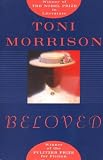
One Hundred Years of Solitude by Gabriel García Márquez is the genre's defining work. The House of the Spirits by Isabel Allende, Beloved by Toni Morrison, and Kafka on the Shore by Haruki Murakami are among the most celebrated modern examples.
Magical realism is a literary style in which magical or impossible elements appear in an otherwise realistic setting and are treated as ordinary, unremarkable parts of life. It differs from fantasy in that the magic is not the point — it is a lens for exploring real emotional and historical truths.
Fantasy builds an internally consistent world where magic operates by rules and is central to the plot. Magical realism keeps the real world intact and lets the impossible intrude without explanation or astonishment — the focus stays on character, history, and meaning rather than the magic itself.
Disclosure: Amazon links on this page are affiliate links. If you purchase through them we earn a small commission at no extra cost to you.
We use cookies to understand how visitors use our site (Google Analytics). No data is collected until you accept.
Privacy Policy