Eleven interconnected stories set in Firozsha Baag, a Parsi apartment complex in Bombay — a community portrait that introduces many of the themes and the compassionate vision that would define Mistry's later novels.
K. arrives in a village dominated by an enormous castle and attempts to gain access to the authorities who have apparently summoned him as a land surveyor — an attempt that proves endlessly deferred, interrupted, and obscured.
Fabrizio del Dongo, a young Italian nobleman, wanders onto the field of Waterloo (without understanding what is happening), flees various entanglements, falls in love with the actress Marietta, and becomes caught in the political intrigues of the court of Parma, where his aunt, the Duchess Sanseverina, rules through her relationship with the Count.
Styron's Pulitzer Prize-winning novel inhabits the first-person voice of Nat Turner, leader of the 1831 Virginia slave rebellion, as he awaits execution. The most controversial American novel of the 1960s — attacked by ten Black writers as a white man's appropriation of Black history — it is also a work of extraordinary formal achievement and moral seriousness.
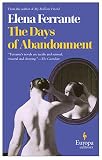
Olga's husband of fifteen years announces he is leaving her for a younger woman. The novel follows the weeks that follow — the rage, the dissolution, the terrifying loss of self that abandonment can produce in someone whose identity was built around a partnership. Ferrante's most concentrated and most visceral novel.
Ray Smith and the poet Japhy Ryder climb mountains, attend rucksack parties, and discuss Buddhism — embodying the 'rucksack revolution' Kerouac imagined for young Americans who had dropped out of the postwar dream. More focused and more spiritually serious than On the Road.
Two elderly cousins and a boy go to live in a treehouse in a chinaberry tree rather than conform to the small town's expectations, and the town decides to bring them down. Capote's most gentle novel is a celebration of eccentricity, chosen family, and the prose is some of the most beautiful he ever wrote.
Lily Bart, beautiful, brilliant, and financially precarious, navigates New York society's marriage market and slowly loses ground in a game she was not born to win.
Dick Young, staying at his friend's house in Cornwall, takes an experimental drug that sends him back to fourteenth-century Cornwall — where he becomes obsessed with the lives of a long-dead woman and her circle.
Ludvik Jahn writes a postcard joking about the Party to impress a girl; the Party expels him, sends him to a labour battalion, and destroys his life — for a joke. Kundera's first novel is his most political: a study of totalitarianism's inability to tolerate irony, and of revenge as a futile response to power.
A radical reimagining of the life of Christ — depicting Jesus as a man torn between the flesh and the spirit, tempted on the cross by a vision of the ordinary human life he might have lived.
Jim Nashe, a former firefighter driving aimlessly through America with his inheritance, picks up a young gambler named Pozzi — and after losing everything in a card game against two eccentric millionaires, they find themselves building a medieval wall in a Pennsylvania field to pay off their debt.
The sixth and final Earthsea novel revisits the question that has haunted the series since The Farthest Shore — the nature of death and the afterlife in the world of the Archipelago. A sorcerer haunted by the dead comes to Roke, and the answer found will transform Earthsea's understanding of what comes after.
Wallace's unfinished posthumous novel follows IRS agents in a Midwest tax processing centre, examining boredom, attention, and the ethical weight of choosing to care about something the world deems worthless.
A grieving, difficult bookshop owner on a small island finds his life transformed when a toddler is left among his stacks — a sentimental, intelligent novel about books, community, and the surprising arcs of human lives.
In an overcrowded future Earth, colonists escape their misery through illegal hallucinations mediated by a corporate drug called Can-D. When the magnate Palmer Eldritch returns from Proxima Centauri with a new drug called Chew-Z, reality itself becomes uncertain — because Chew-Z hallucinations may not be hallucinations at all. Dick's most theologically disturbing novel.
Oskar Matzerath, narrating from a mental institution, recounts how at age three he decided to stop growing, and how he witnessed the rise of Nazism, World War II, and the collapse of Danzig through the perspective of a child in an adult world — beating his tin drum and shattering glass with his voice.
Ta-Nehisi Coates's debut novel follows Hiram Walker, a enslaved young man in antebellum Virginia who discovers he possesses a mysterious power called Conduction — a magical ability linked to memory and loss — and who becomes involved with the Underground Railroad.
The life of T.S. Garp — son of the feminist icon Jenny Fields — from birth to violent death, a novel about family, violence, writing, and the absurdity of existence.
Nine stories, most narrated by Yunior, about the serial infidelity that destroys his relationships. Díaz's second collection extends the world of Drown and Oscar Wao into a sustained examination of masculinity, Dominican machismo, and the specific ways men sabotage the love they need.
A plain, good-natured heiress in 1840s New York is courted by a charming fortune hunter — with her sardonic, brilliant father watching and diagnosing everything.
Archibald Isaac Ferguson is born in 1947 in Newark, New Jersey — and Auster follows four parallel versions of his life, diverging from the same starting point based on small accidents of circumstance, through the turbulent American 1960s and into the early 1970s.
Boston private investigators Patrick Kenzie and Angela Gennaro are hired to find a missing government worker who stole documents from a state senator. What begins as a routine job draws them into Dorchester's gang wars, racial politics, and the violence that underlies South Boston's civic surface.
Theodore Gumbril, a schoolmaster who invents pneumatic trousers, drifts through London's intellectual and artistic circles in the aftermath of the First World War — Huxley's darkest comedy and his most sustained portrait of 1920s London bohemia.