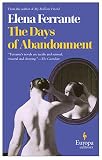
Editors Reads Verdict
Ferrante before the Neapolitan quartet: The Days of Abandonment is the novel that announced her voice — the claustrophobic interiority, the refusal to soften female anger, the psychological nakedness — and it remains her most purely intense reading experience.
What We Loved
- Ferrante's claustrophobic interiority and refusal to soften female anger arrived fully formed — every sentence feels necessary
- The 189-page compression makes the psychological unravelling feel relentless and inescapable
- Olga's breakdown is rendered with clinical specificity that makes her humiliation feel real rather than literary
- The thematic use of la poverella — the woman Olga fears becoming — gives the novel a haunting structural backbone
Minor Drawbacks
- The intensity is unrelenting; readers seeking emotional relief or narrative lightness will not find it here
- Some readers find Olga's behaviour too extreme to remain sympathetic throughout
- The novel's brevity means there is little room to understand Olga before her crisis begins
Key Takeaways
- → Abandonment can feel like existential erasure rather than a personal wound when identity was built inside a partnership
- → Female rage is rarely clean or empowering — it is animal, humiliating, and frightening to the person experiencing it
- → The self built inside a relationship is as real and fragile as any other identity
- → The effort not to become the worst version of yourself in a crisis is itself a form of survival
- → Compression in fiction is its own argument: this story cannot afford to look away from what it is examining
| Author | Elena Ferrante |
|---|---|
| Publisher | Europa Editions |
| Pages | 189 |
| Published | January 1, 2002 |
| Language | English |
| Genre | Literary Fiction, Psychological Fiction, Women's Fiction, Italian Fiction |
How The Days of Abandonment Compares
The Days of Abandonment at a glance against 3 similar books readers weigh alongside it.
| Book | Author | Rating | Best for |
|---|---|---|---|
| The Days of Abandonment (this book) | Elena Ferrante | ★ 4.2 | Literary Fiction |
| My Brilliant Friend | Elena Ferrante | ★ 4.4 | Literary fiction readers |
| Normal People | Sally Rooney | ★ 4.1 | Literary fiction readers interested in contemporary Irish society, millennial |
| The Lost Daughter | Elena Ferrante | ★ 4.1 | Literary Fiction |
The Days of Abandonment Review
Elena Ferrante published The Days of Abandonment in Italy in 2002, three years before she became internationally known through the Neapolitan quartet. It is the novel in which her voice arrived fully formed: the claustrophobic first-person interiority, the refusal to soften or domesticate female rage, the psychological precision that makes her narrators feel less like literary constructions and more like direct transmissions of consciousness.
Olga is thirty-eight, a former writer who set aside her own ambitions to support her husband Mario and raise their two children in Turin. One April afternoon, Mario tells her he is leaving. The announcement is calm, almost bureaucratic. He has no particular explanation. He goes. What follows is 189 pages of controlled disintegration.
Ferrante renders Olga’s breakdown with a specificity that is both clinical and overwhelming. The anger is not the clean, empowering rage of therapeutic narrative — it is animal and humiliating, leading to actions that frighten Olga as much as they frighten the reader. She neglects her children. She cannot leave her apartment. She sleeps with a neighbour out of desperation. At one point, trapped in her apartment with a sick dog and a feverish child and a jammed lock, she enters a dissociation so complete that the prose itself seems to come apart.
Ferrante is tracing something that literature rarely examines honestly: the specific terror of losing the self that was built inside a relationship, the way abandonment can feel like an existential erasure rather than merely a personal wound. Olga keeps returning to the memory of a woman she knew as a child — la poverella, the poor woman — who was similarly abandoned and went mad. The novel is about the effort not to become her.
At 189 pages, the compression is itself an argument: this is not a novel that can afford to look away.
Our rating: 4.2/5 — Ferrante’s most intense novel. The book that made everything that followed possible.
Reading Guides
The Apartment as Trap
The physical setting of The Days of Abandonment — the Turin apartment from which Olga cannot seem to escape — functions as an externalisation of her psychological state with an explicitness that approaches allegory without quite becoming it. The apartment is comfortable, middle-class, sufficient. It contains her children, her dog, her books, her life. And she cannot leave it, cannot clean it, cannot manage it; it becomes the container for a dissolution that might otherwise have no shape.
The locked-apartment sequence — in which Olga cannot open the front door, the dog is dying, her son Otto has a fever, and the neighbour she has just slept with in desperation is also locked inside — is the novel’s most extreme passage and also its most technically accomplished. Ferrante allows the prose itself to fragment during this sequence, the sentences losing their syntactic coherence as Olga’s consciousness loses its grip on ordinary cause and effect. This formal mimesis — the text enacting rather than merely describing the breakdown — is the kind of technical choice that separates literary fiction from psychological drama dressed as literary fiction.
La Poverella
The figure of la poverella — the poor woman who was abandoned in Olga’s neighbourhood when she was a child, who went mad, who became a warning — structures the novel’s central anxiety. Olga’s terror is not simply that Mario has left her; it is that she recognises in herself the early stages of what she witnessed in la poverella. She is watching herself become the woman she feared becoming, and she cannot stop watching.
Ferrante uses this figure with economy and precision. La poverella never appears in the present narrative; she exists only in Olga’s memory, invoked at the moments when Olga’s behaviour most closely resembles what she remembers. The haunting is internal, which makes it more effective than any external ghost: Olga is haunted by a possible version of herself rather than by an actual dead woman, and she cannot exorcise a possibility by ignoring it.
The Voice That Announced the Neapolitan Quartet
The Days of Abandonment was published in Italy in 2002, three years before the first Neapolitan novel appeared in English in 2005 (following the Italian publication of L’amore molesto in 1992 and I giorni dell’abbandono in 2002). For English-language readers who encountered the Neapolitan quartet first, reading The Days of Abandonment is an experience of recognition: the voice is already there, fully formed, with the same claustrophobic interiority, the same refusal to soften female experience, the same psychological precision that produces the distinctive Ferrante reading experience.
The novel demonstrates that the Neapolitan quartet’s extraordinary achievement was not the emergence of a new voice but the deployment of an existing one at extended length and across more complex social and historical material. The Days of Abandonment is, in some ways, the purest expression of what Ferrante can do with 189 pages: a perfectly controlled descent and partial ascent, with nothing wasted.
The Question of Sympathy
Ferrante does not ask for sympathy for Olga and does not engineer it through narrative manipulation. Olga does things that are genuinely difficult to excuse — neglects her children, behaves destructively toward people who have not earned her rage, makes decisions so counterproductive that they function as self-harm. The novel’s implicit argument is that the demand for sympathetic female protagonists — women who suffer with grace, who maintain their dignity, who keep their children fed even while their hearts are breaking — is itself a form of violence against the reality of what extreme psychological crisis actually looks like.
Olga is not sympathetic in the way that the culture generally demands women be sympathetic. She is recognisable, which is more disturbing and more valuable.
The Novel That Made Everything Possible
Without The Days of Abandonment, there is no Neapolitan quartet — not because the quartets subject matter depends on it, but because the voice that produced it was developed here. The compression, the interiority, the refusal of consolation, the willingness to follow the narrators consciousness wherever it leads without flinching: these are the tools that Ferrante refined in 189 pages before applying them to 1,700. For readers who want to understand how the Neapolitan series works, this earlier novel is essential preparation.
Frequently Asked Questions
What is "The Days of Abandonment" about?
Olga's husband of fifteen years announces he is leaving her for a younger woman. The novel follows the weeks that follow — the rage, the dissolution, the terrifying loss of self that abandonment can produce in someone whose identity was built around a partnership. Ferrante's most concentrated and most visceral novel.
What are the key takeaways from "The Days of Abandonment"?
Abandonment can feel like existential erasure rather than a personal wound when identity was built inside a partnership Female rage is rarely clean or empowering — it is animal, humiliating, and frightening to the person experiencing it The self built inside a relationship is as real and fragile as any other identity The effort not to become the worst version of yourself in a crisis is itself a form of survival Compression in fiction is its own argument: this story cannot afford to look away from what it is examining
Is "The Days of Abandonment" worth reading?
Ferrante before the Neapolitan quartet: The Days of Abandonment is the novel that announced her voice — the claustrophobic interiority, the refusal to soften female anger, the psychological nakedness — and it remains her most purely intense reading experience.
Ready to Read The Days of Abandonment?
Check the current price on Amazon.
Check Price on Amazon (paid link)Prices and availability are subject to change. See Amazon for current price.
Review last updated: