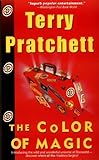
William de Worde accidentally invents the newspaper in Ankh-Morpork when a chance encounter with dwarfish printers gives him the idea of distributing his letter of city news more widely. Within days he has a press, a staff, and enemies. Someone is trying to frame the Patrician Vetinari, and the Ankh-Morpork Times is the only institution positioned to find out the truth.
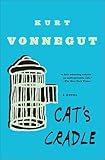
A writer researching the life of the atomic bomb's inventor discovers ice-nine — a form of water that freezes solid at room temperature — in the hands of dangerous and careless people. Vonnegut's darkest comedy.
Not Sidney Poitier — named at birth for the actor by his eccentric mother — grows up in the care of Ted Turner after inheriting a fortune, and survives a series of misadventures that mirror famous Sidney Poitier films, encountering racism, absurdity, and a world that insists on seeing him as someone else.
Stories including 'I CAN SPEAK!™' and 'Jon' take Saunders's corporate satire to its extreme: fiction that uses the language and logic of advertising to anatomise what advertising has done to human interiority. The most formally experimental of his collections.
Theodore Gumbril, a schoolmaster who invents pneumatic trousers, drifts through London's intellectual and artistic circles in the aftermath of the First World War — Huxley's darkest comedy and his most sustained portrait of 1920s London bohemia.
A young novelist's work is accepted by the Moscow Arts Theatre and he is drawn into the labyrinthine machinery of Soviet theatrical production — committees, rewrites, egos, and a mysterious director who never appears. Bulgakov's posthumously published roman à clef about his experiences at the Moscow Arts Theatre is a devastating account of the relationship between art and institutional power.
Two copy-clerks who become friends retire to the countryside and systematically attempt to master every branch of human knowledge — agriculture, chemistry, medicine, archaeology, philosophy, religion — failing at each in turn. Flaubert's unfinished final novel, published posthumously, is his most radical satirical project.
Dwayne Hoover is a successful car dealer having a mental breakdown. Kilgore Trout is a science fiction writer no one has ever heard of who is about to meet Dwayne. Vonnegut himself wanders through the novel as a character watching his own creations. Breakfast of Champions is a satirical attack on American culture so broad it becomes a self-portrait.
Set in a near-future North America where years are sponsored by corporations, David Foster Wallace's sprawling novel interweaves two main locations — the Enfield Tennis Academy and the Ennet House Drug and Alcohol Recovery House — around the search for a film so entertaining that viewers lose all will to do anything else.
Jaromil is a poet from birth — his mother has decided so — and grows up to be a genuine revolutionary lyric poet who informs on his girlfriend to the secret police. Kundera's Prix Médicis-winning novel is a satire of the Romantic artist's egoism and the way revolutionary politics and artistic grandiosity feed each other.
The first Discworld novel follows the hapless failed wizard Rincewind and the naive tourist Twoflower across a flat world balanced on the backs of four elephants standing on a giant star turtle — a comic masterpiece that parodies epic fantasy.
Vienna in the late 1950s: four young people from different classes terrorise random strangers in a park, acting out their rage against an Austria that refuses to acknowledge its Nazi past.
A California oil millionaire obsessed with immortality, his entourage, and a visiting English scholar encounter evidence that an eighteenth-century Earl found the key to extending life indefinitely — with grotesque consequences.
A group of intellectuals and eccentrics gather at Crome, a country house, for a summer of endless conversation about art, philosophy, sex, and the nature of reality — while accomplishing nothing whatsoever.
In 1936, charismatic demagogue Buzz Windrip wins the US presidency on a platform of patriotism, nostalgia, and contempt for elites, then rapidly dismantles American democracy to establish a fascist state. Seen through the eyes of Vermont newspaper editor Doremus Jessup, Sinclair Lewis's 1935 satire is a manual for recognising authoritarianism written before the word was widely used.
In a mobile army surgical hospital near the front lines of the Korean War, a team of brilliant surgeons maintain their sanity through elaborate pranks, outrageous insubordination, and black humor in the face of relentless carnage.
The final South American novel — Cardinal Guzman's son leads a new Inquisition through the Colombian countryside, while the village of Cochadebajo survives through community, love, and the supernatural.
A New Zealand guerrilla gardening collective called Birnam Wood begins farming unused land without permission; when their activities bring them into contact with a reclusive American tech billionaire with interests in the land, the collision between their idealism and his power becomes increasingly dangerous.
Bruce Gold, a Jewish English professor in New York, is offered a vague but enticing position in Washington and navigates the absurdist bureaucracy of politics while colliding with his chaotic family and a government that speaks entirely in meaningless language.