An economist and a journalist explore the hidden side of everything — using data and economic analysis to expose unexpected truths about sumo wrestling, real estate agents, crime, and parenting.
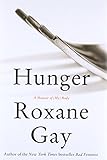
Roxane Gay writes about her body — fat, surveilled, weaponized against her — and the sexual violence that shaped her relationship with it, with unflinching honesty and structural precision.
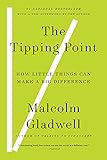
An investigation into how ideas, trends, and social behaviours spread like epidemics — reaching a tipping point where a small change triggers a massive, cascading effect.
Seven essays on sexism, language, and power — anchored by the title essay, which coined the term 'mansplaining' (though Solnit never uses the word), and ranging to cover the epidemic of violence against women, Virginia Woolf's relationship to the sea, and the politics of silence.
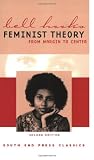
bell hooks's debut work examines the intersection of race and gender in American history, arguing that Black women have been systematically marginalized by both the civil rights movement and mainstream feminism — and that any feminism that does not center Black women's experience is incomplete.
bell hooks reimagines education as the practice of freedom — arguing that genuine learning requires engaged, passionate pedagogy that acknowledges the whole person and makes the classroom a site of liberation rather than domination.
bell hooks argues that mainstream feminism has failed by centering the experiences of white, middle-class women, and calls for a feminist movement rooted in the lives of those at the margins — women of color, the poor, and the working class.
The story of Michael Oher — a homeless Black teenager taken in by a wealthy white family in Memphis who goes on to become an NFL first-round pick — intertwined with an economic history of how American football came to value the left tackle, the position that protects a quarterback's blind side, above almost any other.
Simone de Beauvoir's monumental 1949 study of women's oppression. Drawing on philosophy, biology, history, and literature, she argues that woman has been constructed as the 'Other' to man — and that femininity is not destiny but a situation imposed and lived.
Naomi Klein's investigation into how disaster capitalism exploits crises to implement radical free-market policies that could not survive democratic scrutiny in normal times.
Written after his release from prison and published under a pseudonym, Wilde's poem about the execution of a fellow prisoner — 'he did not wear his scarlet coat, for blood and wine are red' — is his most politically direct work. The poem indicts the prison system, capital punishment, and Victorian society's treatment of those it destroys, written in ballad form that gives the critique populist reach.
Nicholas Carr's Pulitzer Prize finalist argues that the internet is reshaping human cognition — training brains for distraction, skimming, and rapid switching at the expense of deep reading and sustained thought.
Twenty-one meditations on pressing questions of our time — from artificial intelligence and political disillusionment to terrorism, nationalism, and the challenge of staying sane in the information age.
Woolf's extended essay argues that a woman must have money and a room of her own to write fiction. Through invention, irony, and a fictional woman narrator, she examines why women have historically been excluded from literary culture — and what would change if they weren't.
Mernissi's most scholarly work — a feminist reading of Islamic sacred texts arguing that the veil and the seclusion of women were political decisions made by the male elite in the early Islamic period, not divine commandments.
Prince Dmitri Nekhlyudov recognises, as a juror at a murder trial, the woman he seduced and abandoned years before. Overcome by guilt, he follows Katyusha Maslova through the Russian prison and exile system — a journey that becomes Tolstoy's most sustained indictment of the state, the church, and the landed class.
Fatema Mernissi explores the different versions of Scheherazade that Western and Eastern cultures have created — arguing that the Western harem fantasy reveals more about Western fears than about Eastern reality.