War fiction confronts the experience that strains language to its limit — fear, comradeship, atrocity, and the long shadow combat casts over those who survive it. From the trench classics of the First World War to novels of Vietnam and beyond, these books bear witness to what war does to the people caught inside it.
The true story of Oskar Schindler, a German industrialist and member of the Nazi Party who saved more than 1,200 Jews during the Holocaust by employing them in his factories — a story Keneally tells in the form of a novel, using invented scene and dialogue alongside documented fact.
A linked collection of stories about a platoon of American soldiers in Vietnam, narrated by a character named Tim O'Brien, that blurs the line between fact and fiction to argue that emotional truth matters more than factual accuracy.
Soviet submarine captain Marko Ramius attempts to defect to the United States with his entire crew and the USSR's most advanced nuclear submarine — and CIA analyst Jack Ryan must convince a skeptical Navy the defection is real before both superpowers open fire.
Irène Némirovsky's unfinished masterpiece, written during the Nazi occupation of France and discovered decades after her death at Auschwitz. Its two completed novellas portray the chaotic 1940 exodus from Paris and life under German occupation, with extraordinary immediacy and moral clarity.
In an Italian villa at the end of World War II, a burned and dying man is cared for by a Canadian nurse, visited by a Sikh sapper and a former thief; the mystery of the patient's identity, and what the North African desert did to him, forms the novel's slow-burning centre.
On the Greek island of Kefalonia during the Italian and German occupation of World War II, a young woman falls in love with an Italian officer while her fiancé fights with the partisans in the mountains.
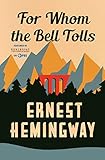
American volunteer Robert Jordan fights with Spanish guerrillas during the Civil War, assigned to blow a bridge — and falls in love with Maria in the three days before the mission.
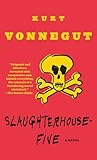
Kurt Vonnegut's anti-war masterpiece follows Billy Pilgrim, who has become 'unstuck in time' and moves non-linearly through his experiences as a prisoner of war in Dresden and his later suburban American life.
In Leningrad on the eve of the German invasion in 1941, nineteen-year-old Tatiana falls in love with Alexander — a Red Army officer carrying dangerous secrets — as the 872-day siege closes around the city and its inhabitants.
Soviet soldiers who fought in Afghanistan (1979-1989) returned home in zinc coffins or with wounds that could not be named. Alexievich interviews the survivors, the mothers, and the widows—recording a war that the Soviet state refused to acknowledge. 'Zinky boys' was soldiers' slang for the zinc-lined coffins the bodies came home in.
A soldier named Cacciato walks away from the Vietnam War, heading west toward Paris. His squad is ordered to follow him. The novel weaves between three time-streams: the observation post where Paul Berlin sits on watch, the actual past of the war, and the fantasy of following Cacciato from Vietnam to Paris.
Wolff's memoir of his year in Vietnam as an Army Special Forces advisor — stationed in a provincial town, teaching Vietnamese soldiers, trying not to die. Written with the precision and moral seriousness of his fiction, it is among the best literary memoirs of the Vietnam War.
A group of reformatory boys is evacuated to a remote mountain village during World War II. When plague breaks out, the villagers flee and lock the boys in, leaving them to survive alone. A brief, violent, and exhilarating novel about what happens when the social order abandons the already-abandoned.
Vietnam, 1963 to 1983. Skip Sands is a CIA officer working for his uncle, a legendary colonel running a psychological operations program called Tree of Smoke. Around him: two brothers from Arizona, a Canadian missionary, a double agent. Johnson's National Book Award winner is the major American novel about the Vietnam War.
Paul Bäumer enlists in the German army at 18, full of patriotic idealism, and spends the next few years watching his friends die one by one on the Western Front while the world that sent them there carries on. Remarque's novel is the definitive anti-war testimony: written in the flat, precise language of men who have stopped expecting rescue.
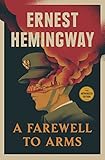
American ambulance driver Frederic Henry falls in love with English nurse Catherine Barkley against the backdrop of the Italian front in World War I — a love story that the war will not leave intact.
When the US government launches a covert military operation against Colombian drug cartels, Deputy National Security Advisor Jack Ryan uncovers a political conspiracy to disavow the soldiers involved — leaving them to die in the jungle rather than admit the mission existed.
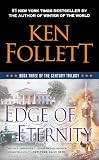
The second book of the Century Trilogy. Following five interrelated families through the rise of the Third Reich, the Spanish Civil War, World War II, and the dawn of the nuclear age, Ken Follett turns the twentieth century's darkest decades into sweeping, character-driven drama.
The origin story of John Kelly — who will become John Clark, Jack Ryan's right-hand operative — set during the Vietnam War. A grieving Navy SEAL wages a one-man war against a Baltimore drug ring while simultaneously being recruited for a secret POW rescue mission in North Vietnam.
Jack Ryan has become National Security Advisor when a trade war with Japan escalates into economic warfare and then military conflict in the Pacific. The novel that introduced the concept of a coordinated attack on financial infrastructure, and that ends with an act of terrorism that presaged 9/11.
The conclusion of the Century Trilogy. Following the five families through the Cold War — civil rights, the Berlin Wall, the Cuban Missile Crisis, Vietnam, and the fall of the Iron Curtain — Ken Follett brings his century-spanning saga to a close.
Three women — debutante Osla, brilliant Mab, and mathematics prodigy Beth — work as codebreakers at Bletchley Park during the Second World War. Years later, on the eve of the 1947 royal wedding, one of them has been committed to a psychiatric facility with a vital secret, and the other two must find the traitor in their midst to get her out.
Based on the true story of Mila Pavlichenko — a Soviet history student turned Red Army sniper who becomes the most lethal female sniper in history with 309 confirmed kills. When she travels to America in 1942 on a propaganda tour, a shadowy figure begins targeting her, and Mila must use the same precision that kept her alive at Sevastopol.
Three days. One hill called the Heroes. Two armies trying to take it. Abercrombie compresses an entire war into a single brutal engagement, following soldiers on both sides as they fight, scheme, and die. A standalone novel set in the First Law world that is less interested in victory than in the human cost of the pointless fights that constitute war.
All Quiet on the Western Front by Erich Maria Remarque, Catch-22 by Joseph Heller, and The Things They Carried by Tim O'Brien are among the most acclaimed. For WWII, The Naked and the Dead by Norman Mailer and Slaughterhouse-Five by Kurt Vonnegut are landmark works.
War fiction centres specifically on the experience of combat and its consequences, whoever the characters are. Historical fiction is the broader category of any novel set meaningfully in the past. A war novel set in 1916 is both; a war novel set in an imagined present or future is only the former.
War fiction offers something history books rarely can: the interior, moment-to-moment human experience of conflict — its terror, boredom, loyalty, and moral cost. The best war novels are also among literature's most powerful arguments for peace.
Disclosure: Amazon links on this page are affiliate links. If you purchase through them we earn a small commission at no extra cost to you.
We use cookies to understand how visitors use our site (Google Analytics). No data is collected until you accept.
Privacy Policy